
In This Article
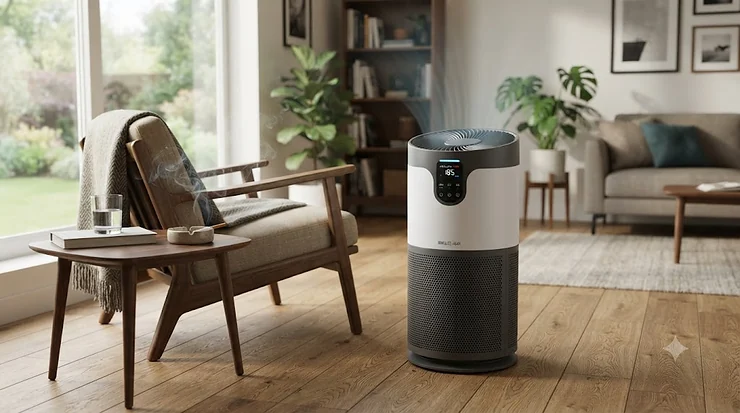
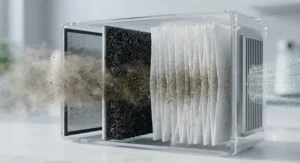
Here’s the thing nobody tells you about cigarette smoke: it doesn’t leave when the cigarette does. You can crack every window, burn every candle, and Febreze the couch into submission, and three days later that stale, ashy smell creeps right back out of the fabric like it never left. That’s not your imagination — it’s chemistry. An air purifier for cigarette smoke is a purpose-built unit combining a true HEPA filter (to trap the microscopic soot and tar particles) with a dense activated carbon bed (to adsorb the nicotine vapor and VOC gases that plain HEPA can’t touch). Skip the carbon and you’re left with a machine that scrubs the visible haze but leaves the smell — and the chemistry — very much intact.
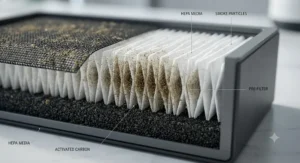
I’ve spent the last few weeks buried in spec sheets, lab test data, and the kind of Reddit threads where ex-smokers argue about carbon weight like it’s a religious debate. What surprised me wasn’t that some purifiers work and some don’t — it’s how much the difference comes down to one boring, unsexy number: how many pounds of carbon are actually inside the box. A purifier built for dust and pollen might carry a few ounces of carbon dust glued onto a paper pre-filter. A purifier built for smokers carries pounds of loose, pelleted granules with real surface area to grab onto. That gap is the whole story.
Whether you’re hunting for an air purifier that eliminates cigarette smell for your own apartment, trying to make a rental livable after the last tenant smoked indoors, or just tired of guests asking “do you smoke in here?” — this guide breaks down seven real, currently available units across every budget tier, backed by actual specs and aggregated review sentiment rather than marketing fluff.
Quick Comparison Table
| Product | Best For | Carbon Weight | Room Coverage | Price Range |
|---|---|---|---|---|
| Austin Air HealthMate HM400 | Heaviest smoke loads | ~15 lbs | Up to 1,500 sq ft | Premium ($500-$700 range) |
| IQAir HealthPro Plus | Medical-grade filtration | ~5 lbs (V5-Cell) | Up to 1,125 sq ft | Premium (around $900) |
| Blueair Blue Pure 211+ | Quiet, open-concept rooms | Moderate carbon layer | Up to 550 sq ft | Mid-range ($250-$350 range) |
| Coway Airmega 400 | Large rooms, auto-sensing | Moderate carbon layer | Up to 1,560 sq ft | Mid-to-premium ($400-$500 range) |
| LEVOIT Core 400S | Bedrooms, smart control | Light-moderate carbon | Up to 900 sq ft | Mid-range (under $250) |
| Winix 5500-2 | Budget-conscious buyers | Light carbon layer | Up to 360 sq ft | Budget (under $150) |
| Honeywell HPA300 | Fast air-change speed | Light-moderate carbon | Up to 465 sq ft | Mid-range ($200-$270 range) |
A quick read of that table tells an honest story: carbon weight and price climb together almost in lockstep, which makes sense once you know that granular activated carbon is genuinely expensive to source and pack. A recent university tobacco-residue study tested dozens of homes and detected tobacco residue on surfaces in every single one, even where indoor smoking bans were already in place — which is a blunt way of saying that light-carbon budget units are fighting a much bigger enemy than their spec sheet suggests. If you’re dealing with daily indoor smoking, the Austin Air and IQAir sit in a different weight class than everything else on this list, literally and figuratively.
💬 Just one click — help others make better buying decisions too!😊
Top 7 Air Purifiers for Cigarette Smoke: Expert Analysis
Coverage here spans every tier — a true budget pick, several sensible mid-range workhorses, and two genuine premium heavyweights — plus a mix of brands so you’re not just looking at one company’s lineup dressed up seven different ways.
1. Austin Air HealthMate HM400 — 15 lbs of activated carbon crushes heavy smoke loads
That carbon figure isn’t a typo, and it’s the reason this unit shows up on nearly every serious smoker’s-home recommendation list. The HM400 pairs roughly 15 pounds of activated carbon and zeolite with a medical-grade HEGA particle filter, skips the ionizer and “smart” gimmicks entirely, and just runs — a simple remote, multiple fan speeds, and a filter rated to last years rather than months under normal use. Based on the spec comparison, that carbon mass matters more than any CADR number: a thin filter saturates with nicotine and tar within weeks in a smoking household, while a bed this deep keeps adsorbing gases long after lighter units have gone stale and started re-releasing odor back into the room.
Who’s this for? Honestly, anyone smoking indoors daily, running a cigar lounge situation, or trying to un-smell a rental a previous tenant smoked in for years. It’s overkill for someone who vapes occasionally near an open window — but for the person whose whole living room still smells like an ashtray at 9am, it’s arguably the most direct fix on this list. Reviewers consistently note the total absence of “new purifier smell” or off-gassing, and several long-term owners report the housing and motor holding up for a decade-plus of continuous operation, though a few mention the industrial, boxy design isn’t going to win any interior-design awards.
Pros:
- ✅ Massive 15 lb carbon bed handles daily smoking without saturating
- ✅ No ionizer, ozone, or off-gassing — just filtration
- ✅ Filters rated for multi-year lifespan under normal use
Cons:
- ❌ Bulky, utilitarian design won’t blend into modern décor
- ❌ Premium price puts it out of reach for casual users
Expect this one in the premium range, generally somewhere in the $500-$700 range depending on current promotions — check current price before buying, since Amazon pricing shifts often. For a household with an actual daily smoker, the value case is straightforward: you’re paying for carbon mass you won’t need to replace as often, which evens out the sticker shock over a couple of years.
2. IQAir HealthPro Plus — medical-grade filtration for heavy smokers and cigars
IQAir built its reputation in hospital and lab settings, and the HealthPro Plus carries that DNA into a household unit with its HyperHEPA filter and a dedicated V5-Cell gas and odor cartridge holding several pounds of activated carbon blended with additional adsorbents. What most buyers overlook about this model is that IQAir tests and certifies filtration efficiency down to particle sizes smaller than the standard HEPA benchmark, which matters specifically for the ultra-fine end of cigarette smoke’s particle range — the stuff so small it can slip past filters that only guarantee performance at the standard 0.3-micron mark.
This is the pick for someone who wants documentation, not just a good feeling — allergy sufferers layering smoke sensitivity on top of existing respiratory issues, or cigar smokers who want the closest thing to a lab-grade solution in a living room. Aggregated review sentiment consistently praises build quality and noise control at lower speeds, though a recurring theme in owner feedback is genuine sticker shock at replacement filter costs down the line, since the gas cartridge isn’t cheap to swap out.
Pros:
- ✅ HyperHEPA filtration rated below the standard HEPA benchmark
- ✅ Multi-pound gas/odor cartridge purpose-built for smoke and VOCs
- ✅ Quiet operation even at mid-to-upper fan speeds
Cons:
- ❌ Replacement filter cartridges carry a steep long-term cost
- ❌ No app or smart-home integration on this particular model
Pricing sits at the top of this list, generally around $900 at the time of research — this is an investment-grade purchase, not an impulse buy, so check current price and consider it against how many years you’ll actually run it.
3. Blueair Blue Pure 211+ — quiet powerhouse for open-concept living rooms
Consumer testing has repeatedly flagged the 211+ as a standout for clearing dust, pollen, and smoke from larger open rooms, and its HEPASilent filtration technology is the reason why — it combines mechanical filtration with an electrostatic charge to keep airflow high without cranking fan noise into “can’t hear the TV” territory. Independent testing has found it performs strongly at both its highest and lowest fan settings, which is a rarer trait than it sounds; a lot of purifiers only perform well maxed out. Here’s what to weigh: the washable pre-filter is a genuine cost-saver over time, since you’re not replacing that layer every few months the way you would a disposable one.
This one’s a strong fit for open-concept apartments or combined living-dining spaces where smoke from one corner drifts everywhere, and for anyone who wants strong performance without a machine that sounds like a hair dryer at full tilt. The tradeoff, based on the spec sheet, is that its carbon layer — while functional for lighter smoke and general VOCs — isn’t in the same weight class as the Austin Air or IQAir, so heavy daily smoking will saturate it faster.
Pros:
- ✅ Effective at both high and low fan speeds, not just maxed out
- ✅ Washable pre-filter reduces long-term filter costs
- ✅ Lightweight design makes room-to-room moves easy
Cons:
- ❌ Carbon capacity trails the Austin Air and IQAir for heavy smoking
- ❌ Lacks a remote control on this particular model
Expect a price in the $250-$350 range, positioning it as one of the better mid-range values here — especially if your smoke load is moderate rather than constant.
4. Coway Airmega 400 — smart auto-sensing built for big spaces
Coway earns consistently strong marks in independent appliance testing for reliability, and the Airmega 400 backs that up with genuinely large coverage — rated up to roughly 1,560 square feet — plus an auto mode that reads the room’s air quality and adjusts fan speed without you touching a dial. Independent lab-style testing of this Coway lineup has singled it out as excelling at clearing smoke, dust, and pollen at both its highest and lowest fan settings, a detail worth reading about in the Consumer Reports air purifier testing roundup if you want the full lab methodology. Reviewers consistently note that the auto-sensor reacts quickly to a fresh cigarette, ramping up speed almost immediately rather than lagging behind the smoke event. Based on the spec comparison, the tradeoff for that big coverage number is physical size and weight — this isn’t a nightstand unit, it’s a floor-standing piece of furniture in its own right.
This is the natural pick for an open floor plan, a finished basement that doubles as a smoking room, or anyone who wants one unit to cover an entire main living level instead of buying two smaller machines. What the spec sheet won’t tell you, but owner feedback suggests, is that predicted reliability scores for this brand run consistently high in independent member surveys — a meaningful signal when you’re planning to run a unit 24/7 for years.
Pros:
- ✅ Auto-sensing mode reacts fast to sudden smoke events
- ✅ Covers large rooms other units on this list can’t touch
- ✅ Strong brand reliability track record in owner surveys
Cons:
- ❌ Large footprint demands real floor space
- ❌ No handheld remote included on base configuration
Pricing lands in the $400-$500 range at the time of research — a fair value proposition given the square footage it’s rated to actually cover.
5. LEVOIT Core 400S — whisper-quiet smart purifier built for bedrooms
If your main battle is falling asleep in a room that still smells like last night’s cigarette, the Core 400S is built around exactly that problem. It runs quiet enough at sleep-mode speeds to disappear into background noise, and its companion app lets you schedule fan speed changes so it ramps up automatically after a known smoking window (say, right after your evening cigarette on the balcony) and drops back down for sleep. Based on the spec comparison, its carbon layer is lighter than the premium picks here, but for a single bedroom rather than a whole smoking household, that’s a reasonable tradeoff for the price.
This is the pick for someone managing occasional or moderate smoke exposure — a partner who smokes outside but tracks residue in on clothes, or a renter dealing with light drift from a neighboring unit — rather than someone smoking indoors around the clock. Aggregated review sentiment highlights the app’s filter-life tracking as genuinely useful, though a recurring complaint is that the smart features require a stable home Wi-Fi connection to function as advertised.
Pros:
- ✅ Genuinely quiet at sleep-mode fan speeds
- ✅ App scheduling automates speed changes around smoke windows
- ✅ Compact footprint fits nightstands and small bedrooms
Cons:
- ❌ Lighter carbon load struggles against heavy daily smoking
- ❌ Smart features depend on a stable Wi-Fi connection
You’ll typically find this one priced under $250, making it one of the more accessible smart options for a bedroom-specific fix.
6. Winix 5500-2 — best budget pick with true 4-stage filtration
Don’t let the price tag fool you into thinking this is a toy. The 5500-2 (also sold as the 5510) runs a genuine 4-stage system — pre-filter, true HEPA, activated carbon, and a PlasmaWave ionization stage — and independent smoke-clearing tests have shown it pulling visible smoke from a sealed test chamber in well under a minute. That same independent testing measured a substantial jump in overall air quality within roughly an hour of continuous runtime in an enclosed test room, which is a strong result for a unit at this price point. What most buyers overlook about a purifier at this price is that the carbon layer, while thinner than the premium units, is still real activated carbon rather than a cosmetic pre-filter dusting — a distinction that separates it from a lot of cheaper competitors in the same price band.
This is the sensible entry point for a smoker on a tight budget, a college dorm situation, or someone who just wants a real upgrade from nothing rather than the absolute best possible performance. Reviewers consistently flag the PlasmaWave stage as optional to disable for anyone sensitive to the faint smell some ionization technologies produce, and the general consensus is that filter replacement costs stay reasonable compared to premium units.
Pros:
- ✅ True 4-stage filtration at a genuinely budget price point
- ✅ Fast smoke-clearing performance in independent testing
- ✅ Optional PlasmaWave stage can be disabled if desired
Cons:
- ❌ Smaller room coverage than every other pick on this list
- ❌ Carbon layer saturates faster under heavy daily smoking
Pricing typically stays under $150, making it the clear budget champion here — just size your expectations to its smaller rated coverage area.
7. Honeywell HPA300 — fastest air-change speed in its class
Honeywell has been in the air-cleaning business long enough to know that raw clearing speed matters as much as filtration grade, and the HPA300 leans hard into that strength with one of the higher Clean Air Delivery Rate figures among mid-range units its size. Based on the spec comparison, a high CADR rating translates directly into fewer minutes standing around waiting for a room to stop smelling like an ashtray after someone steps outside for a cigarette and comes back in trailing smoke — a real-world win that a lot of spec sheets bury under jargon.
This is a strong option for anyone whose priority is speed over ultimate carbon capacity — someone who smokes occasionally indoors and wants the room reset fast, rather than someone running constant heavy smoke all day. What the spec sheet won’t tell you, but owner feedback suggests, is that the pre-filter is genuinely washable and reusable, which trims ongoing costs compared to units requiring full filter swaps more frequently.
Pros:
- ✅ High CADR rating clears rooms noticeably fast
- ✅ Washable pre-filter cuts down on ongoing costs
- ✅ Well-established brand with widely available replacement filters
Cons:
- ❌ Carbon capacity is lighter than the true smoke-specialist units
- ❌ Runs noticeably louder at its highest fan speed
Expect a price generally in the $200-$270 range — a solid mid-tier value if speed matters more to you than sheer carbon mass.
Benefits vs. Traditional Alternatives
| Approach | Removes Particles | Removes Odor/VOCs | Ongoing Cost | Best For |
|---|---|---|---|---|
| HEPA + Carbon Purifier | Yes | Yes | Filter replacement | Daily smokers, whole rooms |
| Air Freshener / Candles | No | Masks only | Low, recurring | Temporary cover-up |
| Opening Windows | Partial | Partial | None | Supplementing a purifier |
| Ozone Generators | Partial | Partial (health risk) | Low | Not recommended for occupied rooms |
The comparison above makes the actual gap pretty obvious: air fresheners and candles never remove anything, they just layer a stronger smell over the top of the stale one, which is why the ashtray note always resurfaces once the fragrance fades. Opening windows genuinely helps by diluting concentration, but it’s a supplement to filtration, not a replacement — you can’t ventilate away odor that’s already soaked into carpet fibers. Ozone generators deserve a specific warning here: they can react with existing pollutants to form new byproducts and are not recommended for use in occupied spaces, which is exactly why every reputable purifier on this list uses activated carbon and true HEPA instead of ozone as its working mechanism.
✨ Don’t Miss These Exclusive Deals!
🔍 Take your indoor air quality to the next level with these carefully selected air purifiers. Click on any highlighted item to check current pricing and availability. These picks will help you create a genuinely fresher home your family and guests will actually notice!
Practical Usage Guide: Setup, Placement, and Maintenance
Getting the right unit is half the battle — placement and habits do the rest, and this is the part most Amazon listings never mention. Set the purifier as close as reasonably possible to where the smoking actually happens, whether that’s a specific armchair, a balcony doorway, or a designated smoking spot in a garage. Distance matters more than most people assume: a purifier across the room from the smoke source is working against airflow patterns instead of with them.
During the first 30 days, run the unit on a middle-to-high speed setting rather than the lowest “eco” mode, especially in a household with regular indoor smoking — the carbon needs consistent airflow to keep adsorbing before it has a chance to saturate and start re-releasing odor. A common early mistake is treating the purifier like an air freshener that only needs to run when someone’s actively smoking; in reality, continuous operation at a moderate speed outperforms sporadic full-blast bursts because it keeps particle concentration low around the clock rather than letting it spike and then chase it back down. Check the pre-filter for visible tar buildup every couple of weeks in a smoking household, and don’t wait for a filter-change light to fully illuminate before ordering a replacement — by the time most indicators trigger, performance has already been declining for days. Beyond the machine itself, washing curtains and fabric surfaces regularly, wiping down hard surfaces where tar residue settles, and steam-cleaning upholstery periodically all reduce the load the purifier has to fight in the first place, since a filter can only clean the air, not the surfaces the smoke has already clung to.
Real-World Scenarios: Matching the Right Purifier to Your Situation
The daily indoor smoker in a one-bedroom apartment. Budget matters, but so does not replacing filters every three weeks. The Winix 5500-2 or, if funds allow, the Austin Air HealthMate HM400 make the most sense here — daily heavy smoke load demands either genuine carbon mass or accepting more frequent filter changes on a budget unit.
The couple where one partner smokes on the balcony only. This is a lighter, intermittent load — smoke drifting in occasionally rather than filling the room constantly. The LEVOIT Core 400S fits well, since its app scheduling can ramp fan speed up right after the known smoking window and quiet back down overnight.
The landlord prepping a rental after a previous tenant smoked for years. This is a saturation problem, not a maintenance one — the walls and carpet themselves are the ongoing odor source until they’re cleaned or replaced. Run a high-carbon-capacity unit like the IQAir HealthPro Plus or Coway Airmega 400 continuously for the first 48-72 hours at a middle-to-high setting before dropping to a maintenance speed, and pair it with the surface-cleaning steps above — the purifier alone won’t out-race walls that have been absorbing smoke for a decade.
How to Choose an Air Purifier for Cigarette Smoke
Choosing the right unit comes down to matching a handful of concrete factors to your actual smoke load, not chasing the highest number on a spec sheet. Here’s the shortlist that actually matters:
- Confirm true HEPA plus activated carbon, not one or the other. HEPA alone traps particles but does nothing for the gas-phase odor; carbon alone misses the fine soot particles. You need both stages working together.
- Check the carbon weight, not just its presence. A few ounces of carbon dust glued to a pre-filter behaves very differently from several pounds of pelleted granular carbon — ask or look for the actual weight spec when it’s listed.
- Match CADR and room coverage to your actual square footage, not the room you wish you had. An undersized unit maxed out constantly wears out faster and still underperforms a properly sized one running at a moderate speed.
- Factor in filter replacement cost and frequency, since a cheap unit with expensive, frequent filter swaps can cost more over two years than a pricier unit built to go longer between changes.
- Consider noise tolerance for bedrooms, since a purifier you turn down — or off — to sleep isn’t protecting you while you’re actually breathing that air for eight hours.
- Skip ionizer-only or ozone-based units for occupied rooms. These technologies can produce their own byproducts and aren’t a substitute for HEPA plus carbon filtration.
- Decide between whole-room and source-point placement based on whether smoking happens in one consistent spot or drifts through open-concept space.
HEPA + Carbon vs. Standard Filters: Why Both Layers Matter
It’s tempting to assume any “HEPA” label solves the whole problem, but that’s exactly the misconception that leaves people disappointed after buying a purifier that leaves the smell untouched. HEPA media on its own does not remove odor; it’s the activated carbon stage that adsorbs the chemicals and gases behind lingering smoke smells. In other words, a standard HEPA-only air purifier is solving half the equation at best: it’ll pull the visible haze and soot particles out of the air, which genuinely helps respiratory symptoms, but the nicotine vapor and VOC gases responsible for that lingering ashtray smell will sail right through an unaugmented HEPA media.
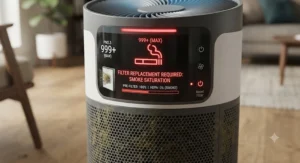
This is precisely why every unit on this list pairs true HEPA with a dedicated activated carbon stage, and why the carbon weight differences between them matter so much in practice. A thin carbon layer will handle occasional light smoke reasonably well but saturates — meaning it stops adsorbing and can even start re-releasing captured odor molecules — much faster under a heavy, continuous smoke load. That’s the real-world translation of “carbon capacity”: it’s not a bragging-rights number, it’s a countdown timer on how long the unit performs before you need a filter change.
Common Mistakes When Buying an Air Purifier for Smokers
The single most common mistake is buying based on room-coverage numbers alone while ignoring carbon capacity entirely — a purifier can be rated for a huge square footage and still leave a smoke smell behind if its carbon stage is a token gesture. A close second is assuming any air purifier eliminates odor by default; plenty of dust-and-allergen-focused units skip a real carbon stage because pollen and pet dander don’t need one, and buyers only discover the gap once cigarette smoke is actually in the mix. Another frequent misstep is under-running the unit — treating it like a light switch you flip only during an active cigarette, rather than a continuous system that performs best left running at a steady moderate speed. Finally, a lot of buyers skip checking replacement filter cost and availability before purchasing, then get blindsided a year in when a specialty cartridge costs nearly as much as a budget unit’s original price tag.
What to Expect: Real-World Performance
Spec sheets promise instant relief, but that’s not how airflow physics actually works. A correctly sized purifier typically needs 20 to 40 minutes to complete several full air changes in a room before nicotine odor drops below the level most people can consciously detect — patience genuinely is part of the deal here, not a flaw in the machine. What you’ll actually notice first is the visible haze clearing within minutes on a higher fan speed, followed gradually by the lingering ashtray smell fading over the following hour as the carbon stage catches up on the gas-phase compounds. Within the first week of continuous operation, most owners in smoking households report the baseline “background” smell dropping noticeably, even though a fresh cigarette will still produce a temporary spike each time — that’s expected and simply means the purifier is doing its job on an ongoing basis rather than achieving some permanent, one-time fix.
Long-Term Cost and Maintenance
Sticker price is only half the financial picture, and this is a section a lot of buying guides conveniently skip. A budget unit with a cheap upfront cost can quietly cost more over two years if its filters need replacing every two to three months under heavy smoke exposure, especially once you add up cartridge prices and shipping over that stretch. A premium unit with a genuinely large carbon mass — again, that Austin Air-style multi-pound bed is the clearest example — spreads its higher upfront cost across a filter life that can run a year or more even under regular smoking conditions, which narrows or even reverses the total cost gap once you zoom out to a realistic ownership timeline. Energy costs matter too, though they’re a smaller line item: units that run continuously at a moderate speed typically cost a modest amount monthly in electricity, meaningfully less than running a unit maxed out around the clock trying to compensate for an undersized carbon stage. Bottom line for planning purposes: budget for filter replacements as a recurring cost from day one, not a surprise expense, and weigh that recurring number against the purchase price rather than judging value on sticker price alone.
Thirdhand Smoke and Tobacco Carcinogens: What Filtration Can and Can’t Do
Here’s an uncomfortable truth an air purifier alone can’t fix: what health researchers call thirdhand smoke is the tobacco residue that settles into furniture, walls, carpeting, and clothing after smoke has already cleared, and that residue keeps releasing odor and chemicals back into the air long afterward — which is exactly why a room can still smell faintly of cigarettes weeks after the last one was smoked there. Routine cleaning doesn’t fully remove it on its own, and research on aged smoke-exposed fabric has found that tobacco-specific residues can persist for well over a year in textiles that haven’t been deep-cleaned or replaced.
This matters for expectations: an air purifier handles what’s airborne right now, continuously, but it isn’t a substitute for cleaning the surfaces that keep re-releasing residue in the first place. For a genuinely comprehensive approach, pair continuous purifier operation with regular fabric washing, surface wiping, and periodic deep cleaning of carpets and upholstery — the purifier keeps the air fresh moment to moment while the cleaning routine shrinks the underlying reservoir the smell keeps coming from. If you want to go deeper on the research behind why this residue is such a persistent problem, the Thirdhand Smoke Resource Center maintains an accessible overview of the current science for anyone dealing with a heavily smoke-affected space.
Features That Actually Matter (And Those That Don’t)
Genuine activated carbon weight matters enormously; a “carbon-infused” pre-filter that’s mostly paper with a light dusting does not perform the same job and shouldn’t be marketed as equivalent, even though plenty of budget listings blur that line. True HEPA certification, ideally against a recognized third-party standard, matters — a filter that merely claims “HEPA-type” or “HEPA-like” performance without independent certification is a marketing shortcut worth skepticism. CADR rating matched honestly to room size matters, because an undersized unit maxed out constantly will still underperform a correctly sized one running moderately. On the other hand, smart-app connectivity is a genuine convenience but not a filtration feature — it doesn’t clean air any better, it just makes scheduling easier. Ionizer and “plasma” stages are, at best, a minor supplementary touch and, at worst, an unnecessary source of trace ozone byproducts in an occupied room; they’re not the reason to buy any unit on this list. And a sleek, app-connected design with a mediocre carbon stage is still a mediocre carbon stage, no matter how good it looks on a kitchen counter.
Frequently Asked Questions
❓ Does an air purifier really remove cigarette smoke smell?
❓ How long does it take for an air purifier to clear cigarette smoke odor?
❓ What's the best air purifier for smokers indoors on a tight budget?
❓ Can an air purifier remove nicotine smell from walls and carpet?
❓ How much activated carbon do I actually need for a smoker's home?
Conclusion
If there’s one takeaway worth carrying out of this whole guide, it’s that carbon weight, not brand reputation or fan speed count, is the number that actually predicts whether a purifier beats cigarette smoke or just moves it around the room. Heavy daily smokers are genuinely better served spending more upfront on something like the Austin Air HealthMate HM400 or IQAir HealthPro Plus, where the math on filter longevity works out in their favor over a couple of years. Lighter, intermittent smoke situations — a balcony smoker, an occasional guest, a mild lingering smell — can get real results from the Blueair 211+, Coway Airmega 400, LEVOIT Core 400S, Winix 5500-2, or Honeywell HPA300 depending on room size and budget. Whichever you land on, remember that a purifier is one piece of a bigger picture: continuous operation, smart placement near the smoke source, and regular surface cleaning to deal with thirdhand residue all work together, and skipping any one of them leaves you chasing a smell that never quite fully disappears.
✨ Ready to breathe easier? Compare these picks side by side and pick the one that actually fits your space — your nose (and your guests) will notice the difference. 💬🤗
Recommended for You
- Portable Air Purifier for Wildfire Smoke: 7 Real Picks (2026)
- Air Purifier for Wildfire Smoke: 7 Picks That Actually Work (2026)
- 7 Best Air Purifiers for Smoke in 2026
Disclaimer: This article contains affiliate links. As an Amazon Associate, I earn from qualifying purchases. If you purchase products through these links, we may earn a small commission at no additional cost to you.
✨ Found this helpful? Share it with your friends! 💬🤗
