
In This Article
An air purifier for garage gym use is a portable or ceiling-hung air cleaner sized for a bigger, dustier, less climate-controlled room than a bedroom. It pairs HEPA or fine-particle filtration with activated carbon to capture dust, chalk, and pollen while softening sweat odor and the rubbery smell that lingers around mats and equipment.
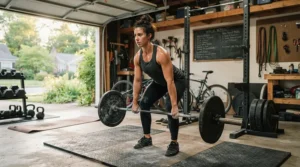
Garages are the home’s junk drawer with a roof. Dust sifts under the door, pollen hitchhikes in on every breeze, and the lawn mower naps ten feet from your squat rack. Then you arrive and start breathing like a freight train. A well-chosen air purifier for garage gym use won’t solve everything, but it takes the worst off the table. Fine dust that never settles on your barbell is dust that never ends up in your lungs.
Sizing decides everything. EPA’s Guide to Air Cleaners in the Home explains CADR, the clean air delivery rate that tells you how much filtered air a unit delivers per minute. A purifier built for a 200 sq ft bedroom simply wilts in a 450 sq ft two-car garage, no matter how pretty the marketing is.
Below, we compare seven real models, from a garage air purifier under $150 to a premium chemical-fighter. We also cover air purifier for garage dust, home gym ventilation, sweat odor, and dust and allergens. Everything rests on published specs and aggregated review sentiment, not invented lab coats. Prices are ranges that shift often, so check current price before you buy.
Quick Comparison: Air Purifier for Garage Gym Picks at a Glance
Think of this table as the menu before the tasting. Find your garage’s square footage, circle the rows that can cover it, then use the Best For column to break ties. As a rule of thumb for an 8-foot ceiling, aim for roughly 65 CADR per 100 sq ft, and add more for taller ceilings.
| Product | Best For | Price Range* | Rated Coverage |
|---|---|---|---|
| Levoit Core 300 | One-car gym on a tight budget | Under $100 | ~219 sq ft |
| WEN 3410 | Dust-heavy lifting and workshop zones | Around $150-$200 | ~400 sq ft |
| Coway Airmega AP-1512HH Mighty | Balanced mid-size garages | Around $180-$230 | ~361 sq ft |
| Winix 5510 | Sweat odor and smell control | Around $170-$210 | ~392 sq ft |
| Honeywell HPA300 | Fast air turnover, simple controls | Around $200-$250 | ~465 sq ft |
| Blueair Blue Pure 211+ | Large two-car gyms, quiet low settings | Around $250-$320 | ~540 sq ft |
| Austin Air HealthMate HM400 | Chemical smells, premium long-haul | Mid-$800s | Up to ~1,500 sq ft (manufacturer claim) |
*Price ranges reflect what was visible at the time of research. Prices may vary, so check current price.
Looking at the comparison above, the Levoit Core 300 is the clear budget play for a single-car corner. The Honeywell HPA300 and Blueair Blue Pure 211+ are the two with enough airflow to credibly handle a full two-car space. The WEN 3410 is the odd one out: a dust-catching ceiling filter with no carbon, so it pairs best with another unit rather than replacing one. If smell is your biggest complaint, the Winix 5510 and Austin Air HealthMate HM400 carry far more carbon than the rest.
💬 Just one click — help others make better buying decisions too!😊
Top 7 Air Purifier for Garage Gym Options: Expert Analysis
Each pick below is analyzed from real specs and aggregated review themes, ordered roughly from budget to premium.
1. Levoit Core 300 — the under-$150 entry for one-car gyms
This little cylinder earns its spot by being small enough to tuck beside a rack and cheap enough to feel like an accessory rather than an investment.
Reviewers list the smoke CADR at around 141 CFM, with dust and pollen within a few points. It is rated for about 219 sq ft. In plain English, that’s roughly five air changes an hour in a 12-by-18-foot corner, plenty to keep chalk haze from hanging around. Its pre-filter, True HEPA, and carbon stages run at about 24-50 dB and draw up to roughly 45 watts.
Based on the spec comparison, this is the pick for a renter or beginner with a single-car footprint and a short list of complaints. The carbon layer is thin, so expect it to blunt sweat odor rather than erase it. Past roughly 250 sq ft, air turnover drops quickly, which is why it struggles in two-car spaces.
Reviewers consistently praise the low noise and the price. The most common caution in roundups is that the coverage ceiling is firm.
Pros:
- ✅ Low entry cost for True HEPA filtration
- ✅ Whisper-quiet low setting for long sessions
- ✅ Compact footprint fits beside a rack
Cons:
- ❌ Coverage tops out near 219 sq ft
- ❌ Thin carbon layer for heavy odors
Price range: under $100 at the time of research. Verdict: outstanding value for small spaces, a poor fit for large ones.
2. WEN 3410 — ceiling-hung muscle against fine dust
This is a workshop air filtration system rather than a bedroom-style purifier. Hung overhead, it leaves your floor space alone.
It moves 300, 350, or 400 CFM across three speeds and is rated for rooms up to about 400 sq ft at up to 7.5 air changes an hour. It uses a 5-micron pre-filter and a 1-micron main filter. Noise lands around 50-60 dB, and a remote with a timer reaches roughly 26 feet. That 1-micron stage is excellent for sanding dust, drywall dust, and chalk. It is not HEPA, and there’s no carbon, so it does nothing for smell.
The honest take: if your problem is air purifier for garage dust rather than odor, this is the cheapest serious tool here. Pair it with a carbon-equipped unit if you also fight sweat odor.
Retail reviewers describe noticeably less airborne dust in one-car garages and small shops. Woodworking forum users add a caution: it won’t clear a big room instantly, and people still wear masks during heavy dust work. Several note the filter gets dirty quickly, which is a sign it’s working.
Pros:
- ✅ Hangs overhead and saves floor space
- ✅ Remote with three speeds and timer
- ✅ Strong airflow for the money
Cons:
- ❌ No HEPA or carbon stage
- ❌ Filters clog quickly in chalk-heavy gyms
Price range: around $150-$200 at the time of research, so it can sit near the garage air purifier under $150 line depending on promotions. Verdict: great dust value, wrong tool for odor.
3. Coway Airmega AP-1512HH Mighty — the proven mid-size workhorse
Few purifiers have a longer paper trail. The Coway Mighty has been a bestseller for years, and that history matters when you want something dependable.
Independent listings show AHAM-verified CADR of roughly 233 smoke, 246 dust, and 240 pollen, rated for about 361 sq ft. The four-stage setup includes a washable pre-filter, a carbon deodorization filter (replace about every six months), True HEPA (about annually), and an air quality sensor with auto mode. Reviewers measure noise anywhere from the mid-20s dB at the bottom to the mid-50s at the top, depending on who holds the meter.
Here’s what to weigh: the 361 sq ft rating suits a large one-car or compact two-car gym, and auto mode ramps up when chalk or dust spikes. The catch is the carbon, which reviewers call too thin for stubborn odors. Some reviewers also note vibration and louder operation on high. Coverage reports note a successor, the Mighty2, arrived in 2026, so availability of the original may vary.
User reviews are strong on allergy relief and filter installation. A few mention a chemical smell from fresh replacement filters.
Pros:
- ✅ Independently verified CADR numbers
- ✅ Auto mode reacts to dust spikes
- ✅ Reasonable annual filter cost
Cons:
- ❌ Carbon layer is thin for heavy odors
- ❌ Louder and buzzier at top speed
Price range: around $180-$230 at the time of research. Verdict: the safe, balanced choice if you want fewer surprises.
4. Winix 5510 — pellet carbon built for sweat odor
If your garage smells like a locker room after leg day, this is the carbon-heavy contender in the mid-range.
Winix lists a CADR around 253 CFM, though retailers show figures from about 232 to 253, so treat it as a 232-253 class. It is AHAM-verified for roughly 392 sq ft. The stand-out is a pellet-based carbon filter, about 226 grams according to one review, plus a washable pre-filter and True HEPA. Optional PlasmaWave ionization can be switched off, and many testers prefer it off. Wi-Fi and a built-in air quality monitor add convenience.
For sweat odor, more carbon means more adsorption capacity. TechGearLab credits the pellet design with beating thin carbon sheets on odors and fumes.
Real-world watch-outs matter for a garage. Reviewers report the unit drops to sleep mode automatically in darkness, and that PlasmaWave sometimes needs to be turned off again after power interruptions. HouseFresh measured turbo at roughly 67 dB. The annual Filter Q price also draws complaints.
Pros:
- ✅ Pellet carbon handles odors better than thin sheets
- ✅ Wi-Fi app and built-in air quality monitor
- ✅ Washable pre-filter catches lint and hair
Cons:
- ❌ Turbo speed is genuinely loud
- ❌ Auto-sleep in dark rooms can undercut cleaning
Price range: around $170-$210 at the time of research. Verdict: strong value for odor-focused gyms, as long as you manage its dark-room quirk.
5. Honeywell HPA300 — raw airflow with zero app drama
This one is the opposite of fancy. Tap a button, pick a speed, forget the phone.
AHAM-listed CADR is 300 smoke, 320 dust, and 300 pollen, rated for 465 sq ft at about five air changes per hour. Three speeds plus Turbo, a 2/4/8-hour timer, and filter reminders round out the controls. Reviews put noise around 48-56 dB. In practice, that Turbo mode can clear a chalk cloud in a fraction of the time the budget cylinders need.
Honest analysis: the HPA300 delivers the highest CADR here for the money, so it’s a natural fit for a true two-car gym with normal ceilings. Its carbon is a pre-filter layer rather than a deep bed, so odor control is modest. Filters are cheap and easy to find locally, but one review estimates $75-$100 a year if you run it nonstop on a roughly three-month schedule.
Reviewers like its build and simplicity. The most repeated critiques are the lack of smart features and the filter cost.
Pros:
- ✅ Highest CADR under the premium tier
- ✅ Simple controls, no app required
- ✅ Turbo mode clears dust bursts fast
Cons:
- ❌ Frequent filter changes add running cost
- ❌ Light carbon layer for heavy sweat odor
Price range: around $200-$250 at the time of research. Verdict: the pragmatic big-garage airflow pick.
6. Blueair Blue Pure 211+ — big-garage airflow, gentle low settings
Blueair’s pitch is quiet power, and the spec sheet backs it up.
It lists a CADR of 350 across smoke, dust, and pollen, rated for about 540 sq ft at five air changes an hour. It uses HEPASilent particle filtration, a carbon layer, and a washable fabric pre-filter. Noise runs about 31-56 dB, and power draw is roughly 30-61 watts. The 360-degree intake lets you place it more freely than front-draw units.
What most buyers overlook is the washable fabric sleeve. In a chalk-heavy room it catches the bulk of the visible dust so the main filter lasts longer. The tradeoff is no auto mode and no app on this base model, so you control speed manually. A Blue Pure 211+ Auto variant adds a particle sensor at a higher price.
Reviewers consistently praise the low noise at the bottom of the dial and the premium feel. Common complaints are the missing smart features and the cost of six-month replacement filters, which run roughly $60-$80.
Pros:
- ✅ Very high airflow for large garages
- ✅ Washable pre-filter extends main filter life
- ✅ Energy efficient for its output
Cons:
- ❌ No auto mode or sensor on base model
- ❌ Six-month filters add ongoing cost
Price range: around $250-$320 at the time of research. Verdict: the best fit when your garage is big and you want to keep talking over the music.
7. Austin Air HealthMate HM400 — a 15-pound carbon bed for the stubborn smells
This is the heavyweight, in every sense.
The filter combines True HEPA with about 15 lbs of activated carbon and zeolite, far more than the thin sheets elsewhere. The steel unit weighs about 45 lbs, runs roughly 42-66 dB depending on speed, and draws up to about 115 watts. Austin Air rates the filter for five years, with a pro-rated warranty. The manufacturer claims coverage up to 1,500 sq ft, but HouseFresh’s testing logged about 52 minutes to clean its test room. Treat it as an odor-and-chemistry specialist first and a speed demon second.
Honest take: if your garage mixes sweat odor with paint cans, solvents, or new rubber flooring, nothing else on this list can touch its gas-phase capacity. For a gym that only has a dust problem, it’s overkill.
Owners and testers praise the build and the gas filtration. The consistent complaints are noise at the top speed and the steep price.
Pros:
- ✅ Massive carbon and zeolite bed for odors
- ✅ Five-year filter life
- ✅ Durable all-steel construction
Cons:
- ❌ Mid-$800s price tag
- ❌ Heavy and loud at top speed
Price range: mid-$800s at the time of research. Verdict: worth it only if chemical and odor control are the main event.
Here is how the seven stack up on the numbers that matter most.
| Product | CADR / Airflow | Odor Media | Noise (reported) | Best For |
|---|---|---|---|---|
| Levoit Core 300 | ~141 smoke CADR | Thin carbon layer | ~24-50 dB | Small gym corners |
| WEN 3410 | 300-400 CFM (airflow, not CADR) | None | ~50-60 dB | Sanding and chalk dust |
| Coway Airmega AP-1512HH Mighty | ~233 / 246 / 240 | Carbon deodorization filter | ~24-55 dB | Mid-size, set-and-forget |
| Winix 5510 | ~232-253 (sources vary) | ~226 g pellet carbon | ~23-67 dB | Sweat odor plus app control |
| Honeywell HPA300 | 300 / 320 / 300 | Carbon pre-filter | ~48-56 dB | Fast air cycling |
| Blueair Blue Pure 211+ | 350 / 350 / 350 | Carbon layer | ~31-56 dB | Large gyms, quiet low speeds |
| Austin Air HealthMate HM400 | No CADR listed | 15 lb carbon and zeolite | ~42-66 dB | Chemicals and heavy odors |
Reading this table, the Honeywell HPA300 and Blueair Blue Pure 211+ pull ahead on pure particle speed, while the Winix 5510 and Austin Air HealthMate HM400 pull ahead on odor media. The WEN 3410 isn’t comparable on CADR because its airflow figure measures fan output, not filtered-air delivery. For most two-car gyms, the sweet spot is one high-CADR unit, with a carbon-heavy second unit only if smell remains a problem.
How to Choose an Air Purifier for Garage Gym Spaces
Here’s the short, snippet-friendly answer: match CADR to your square footage, pick carbon depth for your odor level, and budget for filters. The steps below show how.
- Measure the room and the ceiling. Multiply length by width, then note ceiling height. Garages often run 9-10 feet, which means you need more airflow than an 8-foot rule suggests.
- Match CADR to square footage. A common guide is about 65 CADR per 100 sq ft at 8-foot ceilings. The ENERGY STAR air cleaner guide publishes a sizing table you can follow.
- Prioritize smoke CADR. It reflects the smallest particles, so it’s the toughest test of a unit’s filtering.
- Name your main enemy. Dust and pollen call for high CADR. Sweat odor and fumes call for more carbon, which is why a thin sheet and 15 pounds of media behave very differently.
- Check noise at the speed you’ll use. Music masks 55 dB, but a 67 dB turbo mode gets old fast.
- Price the filters, not just the unit. A cheap purifier with pricey replacements can cost more over three years.
- Read the manual’s operating range. Garages swing hot, cold, and humid, so confirm temperature and humidity limits. Skip ozone generators entirely.
Air Purifier for Garage Dust: Capturing What Lifts, Sands, and Drifts
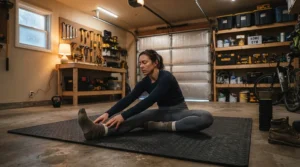
Garage dust is a cocktail: concrete powder from the floor, chalk from your hands, pollen from the open door, and maybe sawdust if the space doubles as a workshop. Each behaves differently, which is why the best air purifier for garage dust usually combines two strategies.
Fine particles under a couple of microns hang in the air for hours. That’s where True HEPA, rated to capture 99.97% of particles at 0.3 microns, earns its keep. Larger, heavier dust drops to surfaces faster, so a pre-filter and a ceiling unit like the WEN 3410 intercept it earlier.
Based on the spec comparison, a sensible air purifier for garage dust setup looks like this: run the unit during your workout and for 30 to 60 minutes afterward. Washable pre-filters on the Blueair Blue Pure 211+, Winix 5510, and Coway Airmega AP-1512HH Mighty are worth rinsing monthly in a chalky garage.
Sealing bare concrete also cuts the source. An air purifier for garage dust can’t keep up forever with a floor that sheds powder with every footstep. Switching to liquid chalk helps too, since the cloud of loose powder shrinks dramatically.
Garage Air Purifier Under $150: What You Can Actually Expect
A garage air purifier under $150 is realistic, but it comes with a coverage asterisk. Here’s the honest math.
A one-car garage often runs roughly 240-300 sq ft. At the 65-per-100 rule, that wants about 155-195 CADR. The Levoit Core 300, at around 141 smoke CADR, covers roughly 217 sq ft on that math, so it handles a gym zone better than a whole garage. That’s fine if your rack, platform, and bench sit in one corner.
The WEN 3410 can hover near the $150 line depending on retailer and promotions, and it moves far more air for the money. The tradeoff, again, is no HEPA and no carbon.
Two budget units can sometimes beat one mid-tier unit on airflow, but stacking them pushes you past a garage air purifier under $150 budget. Be wary of no-name units that advertise giant coverage numbers without independent verification. Look for AHAM-verified CADR or an ENERGY STAR listing instead.
A garage air purifier under $150 works best when you place it close to the action, run it on high during sessions, and set realistic expectations. It will clean your training zone, not sterilize the whole garage.
Home Gym Ventilation: Why a Purifier Isn’t the Whole Answer
Here’s the plot twist: a purifier doesn’t bring in a single breath of fresh air. It recirculates and filters what’s already in the room, which means it can’t lower carbon dioxide or remove carbon monoxide. That’s why home gym ventilation and filtration should work as a team.
Good home gym ventilation starts with basic airflow. Open the main door during sessions, run a fan to create a cross-breeze, and consider an exhaust fan if your garage is attached. EPA’s carbon monoxide guidance is blunt: don’t idle vehicles in the garage, and never run generators or gas-powered tools in enclosed or partly enclosed spaces. Put a carbon monoxide detector in the living space next to the garage.
Humidity belongs in the home gym ventilation conversation too. Sweat adds moisture, and damp garages invite mold. A hygrometer and, when needed, a dehumidifier keep conditions stable.
| Approach | Does Well | Falls Short | Best For |
|---|---|---|---|
| Open door plus box fan | Cheap fresh air, dilutes sweat | Weather, pollen, security | Mild-weather sessions |
| Exhaust fan to outdoors | Removes stale air and fumes | No particle filtering | Attached garages |
| Portable HEPA and carbon unit (e.g., Coway Airmega AP-1512HH Mighty, Honeywell HPA300) | Captures dust, pollen, some odor | No fresh air, no CO removal | Closed-door, allergy-prone gyms |
| Ceiling filter (WEN 3410) | Clears fine dust overhead | No odor control | Dusty or workshop gyms |
The pattern is clear: ventilation brings in fresh air, filtration cleans what’s already there. A Honeywell HPA300 with the door cracked beats either approach alone. For anyone with an attached garage, the exhaust fan is the quiet hero that purifiers can’t replace.
Sweat Odor: Why Your Garage Gym Smells and How Carbon Fixes It
Sweat itself is mostly odorless. The smell comes from bacteria breaking it down on towels, grips, benches, and mats, plus off-gassing from rubber flooring and plates. These are gases, and gases slip right through a HEPA filter. That’s why sweat odor control lives or dies on activated carbon.
Here’s the problem-to-solution path for sweat odor:
- Problem: lingering smell hours after a workout. Solution: run the purifier on high for 30-60 minutes post-session. A Winix 5510 or Austin Air HealthMate HM400 gives you the most carbon to work with.
- Problem: smell returns the next day. Solution: treat the source. Wash towels, wipe benches, and let mats dry fully, since sweat odor lives in damp materials.
- Problem: new rubber flooring stinks. Solution: ventilate heavily for the first weeks and run a carbon-heavy unit.
Thin carbon sheets, like on the Levoit Core 300, blunt mild sweat odor but saturate sooner. Skip air fresheners and ozone generators. They mask or add pollutants rather than removing them.
Dust and Allergens: Keeping the Air Breathable Between Sessions
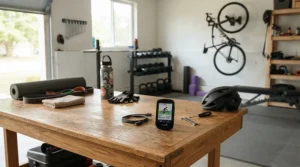
Dust and allergens in a garage include pollen, mold spores, pet dander, and fine dust that rides in every time the door opens. For allergy-prone lifters, the garage can quietly undo the benefits of a great workout.
True HEPA filtration is the main weapon against dust and allergens. Look for units like the Coway Airmega AP-1512HH Mighty, Honeywell HPA300, and Blueair Blue Pure 211+, which pair strong airflow with fine filtration. Reviewers consistently highlight the Coway Airmega AP-1512HH Mighty for allergy relief.
A few habits multiply the benefit:
- Run it on low continuously during pollen season. Slow, steady filtration beats sporadic bursts.
- Keep humidity moderate. Damp air feeds mold and dust mites.
- Wash pre-filters on schedule. A clogged pre-filter cuts airflow and strains the motor.
- Close the door during runs. An open door lets in as many dust and allergens as the purifier removes.
Dust and allergens settle on surfaces, so wiping equipment weekly keeps what the purifier catches from drifting back up.
Setup Guide: Placing and Running Your Air Purifier for Garage Gym Use
Even the best air purifier for garage gym use underperforms when it’s placed badly. Here’s a practical setup routine.
- Place it near the action, but not inside the chalk cloud. A few feet from your platform is ideal.
- Leave breathing room. Keep intakes clear of walls and stacked plates. Austin Air suggests several inches of clearance, and most units benefit from the same.
- Raise it if you can. A sturdy shelf or bench keeps it from sucking settled floor dust.
- Run it on high during workouts, then drop to low. This balances noise with cleaning.
- Close the garage door during runs. Otherwise it fights outdoor air nonstop.
- Log the filter dates. Write the install date on the filter or a calendar.
Common first-30-day mistakes: ignoring filter reminders, forgetting to wash the pre-filter, parking next to the chalk bucket, and expecting a purifier to fix a source problem like a leaky solvent can. With an air purifier for garage gym use, consistency beats intensity, so a unit running on low all week outperforms a unit blasted once a month.
Real-World Scenarios: Which Pick Fits Your Garage Gym?
These are hypothetical profiles to help you map specs to your own space.
If you’re a renter lifting four days a week in a 12-by-20 one-car garage on a tight budget, the Levoit Core 300 is the logical start. At around 240 sq ft, you’re slightly above its rated coverage, so place it near the platform, run it on high during sessions, and consider it a zone cleaner.
If you’re a family with allergies using a 20-by-22 two-car garage with 9-foot ceilings, training five days a week, you need serious airflow. The Blueair Blue Pure 211+ or Honeywell HPA300 are the realistic picks. Pair either with an open-door routine for fresh air.
If you’re a woodworker who also lifts in a shared shop, a few evenings a week, try the WEN 3410 overhead for fine dust, plus a carbon-equipped unit like the Winix 5510 for smell. Budget a bit more, but it covers both sources.
For anyone fighting chemical smells from paint cans or fresh flooring, the Austin Air HealthMate HM400 justifies its premium.
✨ Ready to Clean Up Your Garage Gym Air?
🔍 Take your training space to the next level with these carefully selected products. Click on any highlighted item to check current pricing and availability. Cleaner air means better sessions, so you can focus on the reps instead of the haze! 🏋️
Long-Term Cost & Safety: What an Air Purifier for Garage Gym Really Costs
Sticker price is only the first line of the invoice. Filters are the recurring bill.
Based on published reviews, a Coway Airmega AP-1512HH Mighty can run roughly $40-$50 a year in filters, while an Honeywell HPA300 may land around $50-$100 depending on how often you swap. The Blueair Blue Pure 211+ uses a main filter roughly every six months at about $60-$80, offset by its washable pre-filter. The Winix 5510 filter kit runs near $80. The Austin Air HealthMate HM400 front-loads cost, with a filter rated for up to five years. Electricity is usually a few dollars a month for most units.
Dusty gyms shorten filter life. Chalk and concrete dust clog pre-filters faster, so budget toward the higher end.
On safety, avoid ozone generators. If you shop in California or want a quick check, the California Air Resources Board’s list of certified air cleaning devices shows which models meet ozone limits. CARB notes that certification doesn’t measure effectiveness, so use it as a safety filter, not a performance guarantee. If a unit has an ionizer, like the Winix 5510, you can switch it off. And remember that no purifier replaces a carbon monoxide detector.
FAQ
❓ What size air purifier for garage gym spaces works in a two-car garage?
❓ Do air purifiers remove sweat odor from a garage gym?
❓ Is a garage air purifier under $150 worth it?
❓ Can an air purifier replace home gym ventilation?
❓ How often should I run an air purifier for garage dust?
Conclusion
Garage air is a three-front war: dust, smell, and stale air. No single product wins all of them, but the right match to your square footage gets you most of the way.
For a small corner and a small budget, the Levoit Core 300 is hard to beat. For fine dust, the WEN 3410 is a smart overhead add-on. The Coway Airmega AP-1512HH Mighty is the balanced mid-size workhorse, and the Winix 5510 leads on sweat odor in its price tier. For big spaces, the Honeywell HPA300 and Blueair Blue Pure 211+ deliver the airflow, and the Austin Air HealthMate HM400 is the premium answer to chemicals and stubborn smells.
Whichever you choose, treat the purifier as one piece of a system: good home gym ventilation, moderate humidity, clean towels, and a carbon monoxide detector. Size it to your room, feed it fresh filters, and your next set will be a lot easier to breathe through. 🏋️
✨ Don’t Wait Until the Dust Piles Up!
🔍 Compare your options, click any highlighted product to check current pricing and availability, and give your garage gym the clean air it deserves. These picks will help you create a space your whole family will want to train in!
Recommended for You
- Garage Air Purifier For Exhaust Fumes: 7 Best Picks (2026)
- Air Purifier For Garage Workshop Fumes: 7 Best Proven Picks (2026)
- Air Purifier For Shared Office: 7 Top Picks That Beat Fumes 2026
Disclaimer: This article contains affiliate links. As an Amazon Associate, I earn from qualifying purchases. If you purchase products through these links, we may earn a small commission at no additional cost to you.
✨ Found this helpful? Share it with your friends! 💬🤗
