
In This Article
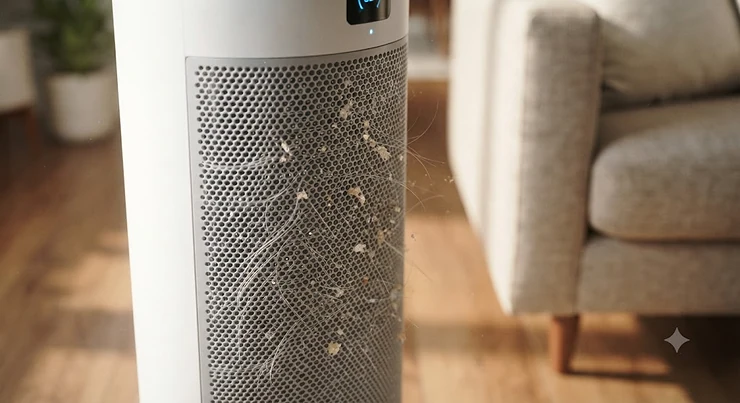
Here’s a smell test nobody signs up for: you walk back into your own living room after running errands, and for one honest second, before your nose adjusts, you catch it. Dog. Litter box. That warm, faintly sour cloud that clings to couch cushions like it pays rent. If you’ve ever caught a whiff of your own home through a stranger’s nose, you already know why so many pet owners go shopping for an air purifier for pet odor instead of just lighting another candle and hoping for the best.
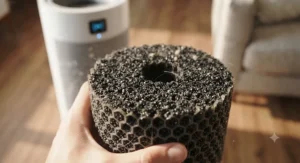
An air purifier for pet odor is a filtration appliance built to pull airborne odor compounds, dander, and pet hair particles out of a room’s air, typically pairing a HEPA filter for particles with an activated carbon layer for the gases that actually carry smell. Candles mask. Sprays mask. A properly sized purifier with real carbon depth actually removes the molecules doing the damage, which is a meaningfully different job. According to the EPA’s research on indoor air quality, concentrations of organic pollutants indoors regularly run several times higher than outdoor levels, and pet waste, saliva, and skin oils are steady contributors to that indoor load.
This guide skips the marketing fluff and gets into the specifics: seven real, currently available machines spanning budget to premium, what actually separates a purifier that eliminates pet smell from one that just moves it around the room, and how to match a unit to your actual house instead of the number on the box. Whether you’re chasing down a single stubborn litter box corner or trying to keep a two-dog household from smelling like, well, a two-dog household, there’s a configuration below that fits.
Quick Comparison Table: Air Purifiers for Pet Odor at a Glance
| Product | Best For | Room Coverage | Price Range |
|---|---|---|---|
| Levoit Core P350-P | Budget bedrooms & small spaces | Small-to-medium rooms | $100-$130 range |
| Coway Airmega AP-1512HH | Best all-around value | Up to 361 sq ft | $180-$230 range |
| Winix 5500-2 | Allergy-prone households | Medium rooms | $170-$220 range |
| Blueair Blue Pure 211i Max | Multi-pet living rooms | Up to 1,524 sq ft | $320-$400 range |
| Levoit EverestAir | Design-forward large rooms | Up to 600 sq ft (recommended) | $400-$500 range |
| Rabbit Air A3 | Quiet premium wall-mount | Up to 1,070 sq ft | $650-$750 range |
| Austin Air HealthMate | Strongest urine & litter odor | Up to 1,500 sq ft | $500-$650 range |
Looking at the spread above, there’s no single “best” unit — there’s a best unit for your square footage and your specific odor problem. Budget shoppers do fine with the Levoit Core P350-P or Coway Airmega AP-1512HH, but if litter box or wet-dog odor is the actual complaint (not just dander or allergies), the carbon mass on the Austin Air HealthMate puts it in a different category entirely. Multi-pet households spread across open floor plans should weight coverage more heavily than price, which is where the Blueair Blue Pure 211i Max and Levoit EverestAir earn their keep.
💬 Found a match already? Bookmark this page and keep scrolling — the full breakdown below explains exactly why each pick made the cut.
Top 7 Air Purifiers for Pet Odor: Expert Analysis
1. Levoit Core P350-P — best budget pick built specifically for pet odor
The Levoit Core P350-P was designed around pet households from the ground up, and it shows in the filter stack rather than the marketing copy. It runs a three-stage system — a washable pre-filter, a True HEPA layer, and an activated carbon filter using Levoit’s ARC Formula, which is engineered specifically to neutralize pet odor molecules rather than just trap larger particles.
In practice, that carbon layer is the whole story here. The HEPA stage handles dander and hair the way any decent HEPA filter would, but the ARC carbon is what keeps a litter box corner or a dog bed from broadcasting itself across a bedroom. Based on the spec comparison with other entry-level units, most budget purifiers under this price point skip a dedicated pet-carbon formulation entirely and rely on generic activated carbon, which saturates faster against ammonia-heavy odors like cat urine.
This is the right call for renters, dorm rooms, or anyone who wants odor control in one specific room — a bedroom with a cat tree, a home office where the dog naps — without spending premium money. Reviewers consistently note that the pre-filter clogs with hair faster than expected in multi-cat homes, which shortens the useful life of the more expensive HEPA and carbon layers underneath it if it’s not vacuumed weekly.
Pros:
- ✅ Purpose-built ARC carbon formula for pet odor specifically
- ✅ Compact footprint fits nightstands and small desks
- ✅ Quiet enough for bedroom use on lower speeds
Cons:
- ❌ Pre-filter needs frequent cleaning in multi-pet homes
- ❌ Undersized for open-concept living rooms
At around $100-$130, the Levoit Core P350-P is the strongest value pick for anyone treating one room rather than a whole house.
2. Coway Airmega AP-1512HH — most trusted all-around value pick
The Coway Airmega AP-1512HH has spent years as one of the most recommended mid-range purifiers on the market, and the reasoning holds up under scrutiny. It’s rated for spaces up to 361 square feet, runs a four-stage system — washable pre-filter, dedicated deodorization filter packed with granular activated carbon, True HEPA, and an optional ionizer — and posts CADR scores in the low-to-mid 200s across smoke, dust, and pollen.
What most buyers overlook about this model is that the deodorization filter is a separate component from the HEPA filter, not a thin carbon coating bonded to it. That separation matters for pet odor specifically: a standalone carbon filter has more surface area exposed to airflow, so it captures gas-phase odor molecules more effectively than the carbon-impregnated HEPA filters found in many competing budget units. The auto mode, which reads ambient air quality and adjusts fan speed automatically, means it doesn’t need to run at full blast around the clock to stay effective.
This is a strong fit for anyone who wants proven performance without paying for smart-home extras. Aggregated customer sentiment across major retailers consistently flags the compact 12-15 pound body and quiet operation as standout traits, though some multi-pet households report needing to replace the deodorization filter closer to every 4-6 months instead of the stated 6-month mark when odor load is heavy.
Pros:
- ✅ Dedicated standalone carbon filter, not just a coating
- ✅ Auto mode adjusts fan speed to real-time air quality
- ✅ Energy Star certified with low standby power draw
Cons:
- ❌ 361 sq ft rating is tight for open floor plans
- ❌ Carbon filter needs replacing faster with heavy odor load
At a $180-$230 range, the Coway Airmega AP-1512HH delivers some of the best dollar-for-performance value in this entire lineup.
3. Winix 5500-2 — best for allergy-prone pet owners
The Winix 5500-2 pairs a True HEPA filter rated to capture 99.99% of airborne allergens with a washable AOC (Advanced Odor Control) carbon filter, plus Winix’s PlasmaWave technology, which the company says helps break down odor and allergen particles at the molecular level without generating measurable ozone.
Here’s what the spec sheet won’t tell you outright: the washable carbon filter is the real differentiator against similarly priced competitors. Most sub-$200 purifiers use disposable carbon filters that need full replacement every few months. Winix’s design lets you rinse and reuse the carbon layer, which stretches the ongoing cost of ownership considerably lower than the sticker price suggests, provided you’re diligent about the maintenance schedule.
This unit tends to land best with households managing both pet dander allergies and general pet odor simultaneously, since the HEPA and carbon stages are both genuinely strong rather than one propping up the other. Reviewers consistently report noticeable improvement in sneezing and stuffiness within the first week of continuous use in homes with cats, though the PlasmaWave feature draws mixed reactions — some users leave it on permanently, others report a faint metallic smell on the highest setting and switch it off.
Pros:
- ✅ Washable AOC carbon filter cuts long-term filter costs
- ✅ Strong dual approach to allergens and odor together
- ✅ PlasmaWave option adds extra odor-molecule breakdown
Cons:
- ❌ Some users report a faint smell from PlasmaWave on high
- ❌ Bulkier housing than similarly priced competitors
Priced in the $170-$220 range, the Winix 5500-2 is the pick for pet owners fighting allergies and odor as a combined problem.
4. Blueair Blue Pure 211i Max — best for large rooms and multiple pets
The Blueair Blue Pure 211i Max uses Blueair’s HEPASilent technology, which combines electrostatic charging with mechanical filtration to capture particles down to 0.1 microns while running quieter and with less airflow resistance than a standard dense HEPA filter alone. It’s rated to refresh air in spaces up to 1,524 square feet in half an hour, with Blueair recommending an ideal room size around 674 square feet for continuous performance at the AHAM-standard four air changes per hour.
The honest analytical takeaway here is that this unit trades raw carbon mass for sheer volume of clean air moved. The washable pre-filter — available in several colors and fabrics — captures pet hair and large debris before it ever reaches the HEPASilent core, which meaningfully extends the life of the more expensive interior filtration. For light-to-moderate household odors from cooking, smoking, or general pet presence, that combination works well. For a concentrated litter box smell in a small room, though, a dedicated heavy-carbon unit will outperform it.
This is the strongest option for anyone with an open-concept living space and more than one pet, where dander and hair volume matter as much as odor concentration. Reviewers consistently praise the whisper-quiet operation on medium settings and the WiFi app’s filter-life tracking, while a recurring complaint is that the app-first control scheme feels unnecessary for people who just want physical buttons.
Pros:
- ✅ Covers large, open floor plans other units can’t touch
- ✅ HEPASilent tech stays quiet even at higher fan speeds
- ✅ Washable, swappable pre-filters in multiple colors
Cons:
- ❌ Carbon layer is lighter than dedicated odor-focused rivals
- ❌ WiFi/app setup is a hassle for some households
At around $320-$400, the Blueair Blue Pure 211i Max is built for volume — big rooms, multiple pets, and steady background odor control.
5. Levoit EverestAir — most design-forward pick for large living rooms
The Levoit EverestAir is the model that made Levoit’s premium tier feel legitimate, pairing a genuinely high CADR — reviewers commonly measure it around 360 CFM — with a three-stage filtration system that specifically targets odors, fumes, smoke, and VOCs in its carbon stage, not just particulates. Levoit recommends it for rooms up to roughly 550-600 square feet at a strong air-change rate, scaling up to much larger spaces at a slower single air change per hour.
What most buyers overlook about the EverestAir is the adjustable vent design on top of the unit, which lets you physically redirect airflow rather than relying on the fan alone to distribute clean air around a room. Paired with the three-channel laser dust sensor that reads PM1.0, PM2.5, and PM10 levels independently, the auto mode reacts to genuine air-quality changes — a dog shaking off dust after coming in from outside, for example — rather than running on a flat timer.
This unit earns its price with buyers who want a living-room centerpiece rather than an appliance to hide in a corner. Reviewers consistently describe the performance as outperforming its CADR number on paper, crediting the airflow design, though the tradeoff is a genuinely premium price and filter replacement costs that run higher than Levoit’s Core series.
Pros:
- ✅ Laser sensor reacts to real pollution events, not a timer
- ✅ Adjustable vents actually redirect airflow around a room
- ✅ Carbon stage specifically targets VOCs and fumes
Cons:
- ❌ Replacement filters cost more than Levoit’s Core line
- ❌ Premium price relative to raw CADR-per-dollar
In the $400-$500 range, the Levoit EverestAir suits pet owners who want strong performance without sacrificing how the living room looks.
6. Rabbit Air A3 — best premium wall-mount pick with a dedicated pet filter
The Rabbit Air A3 takes a genuinely different approach: a six-stage filtration system built around a customizable specialty filter, where buyers choose between Pet Allergy, Odor Remover, Germ Defense, or Toxin Absorber cartridges depending on their household’s specific problem. Every configuration still includes BioGS HEPA filtration rated to capture 99.97% of particles down to 0.3 microns plus an activated charcoal layer, and the unit covers up to 1,070 square feet.
Here’s what the spec sheet doesn’t emphasize: the wall-mount design isn’t just a space-saving gimmick, it changes where the intake sits relative to where pet odor actually concentrates. Mounted up and out of the way, the A3 pulls air from across a whole room rather than just what settles near floor level, and it’s specifically marketed as safe from curious pets and toddlers who might otherwise knock over a floor unit. The Odor Remover filter variant is purpose-built to trap odors from pets, cooking, and mildew rather than treating them as a byproduct of particle filtration.
This is the pick for households that have already tried cheaper units and been disappointed, or anyone who wants near-silent operation in a shared living space with a newborn or a family member with severe pet allergies. Reviewers consistently highlight how quiet it runs even at higher speeds, and the five-year warranty signals real confidence from the manufacturer, though the customized filter packs add an ongoing cost most competitors don’t have.
Pros:
- ✅ Swappable specialty filters target your exact odor problem
- ✅ Wall mounting improves airflow capture across the room
- ✅ Near-silent operation even at higher fan speeds
Cons:
- ❌ Specialty filter packs add to long-term running costs
- ❌ Among the priciest units in this entire roundup
At $650-$750, the Rabbit Air A3 is a serious investment aimed at buyers who want the problem solved once, correctly.
7. Austin Air HealthMate — best for the strongest urine and litter box odors
The Austin Air HealthMate is the outlier on this list, and deliberately so. Instead of chasing smart features or app connectivity, it leans entirely into brute-force filtration: roughly 15 pounds of activated carbon and zeolite blend, combined with 60 square feet of medical-grade True HEPA filtration rated at 99.97% efficiency down to 0.3 microns, all housed in a solid steel cylinder rated to cover spaces up to 1,500 square feet.
The math here matters more than it sounds. Most purifiers on this list carry carbon filters measured in ounces or a couple of pounds; the HealthMate carries fifteen. Based on the spec comparison, that’s roughly an order of magnitude more adsorption surface area dedicated purely to gas-phase odor molecules — which explains why it’s consistently the unit reviewers point to for genuinely stubborn problems like litter box ammonia or a dog that’s had one too many accidents on the carpet. Austin Air also rates the filter to last up to five years under normal use, a dramatically longer cycle than the 6-to-12-month replacement window typical of lighter carbon filters.
This is not the purifier for a small bedroom or a design-conscious living room — it’s heavier, louder on high, and visually utilitarian. It’s the purifier for the specific household that has tried lighter units and still smells the problem. Reviewers consistently describe it as the only unit in their testing that genuinely eliminated litter box odor rather than reducing it, which lines up with the sheer carbon volume involved.
Pros:
- ✅ Roughly 15 lbs of carbon dwarfs typical purifier filters
- ✅ Filter rated to last up to five years before replacement
- ✅ Covers large spaces at serious CFM airflow
Cons:
- ❌ Heavier, louder, and less design-forward than rivals
- ❌ Overkill for small rooms or light odor situations
At $500-$650, the Austin Air HealthMate is the specialist’s choice for households where “pet odor” means something genuinely stubborn.
Practical Usage Guide: Getting the Most From Your Air Purifier for Pet Odor
Buying the right machine solves maybe sixty percent of the odor problem. The rest comes down to setup and habits most listings never mention. Placement is the first mistake people make — tucking a purifier in a corner behind furniture chokes its intake and can cut effective performance noticeably, even on a unit as powerful as the Austin Air HealthMate. Aim for open floor space, ideally a few feet from walls, and as close as reasonably possible to where odor concentrates: near the litter box, the dog bed, or the couch corner that’s clearly claimed territory.
Fan speed matters more than most owners assume. Running a purifier like the Coway Airmega AP-1512HH or Levoit Core P350-P on its lowest “quiet” setting around the clock feels considerate, but it also means less total air volume passing through the carbon layer per hour — which is precisely the layer doing the odor work. A better pattern for the first 30 days in a new pet household is running on medium-to-high during waking hours, then dropping to a sleep setting overnight once the baseline odor has visibly (or rather, smellably) dropped.
Carbon saturation is the quiet failure mode nobody warns you about. Activated carbon works through adsorption — odor molecules physically bind to the material’s internal surface, and once every available site is occupied, the filter simply stops helping, even though it looks fine. Recent materials research on activated carbon’s odor-removal performance confirms that adsorption capacity is finite and gradually declines with saturation, which is exactly why a filter that smelled “fixed” for months can suddenly seem ineffective — it’s full, not broken. Set a literal calendar reminder for filter checks rather than trusting your nose, since scent fatigue means you’ll stop noticing gradual odor return long before guests do.
✨ Ready to stop guessing and start filtering? Check current availability on any of the seven picks above before your next filter change is overdue. 🐾
Real-World Scenarios: Which Air Purifier Fits Your Household
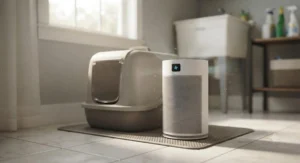
The apartment cat owner. One indoor cat, a studio or one-bedroom apartment, litter box tucked in a bathroom or closet corner. Budget matters, and so does noise, since the unit will likely run within earshot of the bed. The Levoit Core P350-P fits this profile almost perfectly — its ARC carbon formula is purpose-built for exactly this scale of odor, and the compact size doesn’t dominate a small space.
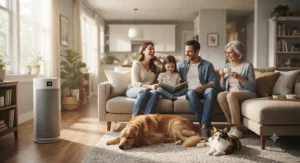
The two-dog family in an open-concept home. Shedding breeds, high foot traffic, and a living room that flows straight into the kitchen and dining area with no doors to contain odor to one zone. Coverage matters more than concentrated carbon power here, since the problem is volume and distribution rather than one intense odor source. The Blueair Blue Pure 211i Max or Levoit EverestAir both make sense, depending on whether design aesthetics or raw square footage coverage matters more to the buyer.
The multi-pet household with a persistent litter box problem. Three cats, a older dog with occasional accidents, and a specific corner of the house that guests notice within minutes of walking in. This is squarely where lighter-carbon units fall short, no matter how good their HEPA performance is on paper. Based on the spec comparison across this entire lineup, only the Austin Air HealthMate carries enough carbon mass to genuinely resolve concentrated ammonia odor rather than just diluting it, making it worth the higher price and larger footprint for this specific situation.
Problem → Solution Guide for Pet Odor Air Purifiers
Problem: The purifier runs constantly, but the smell always seems to come back by evening. This usually points to undersized coverage relative to the room, not a failed unit — check the manufacturer’s square footage rating against your actual room and consider sizing up, or supplementing with a second unit for open floor plans.
Problem: Odor control was great for the first month, then quietly faded. This is carbon saturation, described above. Replace the carbon filter on schedule rather than waiting for a smell to return, since adsorption capacity declines gradually and invisibly before it fails completely.
Problem: The purifier handles everyday pet smell fine but can’t touch a specific urine accident. Air purifiers filter airborne odor molecules; they do very little for odor trapped in porous surfaces like carpet fibers or upholstery padding, which keep releasing odor at the source. That’s a job for a targeted enzymatic cleaner first, with the purifier handling the ambient air afterward — more on that distinction below.
Problem: Pet hair keeps clogging the pre-filter faster than expected. Multi-pet or high-shedding households should plan to vacuum or rinse washable pre-filters weekly rather than monthly, since a clogged pre-filter throttles airflow to every downstream filtration stage, carbon included.
Problem: The room still smells “stuffy” even though visible odor seems reduced. This is frequently a ventilation issue rather than a filtration one — cracking a window periodically, even briefly, helps exchange stale indoor air in a way no purifier alone fully replicates.
Buyer’s Decision Framework
If your household has one pet and one room to treat, choose a compact carbon-forward unit like the Levoit Core P350-P, because concentrated small-space odor doesn’t need whole-home CFM power. If you’re dealing with an open floor plan and multiple pets but only moderate odor intensity, choose a high-coverage unit like the Blueair Blue Pure 211i Max, because volume of clean air matters more than raw carbon mass in that scenario. If litter box or urine odor specifically is the complaint — not general “pet smell” but a genuinely identifiable problem spot — choose the heaviest carbon option available, which today means the Austin Air HealthMate, because lighter carbon filters simply saturate too fast against ammonia-heavy sources. And if design, quiet operation, and customization matter as much as raw performance, the Rabbit Air A3‘s swappable specialty filters let you dial in exactly the problem you’re solving for.
What Is an Air Purifier for Pet Odor?
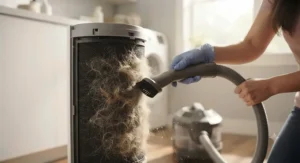
An air purifier for pet odor is a home appliance that pulls room air through a series of filters — typically a pre-filter for hair, a HEPA filter for dander and dust, and an activated carbon filter for odor-causing gases — before releasing cleaner, less odorous air back into the room. The carbon stage is what actually targets smell, since HEPA filters alone are engineered to capture particles, not the gaseous compounds that carry odor to your nose.
How to Choose an Air Purifier for Pet Odor
- Measure your room first, then shop. Manufacturer coverage ratings assume an empty box of a room; furniture, open doorways, and vaulted ceilings all reduce real-world performance, so size up rather than down when in doubt.
- Prioritize carbon weight over marketing language. “Activated carbon filter” appears on nearly every purifier’s box; the actual mass and thickness of that carbon layer is what determines real odor performance, and it’s rarely printed prominently.
- Match the unit to your specific odor source. Ambient pet presence, dander, and litter box ammonia are different problems that respond differently to filtration — a unit tuned for allergens isn’t automatically tuned for odor.
- Factor in ongoing filter costs, not just sticker price. A cheaper unit with frequent, expensive filter replacements can cost more over two years than a pricier unit with a five-year filter life.
- Consider noise tolerance for the room it’s going in. A purifier that’s too loud to run on high gets left on low, which quietly undermines its actual filtration volume.
- Check for a dedicated pre-filter. In pet households, a washable pre-filter that catches hair before it reaches HEPA and carbon stages meaningfully extends the life of the more expensive filtration underneath it.
- Decide whether smart features actually matter to you. App control and auto-sensing are genuinely useful for hands-off operation, but they add cost that’s better spent on carbon mass if odor control is the primary goal.
Air Purifier vs Enzymatic Cleaner for Pet Odor
This comparison trips up more pet owners than any other, because the two tools solve genuinely different problems that happen to produce the same symptom. An air purifier treats airborne odor — the molecules currently floating through the room you’re standing in. An enzymatic cleaner treats odor at its physical source, using targeted enzymes to break down the organic compounds in urine, feces, or vomit that have soaked into carpet fibers, grout, or upholstery padding. According to veterinary sourcing summarized by Rover’s interview with a Cornell University veterinarian, enzymatic cleaners work by using non-pathogenic bacteria to produce enzymes that break organic waste down into smaller, odorless components — a chemical process, not a filtration one.
| Approach | What It Actually Does | Best Used For |
|---|---|---|
| Air Purifier | Filters airborne odor molecules and particles in real time | Ongoing ambient odor, dander, general pet presence |
| Enzymatic Cleaner | Chemically breaks down organic residue soaked into surfaces | Urine accidents, stains, source-point odor in carpet/upholstery |
| Combined Use | Cleaner removes the source, purifier manages the air afterward | Households with both accident history and general pet odor |
The analysis here is straightforward: these tools aren’t competitors, they’re teammates with different jobs. A purifier running 24/7 next to an unresolved urine stain in the carpet padding will keep smelling that stain indefinitely, because the odor keeps regenerating faster than airborne filtration can keep up. Treat the surface first with an enzymatic product, then let the purifier — whether that’s the Levoit Core P350-P for a small room or the Austin Air HealthMate for something more stubborn — handle what’s left in the air.
Activated Carbon and Pet Odor: What Carbon Filter Thickness Actually Means
“Activated carbon filter” is one of the most overused phrases in this entire product category, and it hides a meaningful range of actual performance. The science behind it is adsorption, not absorption: odor molecules physically stick to the enormous internal surface area inside each carbon granule, which according to research on activated carbon’s odor-capturing mechanism can reach 500 to over 1,500 square meters of internal surface per single gram of material. That surface area is where the actual odor removal happens — everything else is just packaging.
This is why carbon filter thickness matters so much more than the presence of carbon alone. A thin carbon-impregnated HEPA filter — common on cheaper purifiers — offers a fraction of the adsorption surface of a standalone carbon cartridge, let alone the roughly 15 pounds of carbon and zeolite packed into the Austin Air HealthMate. Thicker, denser carbon beds have more total binding sites, which means they take longer to saturate against a steady source like a litter box, and they perform better against stubborn, higher-concentration VOC compounds like the ammonia and sulfur compounds that dominate pet waste odor specifically.
Pet odor VOC compounds aren’t a single chemical — they’re a mixed bag that includes ammonia from urine breakdown, sulfur compounds from waste and certain diets, and various organic compounds released from skin oils and saliva. Different carbon blends handle these differently; some manufacturers, including Austin Air, add zeolite specifically because it broadens the range of chemicals the filter can bond to beyond what carbon alone captures efficiently. What most buyers overlook when comparing specs sheet to spec sheet is that “activated carbon air purifier for pet odor” claims mean very little without knowing the actual weight and thickness of that carbon layer.
Common Mistakes When Buying an Air Purifier for Pet Odor
The single most common mistake is sizing a unit to the room’s square footage without accounting for ceiling height or open floor plans, which quietly cuts real-world performance well below the rated number. A close second is judging odor performance purely by HEPA particle efficiency percentages — a 99.99% HEPA rating says nothing about carbon depth, and odor is a gas-phase problem HEPA filters aren’t designed to solve at all. Buyers also frequently underestimate ongoing filter costs, choosing the cheapest unit up front and then paying more over two years in frequent replacement filters than a pricier, longer-lasting unit would have cost outright. Finally, plenty of pet owners run their purifier constantly on the lowest, quietest setting to save on noise or energy, not realizing that lower fan speeds mean less total air volume passing through the carbon layer per hour — precisely the opposite of what a stubborn odor problem needs.
Long-Term Cost & Maintenance
Sticker price is only half the real cost of ownership, and pet households in particular should weight filter replacement cycles heavily in their decision. A unit like the Winix 5500-2, with its washable AOC carbon filter, can meaningfully undercut its own competitors on multi-year cost despite a similar upfront price, simply because the carbon layer doesn’t need full replacement as often. On the other end, the Austin Air HealthMate‘s filter is rated for up to five years under normal use — a single filter cycle that can outlast three or four replacement cycles on a lighter-carbon competitor, even though the unit itself costs more at checkout.
| Product | Typical Filter Cycle | Ongoing Cost Pattern |
|---|---|---|
| Levoit Core P350-P | Every 6-8 months | Low upfront, moderate ongoing |
| Coway Airmega AP-1512HH | Carbon ~6 months, HEPA ~12 months | Moderate, faster with heavy odor load |
| Winix 5500-2 | Washable carbon, HEPA ~12 months | Lower long-term due to washable carbon |
| Austin Air HealthMate | Up to 5 years | High upfront, very low ongoing |
The analysis here favors a longer view than most shoppers naturally take. A $130 purifier with $40 filters replaced three times a year works out to roughly $250 in year one alone, before electricity. A $600 unit with a five-year filter life can, over that same five-year window, actually undercut the cheaper option on total cost — while also delivering meaningfully stronger odor performance the entire time. Run the math against your actual household’s odor severity before assuming the lower sticker price is the better deal.
Frequently Asked Questions
❓ Do air purifiers actually get rid of pet smell, or just cover it up?
❓ How big of an air purifier do I need for pet odor in a small apartment?
❓ Can one air purifier handle a whole house with multiple pets?
❓ How often do I need to replace the carbon filter in a pet odor air purifier?
❓ Is an air purifier or an enzymatic cleaner better for pet urine odor?
Conclusion
Pet odor is rarely one single problem — it’s dander plus hair plus airborne gases plus, sometimes, a stubborn accident that soaked into the carpet months ago and never quite left. That’s exactly why there isn’t one universal “best” air purifier for pet odor, only the best match for your specific room, your specific pets, and how stubborn your specific smell situation actually is. A single cat in a studio apartment and a three-dog household with an open floor plan are not the same shopping problem, even though both owners type the same search into Amazon.
Start with your square footage, be honest about how concentrated the odor actually is, and don’t be afraid to spend more upfront on carbon depth if litter box or urine odor is the real complaint rather than general pet presence. The Coway Airmega AP-1512HH remains one of the smartest all-around bets for typical households, the Levoit Core P350-P is hard to beat for single-room budget setups, and the Austin Air HealthMate exists specifically for the households that have already tried the lighter options and are still catching that smell at the door. Whichever you choose, pair it with good maintenance habits — clean pre-filters, timely carbon replacement, and an enzymatic cleaner on hand for actual accidents — and the difference should be noticeable within days, not months.
✨ Don’t Miss These Exclusive Deals!
🔍 Take your fight against pet odor to the next level with the picks covered above. Click through to check current pricing and availability before you commit. The right unit will help you create a genuinely fresher home your guests won’t even think to comment on! 🐶🐱
Recommended for You
- Air Purifier for Large Dogs: 7 Real Picks That Beat Shedding (2026)
- Air Purifier for Dog Allergies: 7 Real Picks That Help (2026)
- Air Purifier for Cat Hair and Dander Large Room: 7 Picks (2026)
Disclaimer: This article contains affiliate links. As an Amazon Associate, I earn from qualifying purchases. If you purchase products through these links, we may earn a small commission at no additional cost to you.
✨ Found this helpful? Share it with your friends! 💬🤗
