
In This Article
Airplane cabins. Hotel rooms with a mystery smell. A parked car that has been slow-cooking in the sun since noon. Away from home, you rarely get a say in the air you breathe, which is why the rechargeable portable air purifier has gone from gadget-drawer curiosity to carry-on staple. A rechargeable portable air purifier is a compact, battery-fed air cleaner that follows you from desk to nightstand to cup holder without hunting for an outlet, and in 2026 the category has some genuinely interesting options.
Let’s be clear about what these little machines are, though. A battery powered portable air purifier is not a miniature whole-room unit, because physics doesn’t shrink that politely. EPA’s consumer guide to air cleaners makes the same broad point: portable cleaners can reduce indoor particle levels, but they can’t remove every pollutant, so they work best alongside source control and fresh-air ventilation. What the compact models do well is clean the bubble of air nearest your face. A few larger ones can even take on a small bedroom.
This guide covers seven real models across budget, mid-range and premium territory. It weighs them on the things that decide whether you’ll actually use one: battery life, cordless convenience, multi-room use, and how well a single portable air purifier for travel and home can do both jobs.
One transparency note before we start. Everything below comes from manufacturer specs, retailer listings, editorial roundups and aggregated review themes, not personal hands-on testing. Every price is an approximate range, so check the current price before you buy.
Quick Comparison: 7 Rechargeable Portable Air Purifiers at a Glance
| Product | Battery Life | Coverage | Filtration | Best For |
|---|---|---|---|---|
| PureZone Mini | Up to 12 hrs (maker claim) | ~6 sq ft personal zone | Carbon pre-filter + True HEPA | Flyers, desks, cars |
| ConairPure Portable | Up to 22 hrs (listing claim) | ~15 sq ft | HEPA-grade filter | Dorms, small bedrooms |
| HoMedics Personal Air Purifier | Up to 8 hrs | Personal space | HEPA-type + carbon | Nightstands, aromatherapy fans |
| LG PuriCare Mini | Verify on listing | Compact / personal | Replaceable low-cost filter | Bedroom-to-car use |
| Westinghouse 1804 | Battery pack; verify runtime | Up to ~100 sq ft (maker claim) | HEPA + NCCO reactor | Desk-to-small-room hybrid |
| CleanAirKits Triple Exhalaron | Depends on your USB-C power bank | Reported CADR 131 cfm | Fan-driven filter | Road trips, larger spaces |
| AirTamer A320 | Long-running (verify on listing) | Breathing zone | Wearable, ion-type | Crowded commutes |
The table splits the field into three camps. The pocket-sized units (PureZone Mini, ConairPure Portable, HoMedics Personal Air Purifier) clean a personal bubble. The in-between pair (LG PuriCare Mini, Westinghouse 1804) aim a little higher. CleanAirKits Triple Exhalaron is the only one here with serious airflow, and AirTamer A320 is a different species entirely. Match the camp to your use case first, then shop on battery life.
💬 Just one click — help others make better buying decisions too!😊
Top 7 Rechargeable Portable Air Purifiers: Expert Analysis
1. Pure Enrichment PureZone Mini — pocket-sized HEPA for desks, cars and carry-ons
Weighing roughly 0.6 pounds and standing about 8.5 inches tall, PureZone Mini is the rare gadget you can forget is in your tote.
It pairs an activated-carbon pre-filter with a True HEPA layer rated to catch 99.97% of particles at 0.3 microns. It has three fan speeds and charges over USB for up to 12 hours of cordless running. In practice, one charge covers a cross-country flight plus a layover. The carbon layer takes a swipe at odors while HEPA handles the fine stuff. The maker says it cleans about 6 square feet in 12 minutes, which is a tray-table bubble, not a bedroom. Some retail listings print a 54-square-foot figure, but treat the smaller number as the realistic one.
Based on the spec comparison, this is a personal-zone cleaner for allergy-prone commuters and anyone wanting a small barrier at a desk or in a car cup holder. Expect it to scrub a living room and you’ll be disappointed. Many of the lukewarm reviews trace back to exactly that mismatch.
Reviewers consistently praise it for travel and car use, and describe the airflow as gentle and quiet. Common complaints include no auto shut-off timer, faster drain on high speed, and occasional reports of units giving out after about a year. Listing ratings hover around four stars or better.
Pros:
- ✅ Genuinely pocketable and under a pound
- ✅ True HEPA plus carbon pre-filter
- ✅ Up to 12 hours cordless on low
Cons:
- ❌ Covers a personal zone, not a room
- ❌ No shut-off timer; some durability reports
Price: roughly $45-$70. That’s fair value if you respect its personal-zone limits.
2. ConairPure Portable Rechargeable Air Purifier — up to 22 hours per charge
The headline here is endurance. Listings quote up to 22 hours from a slim, cordless body, the longest runtime among the compact units in this lineup.
Specs include HEPA-grade filtration, a rechargeable battery and claimed coverage of roughly 15 square feet. In practice, 22 hours means you could run ConairPure Portable on low through a couple of workdays without reaching for the charger. That matters more than raw airflow when the goal is a steady trickle of cleaner air at a dorm desk or bedside. The 15-square-foot figure points to a small bedroom corner or cubicle, not an open-plan space.
What the spec sheet won’t tell you is how much airflow you’re trading for that runtime. Long endurance usually means a modest fan. It suits light sleepers, students and office workers who want set-and-forget convenience. Several editorial roundups name it a top pick for personal spaces. I couldn’t verify a deep pool of owner reviews, though, so the praise here is editorial rather than crowd-sourced.
Pros:
- ✅ Up to 22 hours of cordless running
- ✅ Slim body slips into bags and drawers
- ✅ Fits dorms, bedrooms and small offices
Cons:
- ❌ Small coverage area of about 15 sq ft
- ❌ Thin owner-review evidence I could verify
Price: roughly $40-$70. That’s strong value for endurance seekers.
3. HoMedics Personal Air Purifier — carbon-layered comfort with an aromatherapy touch
The aromatherapy angle tells you who this is for: bedside users who care about ambience as much as particles.
It’s USB-rechargeable, uses a HEPA-type filter with activated carbon, and runs up to about 8 hours per charge. The carbon element is the practical bit, since it’s the layer that tackles odors, which a bare particle filter can’t. Eight hours covers a night’s sleep on low or a workday at a desk. It’s also the shortest battery life in this lineup, so plan to top it up daily.
One phrase deserves a raised eyebrow: “HEPA-type.” That wording isn’t the same as a tested True HEPA claim, and filter makers themselves advise verifying that a filter is actually certified. For allergy-sensitive buyers that distinction matters. For someone who mainly wants fresher-smelling air near the pillow, it matters less.
Editorial roundups praise HoMedics Personal Air Purifier for portability and its filter combination. I couldn’t verify a large body of owner reviews, so there’s little crowd data on long-term durability.
Pros:
- ✅ Carbon layer helps with everyday odors
- ✅ USB charging and easy portability
- ✅ Aromatherapy option for bedside use
Cons:
- ❌ HEPA-type isn’t the same as True HEPA
- ❌ Shortest battery life of the group
Price: roughly $35-$60. That’s decent value for odor and comfort, less so for allergen-critical buyers.
4. LG PuriCare Mini — big-brand design with cheap replacement filters
Reviewers keep mentioning how inexpensive the replacement filters are, a sneaky cost advantage for something you’ll run for years.
On Best Buy, LG PuriCare Mini averaged about 4.1 out of 5 across a modest pool of 38 reviews at the time of research. Feedback themes included air quality, noise, portability, battery life and filter availability. One reviewer described filters in the low-teens in dollars and liked moving the unit from bedroom to car to office. I couldn’t pin down verified runtime or coverage figures in my research, so confirm both on the current listing.
Filters quietly dominate the long-term cost of any air cleaner, so cheap, easy-to-find replacements are real value. The catch is lighting. A reviewer flagged the indicator light as bright, which matters if the bedroom is your use case. A small strip of tape fixes it, but it’s worth knowing before you buy.
Choose this if brand familiarity and easy refills outweigh bragging-rights specs.
Pros:
- ✅ Affordable replacement filters per reviewers
- ✅ Moves easily from bedroom to car to office
- ✅ Established brand with filter supply
Cons:
- ❌ Bright indicator light at night
- ❌ Small review pool; limited verified specs
Price: roughly $60-$100. Value is good if you plan to keep refreshing the filter.
5. Westinghouse 1804 — largest claimed coverage of the group
The maker claims coverage of up to 100 square feet, far beyond the pocket models.
It runs from a battery pack and combines a HEPA filter with an NCCO reactor. The package includes a wall adapter and a mounting strap, and filter access reportedly needs no tools. There are quirks, though. A hands-on review noted the lithium battery is hard-wired and not user-replaceable, requiring a triangle security bit to open. The charging port sits in a recessed spot on the bottom, awkward for a USB-powered device. One aggregated reviewer remarked that the handle makes it seem more portable than it really is.
Think of Westinghouse 1804 as a desk-to-small-room hybrid rather than a travel companion. The 100-square-foot figure is a manufacturer claim, and I couldn’t find a verified CADR behind it, so read it as small-room help rather than a guarantee. The sanitizing claims attached to the NCCO reactor are also the maker’s own, so treat the HEPA filter as the workhorse. A 2024 listing analysis counted a few hundred reviews, with sentiment suggesting it works well on a side table.
Pros:
- ✅ Larger claimed coverage than pocket models
- ✅ HEPA plus NCCO reactor
- ✅ Tool-free filter swaps
Cons:
- ❌ Hard-wired battery you can’t replace yourself
- ❌ Bulkier than the handle implies
Price: roughly $100-$150. It’s reasonable value as a small-room cleaner, weaker as a traveler.
6. CleanAirKits Triple Exhalaron — serious airflow for the road
A reported CADR of 131 cfm is a rare number in this category, where many tiny models don’t publish a CADR at all.
It’s a PC-fan-powered cleaner that runs from a USB-C power bank. In its testing roundup, HouseFresh judged it the one portable option running from a battery pack that produced enough clean air to be useful. The trade-off is that you bring your own bank. That flexibility cuts both ways: a bigger bank means longer runtime, but it’s one more thing to charge and carry. By the common rule of thumb that smoke CADR should be at least two-thirds of room square footage, 131 cfm points to roughly 190-200 square feet on paper.
This is for road-trippers, RV travelers, hotel-room dwellers and anyone who prefers muscle to elegance. CleanAirKits Triple Exhalaron is less gift-ready than mainstream models, so check the maker’s power-bank requirements first. The evidence behind it is expert testing rather than a mountain of owner reviews, and I couldn’t verify broad customer feedback.
Pros:
- ✅ Highest reported airflow in this lineup
- ✅ USB-C power bank flexibility
- ✅ Works in cars and bigger spaces
Cons:
- ❌ Battery not included; bank required
- ❌ Less plug-and-play polish
Price: roughly $100-$150 before a power bank; availability varies by retailer.
7. AirTamer A320 — wearable breathing-zone wildcard
This one hangs on you, so the cleaning follows your nose rather than your table.
It’s a USB-rechargeable wearable. Roundups credit it with independently verified virus reduction, citing a 99% cut in Influenza A, and give its sibling AirTamer A315 a 50-plus-hour battery and a roughly three-foot protection zone. Handle those claims with care, because they come from the maker and affiliate-style roundups rather than from neutral lab data I could verify. Wearables in this class typically rely on ionization instead of a filter that physically captures particles. That’s why checking ozone emissions matters, since EPA’s guidance warns about ozone-producing devices sold as air cleaners.
Hands-free convenience is the draw for crowded buses, planes and waiting rooms. AirTamer A320 makes sense as a supplement, not a replacement for a HEPA-based unit at your desk or bedside. I couldn’t verify a broad base of owner reviews, so the praise is mostly editorial.
Pros:
- ✅ Hands-free wearable design
- ✅ Long battery life per roundups
- ✅ Simple USB recharging
Cons:
- ❌ Ion-type tech, no filter capture
- ❌ Claims lean on maker and roundups
Price: roughly $80-$140. Value depends on whether you accept the evidence gap.
Price Range and Value: Who Gets the Most for the Money
| Product | Approx. Price Range | Value Verdict | Best For |
|---|---|---|---|
| PureZone Mini | $45-$70 | Strong if used within its personal zone | Frequent flyers |
| ConairPure Portable | $40-$70 | Excellent endurance per dollar | Students, bedside use |
| HoMedics Personal Air Purifier | $35-$60 | Good for odors and comfort | Aromatherapy fans |
| LG PuriCare Mini | $60-$100 | Cheap refills offset the sticker | Long-term owners |
| Westinghouse 1804 | $100-$150 | Fair for small-room help | Desk-to-room use |
| CleanAirKits Triple Exhalaron | $100-$150 + power bank | Most airflow per dollar | Road trips |
| AirTamer A320 | $80-$140 | Niche, claims need caution | Crowded commutes |
Prices are approximate research-time ranges and may vary, so check current price before buying. For raw value, ConairPure Portable and PureZone Mini are the safest bets, since each is cheap enough that being wrong costs little. CleanAirKits Triple Exhalaron costs more once you add a power bank, but it’s the only one here that credibly addresses a real room. AirTamer A320 is a lifestyle bet rather than a filtration bet.
✨ Don’t Miss These Exclusive Deals!
🔍 Take your clean-air routine to the next level with these carefully selected picks. Click on any highlighted item to check current pricing and availability. These compact cleaners will help you create fresher, easier-to-breathe spaces your whole family will appreciate!
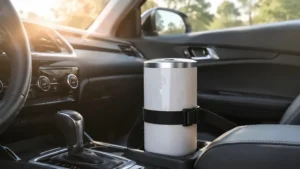
What Is a Rechargeable Portable Air Purifier?
A rechargeable portable air purifier is a compact air cleaner powered by a built-in lithium battery, or a USB power bank, instead of a wall outlet. It pulls air through a filter, usually HEPA and sometimes activated carbon, and pushes cleaner air back out, letting you use it anywhere.
The filter matters most. A HEPA filter is an efficiency standard for dense, pleated filters made from a mat of randomly arranged fibers. The most common U.S. benchmark is 99.97% capture of particles at 0.3 microns. Activated carbon is a separate layer for odors and some gases. A compact unit with only a carbon element, or a vague “HEPA-type” label, won’t give you the same particle capture as a certified True HEPA filter.
Think of the category as personal air hygiene rather than home infrastructure. The small units clean a tight zone, the larger ones stretch toward a room, and the wearables sit at the far end of “personal.”
How to Choose a Rechargeable Portable Air Purifier
- Decide the zone first. Desk, bedside, car or whole room? Personal-bubble units handle roughly 6-15 square feet, while a model like CleanAirKits Triple Exhalaron aims at a room.
- Check the filter claim. True HEPA is a tested standard. “HEPA-type” and “HEPA-like” are marketing labels, so read them skeptically if allergies are the goal.
- Look for a published CADR. Clean air delivery rate tells you how much clean air per minute a unit delivers. A common rule is smoke CADR at least two-thirds of your room’s square footage.
- Read the battery life figure carefully. Runtimes are usually quoted on the lowest fan speed, so expect less at high speed.
- Price the refills. Cheap filters (as with LG PuriCare Mini) beat a low sticker price over three years.
- Weigh noise and lights. A bright indicator ruins a bedroom; a loud fan ruins a library.
- Avoid ozone producers. Skip any device that intentionally generates ozone.
Battery Life: What the Hours Really Mean
Battery life is the number everyone shops by and few people interpret correctly. Take the 12 hours claimed for PureZone Mini: it’s a best-case figure on the lowest fan setting. Crank it to high and expect noticeably less. A Walmart reviews summary captures the pattern: a unit can last all day on gentle use but drain quickly under heavy use.
Here’s how the hours translate into real routines.
- Flight day: 8-12 hours covers most itineraries, so HoMedics Personal Air Purifier and PureZone Mini both work.
- Work week: 22 hours on ConairPure Portable stretches across two or three low-speed workdays.
- Road trip: a power-bank design like CleanAirKits Triple Exhalaron lets you swap or upsize the battery, so runtime becomes your choice.
Another reality check: lithium cells age. The battery in Westinghouse 1804 is hard-wired and not user-replaceable, so its effective lifespan is tied to the cell. Charging habits matter too. Topping up a little every night is easier on most lithium batteries than draining to zero repeatedly, though the manufacturer’s guidance should win any argument. Finally, remember that a longer battery life often signals a gentler fan, and gentler fans clean less air. Endurance and airflow are always in tension.
Cordless Convenience: Where It Helps and Where It Doesn’t
Cordless convenience is the real reason this category exists. No plug means you can put the cleaner exactly where the problem is: on the tray table, between you and the smoky campfire, next to the pillow, on the passenger seat. A cord forces compromise, and a battery removes it.
The convenience is genuine in four situations. In cars, outlets are scarce and cords are tangled. In travel, hotel outlets are always behind the bed. In rentals and dorms, you can’t rewire anything. And in small offices, you can park the unit at head height instead of floor level.
But cordless convenience has limits worth admitting. The battery is a consumable, charging is another chore, and the form factor caps fan size. If you’re cleaning one fixed room all year, a plug-in unit will usually deliver more airflow per dollar. Battery models earn their keep when mobility matters more than muscle. One reviewer of PureZone Mini wished for an auto shut-off timer to save battery, a small feature that shows how much power management matters when there’s no wall to lean on.
Multi-Room Use: Making One Purifier Work for the Whole Home
Multi-room use sounds like a win: buy one rechargeable portable air purifier, carry it from bedroom to home office to kitchen. It works, with a few rules.
First, match the unit to the room. ENERGY STAR’s room air cleaner guidance says to look for models delivering at least 4.8 air changes per hour for the recommended room size. A personal-zone unit like PureZone Mini will never hit that in a bedroom, whereas CleanAirKits Triple Exhalaron, with its reported 131 cfm CADR, plausibly could.
Second, follow the person, not the square footage. Run the purifier where you spend the most time: the bedroom overnight, the office by day. Move it with you rather than expecting it to clean the whole house.
Third, leave clearance. Air cleaners need a few feet of open space around the intake to work properly, so don’t tuck one behind a couch. And keep doors and windows in mind, because an open window dilutes any benefit.
A realistic multi-room routine looks like this: Westinghouse 1804 on the desk during work hours, then to the nightstand at bedtime. Mobile, yes, but it’s still one machine serving one space at a time.
Portable Air Purifier for Travel and Home: One Device, Two Lives
Can one device be a convincing portable air purifier for travel and home? Often yes, if you pick the right camp.
For travel, weight and runtime rule. PureZone Mini and ConairPure Portable are the obvious fits: light, slim, and long-lasting. Check your airline’s rules on lithium batteries before packing. Spare batteries and power banks generally must travel in the cabin, and capacity limits apply.
For home, coverage and refills rule. That’s where LG PuriCare Mini (cheap filters) and Westinghouse 1804 (larger claimed coverage) make sense as bedroom companions.
The compromise models are the interesting ones. ConairPure Portable does a respectable bedside job at home and weighs almost nothing in a carry-on. CleanAirKits Triple Exhalaron serves both a hotel room and a living room, but it asks you to carry a power bank.
If your travel is occasional and your home need is real, buy for home and accept that it won’t fly well. If you fly monthly, buy for the bag and accept a smaller footprint at home. And if you can afford two, a pocket unit plus a plug-in room cleaner is hard to beat.
Battery Powered Portable Air Purifier vs Plug-In Models
| Factor | Battery Powered Portable | Plug-In Room Purifier |
|---|---|---|
| Mobility | Excellent; moves anywhere | Limited by outlets |
| Coverage | Personal zone to small room | Small room to whole room |
| Airflow | Modest (rare exceptions) | Strong, sustained |
| Running cost | Charging plus filters | Electricity plus filters |
| Best For | Travel, cars, desks | Fixed living spaces |
The table makes the trade-off blunt. A plug-in model will out-clean any battery powered portable air purifier on sustained airflow, and it never needs charging. Battery models win on where they can go. If you’re picking one, ask whether the problem is a place or a person: places call for plug-ins, people call for batteries.
Features That Actually Matter (And Those That Don’t)
Matters: True HEPA filtration, a published CADR, honest battery life figures, affordable refills, and a design that doesn’t blind you in a dark bedroom.
Mostly marketing: “Sanitizing” claims, exotic reactor names, and big coverage numbers with no CADR behind them. The Westinghouse 1804 NCCO reactor is a good example. It’s the maker’s selling point, but HEPA does the verifiable work.
Nice but not essential: aromatherapy (HoMedics Personal Air Purifier), handles that double as stands (PureZone Mini), and touch controls. They’re pleasant, but none should outrank filter quality.
Quietly important: a timer, which several reviewers say they miss, and easy filter access. A cleaner that’s a hassle to maintain becomes a decorative paperweight within a season. The EPA’s advice to replace filters regularly and follow the manufacturer’s maintenance instructions is less glamorous than any spec, yet it’s what keeps these devices useful.
Common Mistakes When Buying a Rechargeable Portable Air Purifier
- Expecting room-scale results from a personal-scale unit. This is the biggest source of disappointment, and it’s baked into many unhappy reviews of tiny models.
- Trusting coverage numbers without a CADR. Look for the AHAM Verifide seal, which lists three CADR numbers for smoke, dust and pollen. AHAM explains how that seal works. Many compact models don’t carry it, so treat unverified coverage claims as marketing.
- Ignoring refill costs. The sticker price is just the entry fee.
- Forgetting the battery’s age. A non-replaceable cell, as in Westinghouse 1804, sets the product’s lifespan.
- Buying ion-based devices without checking ozone. If you’re considering AirTamer A320 or similar wearables, look for independent ozone-emission verification.
- Skipping the basics. No purifier replaces ventilation, source control and clean filters.
Practical Usage Guide: Setup and Your First 30 Days
A few habits turn a decent purchase into a good one.
Day one: charge fully before first use, remove all filter packaging (it happens more than you’d think), and confirm the filter is seated properly. Unsealed filters let dirty air bypass the filter entirely.
Placement: keep a few feet of open space around the intake. For a desk unit like PureZone Mini, position it a foot or two from your face, angled toward you. For a bedside model, put it at head height and away from the wall.
Fan speed: start on low. Battery life figures assume it, and quiet operation encourages daily use. Step up only when air quality demands it, such as smoke, cooking fumes or a dusty hotel room.
Charging rhythm: top up regularly rather than draining to empty. Don’t leave the unit in a hot car or freezing garage, since reviewers and manufacturers both caution against temperature extremes.
Maintenance schedule: check the filter monthly, replace per the manufacturer’s guidance, and wipe the housing. A dusty pre-filter chokes airflow.
Common first-30-days mistakes: running on high all day, covering the intake with a jacket, and forgetting to charge before a trip. Set a phone reminder for the first month; after that, it becomes automatic.
Real-World Scenarios: Matching Products to People
The college commuter. Budget under $75, a dorm room and a 25-minute train ride, used daily. ConairPure Portable fits: a 22-hour battery for a multi-day class schedule, slim enough for a backpack, and a coverage claim sized for a dorm corner. Skip anything needing a power bank.
The frequent business flyer. Budget around $100, weekly flights, hotel stays, minimal luggage. PureZone Mini is the safe bet for the tray table and nightstand. If crowded cabins bother them more than odors, AirTamer A320 is a supplementary hands-free option, with the caveat about evidence quality. This traveler should also read their airline’s lithium battery rules.
The allergy-sensitive remote worker. Budget $100-$150, a spare-room office around 150 square feet, daily use. CleanAirKits Triple Exhalaron is the strongest on paper thanks to its reported CADR, and a power bank gives flexible runtime. For something plug-and-play, Westinghouse 1804 is a sensible small-room alternative. This person should insist on True HEPA and skip any “HEPA-type” product like HoMedics Personal Air Purifier.
The light sleeper. A low-light, low-noise bedroom with nightly use. LG PuriCare Mini suits the cheap-refill logic, though its bright indicator light may need covering. The HoMedics Personal Air Purifier adds aromatherapy, which some sleepers will love and others will hate.
Safety Guide: Ozone, Ionizers and Lithium Batteries
Three safety points deserve a plain-language summary.
Ozone. Ozone is a lung irritant, and some devices sold as air cleaners produce it by design. EPA’s consumer guidance advises steering clear of ozone-generating products. Filter-based units like PureZone Mini don’t have this issue. Ion-based products need independent verification of low ozone emissions.
Lithium batteries. Treat them with respect: no extreme heat, no crushing, and follow the charger and cable guidance. For flights, check airline and aviation-authority rules on carry-on batteries and power banks before you travel. This matters especially if you use a power bank with CleanAirKits Triple Exhalaron.
Health claims. Portable cleaners can reduce particles, but they don’t treat asthma or allergies, and they can’t remove every pollutant. Use them alongside ventilation, source control and medical advice where relevant. Any “kills viruses” claim, including the ones around Westinghouse 1804‘s NCCO reactor and AirTamer A320, should be read as a manufacturer claim, not a medical guarantee.
FAQ
❓ Can a battery powered portable air purifier clean a whole bedroom?
❓ Can I take a rechargeable portable air purifier on a plane?
❓ How often should I replace the filter?
❓ Is a rechargeable portable air purifier worth it for allergies?
❓ Can I charge a portable air purifier with a power bank?
Conclusion
The best rechargeable portable air purifier is the one matched to your real use, not the one with the biggest claim on the box. For most travelers, PureZone Mini is the sensible all-rounder, with True HEPA, a 12-hour battery claim and a pocketable body. For endurance on a budget, ConairPure Portable is hard to beat. If you want actual room-scale airflow and don’t mind supplying a power bank, CleanAirKits Triple Exhalaron is the performance pick. LG PuriCare Mini and Westinghouse 1804 fill the practical middle, and HoMedics Personal Air Purifier and AirTamer A320 serve comfort-focused and wearable niches, with the caveats noted above.
Remember the three themes that decide satisfaction: battery life that matches your day, cordless convenience that actually changes where you can use it, and honest expectations about multi-room use. A battery powered portable air purifier is a personal tool first and a home appliance second. Buy it that way, keep the filters fresh, and it will earn its place in your bag.
Recommended for You
- Portable Air Purifier For Desk: 7 Best Picks For 2026
- Portable Air Purifier For Dorm Room: 7 Smart Picks For 2026
- HEPA Car Air Purifier For Asthma: 7 Safest Picks 2026
Disclaimer: This article contains affiliate links. As an Amazon Associate, I earn from qualifying purchases. If you purchase products through these links, we may earn a small commission at no additional cost to you.
✨ Found this helpful? Share it with your friends! 💬🤗
