
In This Article
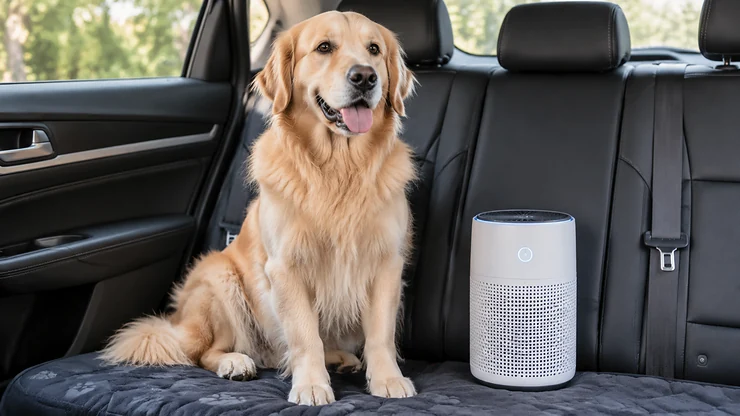
You step into your car, turn the key, and settle into what feels like a private bubble. For someone with asthma, that bubble can be a small, poorly ventilated chamber that sits inches from other vehicles’ exhaust. Rush-hour traffic, pollen drifting through the vents, old cigarette residue baked into the seats: they all end up in the air you’re breathing. A HEPA car air purifier for asthma is one of the few accessories that tackles that problem directly, and the right one can change how a drive feels.
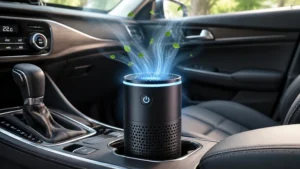
So what exactly are we talking about? A HEPA car air purifier for asthma is a compact, car-friendly air cleaner that forces cabin air through a High-Efficiency Particulate Air filter. A true HEPA filter is rated to trap 99.97% of particles at 0.3 microns, which includes pollen, dust, pet dander, and much of the fine soot from traffic. It targets common asthma triggers without adding ozone to the air.
Here’s the honest framing before we dive in. No purifier cures asthma or replaces your rescue inhaler and your doctor’s plan. Public-health researchers at the National Institute of Environmental Health Sciences have documented how traffic-related pollution can make people with asthma sicker, and reducing exposure is a sensible layer of protection. Below, I’ve compared seven real units using their published specs and aggregated review themes, so you can pick the one that fits your car, your budget, and your lungs.
Quick Comparison Table: 7 HEPA Car Air Purifier for Asthma Options at a Glance
Price tiers below are approximate bands from research at the time of writing. Retail prices shift constantly, so check current price before buying.
| Product | Filter | Power | Noise (claimed/reported) | Price tier | Best For |
|---|---|---|---|---|---|
| IQAir Atem Car | HyperHEPA | 12V outlet | ~32 dB on high | Premium ($300-$450 range) | Severe asthma, high-pollution commutes |
| Luftrum C401A | H13 HEPA, 4-stage, PM2.5 sensor | 12V outlet | Described as near-silent | Mid-range | Hands-off, auto-adjusting use |
| Aucleia Portable Car Air Purifier | H13 HEPA | USB | ~22 dB | Budget to mid | Quiet cabins, versatile car/desk use |
| MOOKA M01 | H13 HEPA, 360° intake | USB-C | ~15 dB sleep mode | Budget (under $50) | Tight budgets, first-time buyers |
| AlienOne AP-C1-D | H13 True HEPA | 12V outlet | ~30 dB | Budget | Value-minded commuters |
| Pure Enrichment PureZone Mini | True HEPA + carbon pre-filter | Rechargeable | Not widely published | Budget to mid | Cordless use, passengers, travel |
| Scosche FrescheAIR Pro | True HEPA | Plug-in | ~30 dB (minimum) | Mid-range | Cup-holder convenience |
The IQAir Atem Car is the premium benchmark if your asthma is severe and your commute is dirty, while the MOOKA M01 and AlienOne AP-C1-D prove that genuine H13-grade filtration no longer demands a big spend. If you want automatic adjustment, the Luftrum C401A is the standout because its PM2.5 sensor does the thinking for you. Those who split time between car and desk will find the Aucleia Portable Car Air Purifier and Pure Enrichment PureZone Mini easy to move around.
💬 Just one click — help others make better buying decisions too!😊
Top 7 HEPA Car Air Purifier for Asthma Models: Expert Analysis
Every unit below gets the same treatment: what the specs mean in practice, who benefits, and what reviewers consistently say. Where real review data was thin, I’ve said so rather than papering over it.
1. IQAir Atem Car — deepest filtration in its class
The standout feature is IQAir’s HyperHEPA technology, which the manufacturer says captures particles down to 0.003 microns, far finer than the 0.3-micron standard for ordinary true HEPA. In practical terms, that reaches into the ultrafine particle range that tailpipes produce. One independent-style test roundup reported PM2.5 inside a sedan falling from 180 to 12 µg/m³ in about twelve minutes, though that comes from a single review site, so treat it as directional.
On paper, this is the unit for the driver whose asthma flares at the first whiff of diesel. Controls are manual only, with no app and no auto mode, so you set the fan speed yourself. Reviewers with asthma and COPD describe noticeable relief on drives, and that’s the pattern worth noting rather than any single comment.
Pros:
- ✅ Finest filtration claimed among car units
- ✅ Built by an established air-quality brand
- ✅ Quiet enough on high for conversation
Cons:
- ❌ Premium price compared with every rival here
- ❌ No auto mode or sensor feedback
Expect a premium price in the $300-$450 range at the time of research, though some listings vary wildly, so verify current price. Value verdict: worth it for severe or frequent symptoms, overkill for casual use.

2. Luftrum C401A — smart sensor that adjusts for you
The headline here is the built-in PM2.5 sensor with auto on/off. Instead of you remembering to crank the fan when traffic thickens, the unit reacts on its own. It pairs an H13 True HEPA stage with a four-stage design, and the maker claims 99.9% removal down to 0.1 microns, covering exhaust fumes, smoke, and bacteria.
That automation matters more than it sounds. Asthma drivers who forget, or who are distracted by a rough commute, get protection without thinking. The 12V plug means it draws power from the car and doesn’t rely on a battery you must remember to charge.
Review snippets that surfaced describe first impressions as positive and appreciate that it doesn’t occupy a cup holder, but long-term durability reports were limited in my research, so I can’t speak to year-two performance.
Pros:
- ✅ PM2.5 sensor with automatic operation
- ✅ H13 filtration with a four-stage design
- ✅ Leaves cup holders free
Cons:
- ❌ Limited long-term durability data found
- ❌ Sensor accuracy at this price is unverified
Priced in the mid-range bracket, so check current price. Value verdict: the best “set it and forget it” pick for drivers who want a HEPA car air purifier for asthma that manages itself.
3. Aucleia Portable Car Air Purifier — whisper-quiet and flexible
Quietness is its hook. The manufacturer lists roughly 22 dB, quieter than a library, which means you’ll hear the road and your podcast, not the fan. It uses an H13 HEPA filter claimed to capture 99.97% of allergens, smoke, and dander, and it runs on USB.
Here’s the asthma-specific catch worth noticing. This model also includes negative-ion and aromatherapy features. Ionizers can add trace ozone as a by-product, and fragrance itself is a recognized trigger for some people with asthma. If you buy this, keep the ionizer off and skip the scent pad.
Reviewers on multiple roundups favor it for allergy sufferers and small cabins. Its true strength is versatility: the same unit moves to a desk or bedside table.
Pros:
- ✅ Very low noise on the manufacturer’s rating
- ✅ H13 filtration suited to allergens and dander
- ✅ Doubles as a desk or travel unit
Cons:
- ❌ Ion and scent features may bother sensitive airways
- ❌ USB power limits airflow compared with 12V models
Sits in the budget-to-mid tier, so check current price. Value verdict: strong if you disable the extras.
4. MOOKA M01 — real H13 on a tight budget
The standout is the price-to-filter ratio. The MOOKA M01 delivers genuine H13 filtration, a 360-degree air intake, and USB-C power, with a sleep mode listed at about 15 dB. One review site priced it near $28, and even if that drifts, it’s reliably in the “under $50” territory.
What does a small footprint cost you? Airflow. A compact unit cleans the air near your seat quickly, but it can’t match a larger unit in a full SUV cabin. For a solo commuter in a sedan, that’s usually fine.
Reviews highlight value and quiet running, and several lists crown it the best budget HEPA pick. I’d note that the aromatherapy pad is optional, and for asthma, leaving it empty is the safer call.
Pros:
- ✅ H13 filtration at an entry-level price
- ✅ USB-C power fits modern cars
- ✅ Quiet sleep mode for night driving
Cons:
- ❌ Limited airflow for large cabins
- ❌ Filters add recurring cost
Budget tier, under $50. Value verdict: the easiest way to start without gambling much money.
5. AlienOne AP-C1-D — plug-in value for daily commutes
Here the draw is a 12V plug combined with H13 True HEPA, which means no charging and no USB cable snaking across the console. Reported noise sits around 30 dB, quiet enough for daily use.
For commuters, a hard-wired plug-in has a hidden perk: you set it once and it’s simply there every drive, which beats a battery unit you forget to charge. Reviewers repeatedly describe it as a solid, accessible choice, and it appears across several 2026 lists as a budget favorite.
I couldn’t verify detailed asthma-specific testimonials, so treat the claim of “relief” as unproven for this exact model. What you can say is that its filter grade fits the job description.
Pros:
- ✅ H13 True HEPA at a budget price
- ✅ 12V plug means no charging
- ✅ Reasonable noise level
Cons:
- ❌ Few asthma-specific reviews to lean on
- ❌ Basic controls with no sensor feedback
Budget tier. Value verdict: dependable value for daily drivers.
6. Pure Enrichment PureZone Mini — cordless and carry-anywhere
This one stands out for being cordless, with battery life listed at up to 12 hours and a weight under one pound. It combines a True HEPA filter with an activated carbon pre-filter, which helps with odors on top of particles.
Its coverage is described as very small, around 6 square feet, so it’s a personal purifier, not a cabin-filling system. That’s actually a smart match for a passenger with asthma, or for a driver who wants clean air aimed near the face. Place it close, on the dash or a seat-mounted spot, rather than the back seat.
Reviews praise portability and the travel-friendly design. The tradeoff is power: small fans can’t turn over a whole SUV’s air quickly.
Pros:
- ✅ Cordless, with long battery life
- ✅ HEPA plus carbon for odors
- ✅ Moves between car, office, and bedside
Cons:
- ❌ Tiny coverage area
- ❌ Battery needs regular recharging
Budget-to-mid tier, so check current price. Value verdict: best as a close-range personal unit.
7. Scosche FrescheAIR Pro — cup-holder convenience
The hook is the cup-holder form factor, which makes it one of the few true HEPA options that slots into a car with no installation. Spec listings show a minimum noise around 30 dB and true HEPA filtration.
Practically, that means you can pass it to a rear passenger or swap seats in seconds. Here’s the caveat reviewers raise: some users report reliability trouble with the power plug after extended use, which suggests checking the warranty and keeping the receipt.
Because the cup holder sits low and off to the side, airflow reaches your face less directly than a dash-mounted unit. Think of it as a good all-cabin supplement, not a precision tool.
Pros:
- ✅ True HEPA in a cup-holder format
- ✅ Easy to relocate between seats
- ✅ No installation required
Cons:
- ❌ Plug reliability complaints appear in reviews
- ❌ Low placement limits direct airflow
Mid-range tier, so check current price. Value verdict: convenient, but inspect the plug early.
Ready to breathe easier on every drive?
✨ Don’t Miss These Exclusive Deals!
🔍 Take your drive to the next level with these carefully selected products. Click on any highlighted item to check current pricing and availability. These units will help you create the clean, calm cabin air your whole family will love!
Asthma Triggers Inside Your Car: What You’re Actually Breathing
Knowing your asthma triggers is half the battle, and the car hides several of them. Public-health guidance lists tobacco smoke, outdoor air pollution, pollen, mold, and pet dander among the most common triggers, and a single vehicle can host nearly all of them at once.
Traffic exhaust is the loudest offender. Research funded by the EPA through the Atlanta Commuters Exposure Study specifically examined in-vehicle pollution among daily commuters, including adults with asthma. That alone tells you researchers consider the cabin a legitimate exposure zone.
Then come the quieter culprits. Pollen rides in on open windows. Mold can bloom on a damp evaporator or cabin filter. Pet dander clings to cloth seats long after the dog has left. Fragrance, whether from air fresheners or dangling trees, is a trigger for some people.
A HEPA car air purifier for asthma handles particles well, but it doesn’t remove gases like carbon monoxide. That’s why pairing it with smart habits, covered later, matters. Note your personal asthma triggers in a simple log for a week; patterns often appear fast.

Protecting Respiratory Health on Every Drive
Respiratory health isn’t only about the minutes you spend in the car. It’s cumulative. A forty-minute commute five days a week adds up to over 150 hours a year in a small pollution-prone space, and that’s where steady, low-level improvements pay off.
Think of cabin filtration as one layer in a stack. Your controller medication and action plan come first. Next come avoidance habits: recirculating air in traffic, timing trips outside rush hour, and checking air-quality forecasts. A purifier sits on top, quietly trimming the particle load.
What’s the realistic benefit? Based on how HEPA filtration works, a well-sized unit reduces the particles that irritate airways, which may reduce symptom days for some people. I can’t promise that outcome, and no purifier has been proven in a car-specific asthma trial that I could find. That’s an honest limit, and it’s why you should talk with your clinician about your own respiratory health plan, especially if you’re considering a purifier for a child.
If you notice wheezing that doesn’t improve, never lean on a gadget alone. Use your medication and seek care.
HEPA Car Air Purifier for Smokers: Taming Smoke Residue
If you’re shopping for a HEPA car air purifier for smokers, you’re fighting two enemies. The first is the smoke itself while the cigarette burns. The second is thirdhand smoke, the residue that settles into upholstery, headliners, and dashboards, and then re-enters the air.
Researchers at Lawrence Berkeley National Laboratory found that nicotine residue can react with indoor chemicals in a smoker’s car to form compounds of concern. As the Cancer Prevention & Treatment Fund notes, scientists don’t yet know exactly how much exposure is dangerous, but they agree it’s smart to reduce it.
Here’s the uncomfortable truth. A purifier helps clear airborne particles after smoking, yet it can’t scrub residue off fabrics. The most effective step for a household with asthma is not smoking in the car at all. If you do smoke, consider a unit with an activated carbon layer, such as the Pure Enrichment PureZone Mini or the Luftrum C401A, which pairs multi-stage filtration with its sensor.
Replace filters more often than the schedule suggests, since smoke clogs them fast. And wash seat covers regularly.
HEPA Car Air Purifier for Commuters: Built for Rush Hour
Choosing a HEPA car air purifier for commuters is really a question of how many minutes, and how dirty, your route is. Studies of in-vehicle exposure in Canadian cities found that commuters can be exposed to elevated traffic-related pollution simply because they sit so close to emissions.
A University of Surrey study across ten global cities reported that driving with windows open produced the highest in-car PM2.5 exposure, while using recirculation cut exposure by around 80% compared with open windows. That’s a free upgrade before you spend a cent.
For daily drivers, I’d prioritize three traits. First, automatic operation, which favors the Luftrum C401A. Second, a plug-in power source, which suits the AlienOne AP-C1-D and IQAir Atem Car. Third, low noise, since you’ll tolerate a quiet fan for years.
For short trips, a cordless Pure Enrichment PureZone Mini or an easy-to-move Aucleia Portable Car Air Purifier may be more practical. The longer and heavier your traffic, the more a stronger unit pays off.
How to Choose a HEPA Car Air Purifier for Asthma
Here’s a quick, snippet-friendly process for selecting the right unit.
- Confirm true HEPA or H13 grade. Avoid “HEPA-type” or “HEPA-like” wording, since it often means a lower standard. The label should say True HEPA or H13.
- Check ozone safety. Skip ionizer-only and ozone-producing devices. Look for CARB certification where applicable.
- Match airflow to your cabin. A compact sedan needs less than a three-row SUV, and small USB units have limited reach.
- Pick the right power source. A 12V plug is dependable for daily use, while USB-C or battery suits flexibility.
- Weigh noise levels. Anything near 15-30 dB is generally comfortable, and a loud fan will end up unplugged.
- Plan filter replacement. Look up filter price and availability before you buy, because a cheap unit with expensive filters is a trap.
- Consider sensors and automation. A PM2.5 sensor helps if you’d forget to adjust.
A good rule: when in doubt, favor filtration quality over extras. Fragrance pads, light shows, and ion modes add little for asthma and can actively irritate.
HEPA vs Ionizers, Ozone Generators, and Charcoal Bags
Not every “car air purifier” actually filters air. Ionizers charge particles so they stick to surfaces. Ozone generators intentionally create ozone. Charcoal bags passively absorb some odors. Only HEPA physically traps particles.
| Option | How It Works | Particle Removal | Asthma Safety | Best For |
|---|---|---|---|---|
| HEPA/H13 (e.g., IQAir Atem Car, MOOKA M01) | Physical filtration | High | Generally good | Asthma, allergies |
| Ionizer-only | Charges particles | Low to moderate | Possible ozone by-product | Odor mood, not asthma |
| Ozone generator | Creates ozone | None useful | Poor | Not for occupied cars |
| Charcoal bag | Passive odor absorption | Minimal | Safe but limited | Light odor control |
The table makes the gap obvious: only the HEPA row actually does the job that asthma demands. Ozone generators are the red flag, since regulators advise against them around people, and passive charcoal bags are a fine supplement but not a substitute. If you love a scent-free, low-effort car, a HEPA unit plus fresh recirculated air gives you the most reliable improvement.
Common Mistakes When Buying a HEPA Car Air Purifier for Asthma
Buyers repeat the same errors, and avoiding them saves money and symptoms.
Mistake one: trusting “HEPA-type.” That phrase is a marketing cousin of true HEPA, not a guarantee. Insist on True HEPA or H13.
Mistake two: buying for the ionizer. Ion modes are a bonus for some people and a bother for sensitive airways. Prioritize the filter and switch the extras off.
Mistake three: ignoring filter costs. A budget unit like the MOOKA M01 is cheap upfront, but you’ll replace filters on a schedule. Add that to your yearly cost.
Mistake four: placing it badly. A unit buried under the seat can’t help your face. Aim airflow toward the breathing zone.
Mistake five: expecting a cure. A purifier supports, but doesn’t replace, your treatment plan. Keep medications within reach.
Safety, Ozone, and Regulations: What Asthma Drivers Should Know
Ozone is the regulatory red line. The California Air Resources Board explains that some devices sold as “air purifiers” intentionally emit ozone, and it strongly advises against using them in spaces occupied by people. Its air cleaner consumer guidance also describes certification limits for ozone emission from electronic air cleaners.
Two nuances matter. First, CARB’s certification list covers indoor air cleaners, and it notes that certification doesn’t measure how well a device cleans the air. Second, mechanical filters, like pure HEPA designs, are listed as devices that don’t generate ozone or ions.
Practical takeaway: favor mechanical HEPA units, and if a model includes an ionizer, read the specs and turn it off. If you live in California, check that anything shipped to you carries the certification label. Elsewhere, the same logic still protects your lungs.
Long-Term Cost & Maintenance: Total Cost of Ownership
A purifier’s sticker price is only chapter one. Filters, power, and lifespan determine the real cost. Here’s a simplified view, with approximate bands.
| Product | Upfront Tier | Filter Upkeep | Long-Term Value | Best For |
|---|---|---|---|---|
| IQAir Atem Car | Premium | Higher | Strong for severe cases | Heavy symptoms |
| Luftrum C401A | Mid | Moderate | Good, sensor saves effort | Auto convenience |
| MOOKA M01 | Budget | Low to moderate | Good starter value | First-time buyers |
| AlienOne AP-C1-D | Budget | Low to moderate | Good daily value | Commuters |
Looking at the table, the premium IQAir Atem Car costs more upfront, but heavy daily users may spread that over years of drives, while the budget units trade a lower entry price for more frequent replacements. If your use is occasional, the MOOKA M01 or AlienOne AP-C1-D gives you the best cost-per-use.
Maintenance is simple. Replace filters per the manufacturer’s schedule, sooner in smoky or dusty conditions. Wipe the intake grille monthly, and vacuum the cabin so the filter isn’t doing double duty.
Practical Setup Guide: Your First 30 Days
Buying the right unit is half the job. Setting it up properly, and building small habits, is how you get a real benefit.
Week one: placement. Put the unit where air reaches your breathing zone, such as a dash mount or console, rather than the floor. Make sure the intake isn’t blocked by a jacket or bag.
Run it before you drive. Start it a few minutes before you set off, so the cabin is already cleaner when you get in. A 12V model like the AlienOne AP-C1-D makes this easy.
Use recirculation in traffic. The Surrey research on windows and recirculation suggests a simple switch can cut exposure dramatically, and it costs nothing.
Week two: clean up the cabin. Vacuum seats and mats, wipe the dash, and replace the cabin air filter if it’s old.
Week four: review. Check noise, comfort, and symptom notes. If you see no benefit, reconsider placement before the product.
Common first-month mistakes: forgetting to charge a cordless unit like the Pure Enrichment PureZone Mini, leaving fragrance pads in place, and ignoring the filter indicator.
Real-World Scenarios: Which Purifier Fits Which Driver?
Matching a unit to a driver is easier with a story. Here are three profiles.
The urban commuter with moderate asthma. She drives about 45 minutes each way in heavy city traffic, with symptoms flaring on bad-air days. A Luftrum C401A fits well because its sensor adapts as traffic thickens, and the 12V plug means no charging. Budget is mid-range.
The rideshare driver with allergies. He’s in the car 8-10 hours a day, so filter wear and reliability matter. The IQAir Atem Car suits that heavy use, and its premium cost is spread across thousands of hours.
The parent with a child who has asthma. The vehicle runs school pickups, so the unit travels often. A cordless Pure Enrichment PureZone Mini can sit near the child seat for focused airflow, while a MOOKA M01 gives a low-cost backup in the second family car.
In every case, the right choice depends on hours driven, cabin size, and how sensitive the person is. Notice that none of these scenarios depends on fancy extras.
Problem and Solution Guide: Fixing Common Cabin Air Problems
Even a good setup hits snags. Here are the usual ones, with practical fixes.
Problem: musty smell on startup. That’s a sign of moisture or mold in the system. Replace the cabin air filter, run the fan on dry mode, and consider professional evaporator cleaning.
Problem: purifier feels weak. A small USB unit like the Aucleia Portable Car Air Purifier has limited airflow. Move it closer to your face and choose the higher fan setting.
Problem: lingering smoke odor. Smoke clings to fabric. Wash covers, vacuum thoroughly, and use a carbon-equipped unit such as the Pure Enrichment PureZone Mini.
Problem: fan noise irritates you. Drop to a lower speed and confirm nothing is rattling. Quiet models like the MOOKA M01 help here.
Problem: power plug loose or cutting out. This is the complaint reviewers raise about the Scosche FrescheAIR Pro, so secure the cable and keep your warranty details handy.
Frequently Asked Questions
❓ Does a HEPA car air purifier for asthma actually help?
❓ Is an ionizer safe for asthma in a car?
❓ How often should I replace the filter in a car purifier?
❓ Can a car air purifier remove cigarette smell for good?
❓ What's the best place to put a purifier in my car?
Conclusion: Cleaner Drives Start With the Right Filter
Choosing a HEPA car air purifier for asthma comes down to a handful of honest questions. How severe are your symptoms, how long do you drive, and how much do you want automation? If the answer is “severe and daily,” the IQAir Atem Car is the deepest filter here. If you want smart, hands-off operation, the Luftrum C401A earns its mid-range slot. On a budget, the MOOKA M01 and AlienOne AP-C1-D deliver real H13 filtration without much outlay, while the Aucleia Portable Car Air Purifier, Pure Enrichment PureZone Mini, and Scosche FrescheAIR Pro fill the portable niches.
Pair whichever you choose with good habits: recirculate air in traffic, avoid fragrance and ozone-emitting gadgets, and replace filters on time. Whether you’re a smoker cleaning up a car, a commuter fighting rush hour, or a parent protecting little lungs, the best purifier is the one that fits how you actually drive.
✨ Ready to breathe easier?
🚗 Compare current prices on your favorites, pick the unit that fits your cabin, and give your lungs a fighting chance on every drive. Your next commute can be a lot kinder to your airways. 🌬️
Recommended for You
- HEPA Car Air Purifier For Pet Dander: 7 Proven Picks For 2026
- HEPA Car Air Purifier For Allergies: 7 Best Picks 2026
- Portable Car Air Purifier For Allergies: 7 Best Picks (2026)
Disclaimer: This article contains affiliate links. As an Amazon Associate, I earn from qualifying purchases. If you purchase products through these links, we may earn a small commission at no additional cost to you.
✨ Found this helpful? Share it with your friends! 💬🤗
