
In This Article
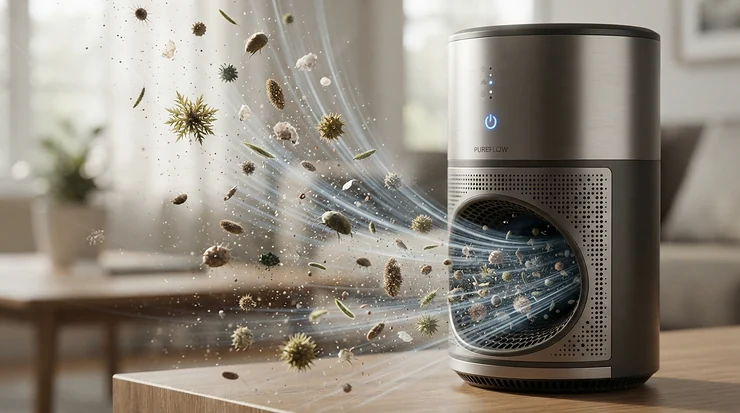
A HEPA car air purifier for pet dander is a compact, vehicle-friendly air cleaner that pulls cabin air through a High-Efficiency Particulate Air filter, rated to trap at least 99.97% of 0.3-micron particles. Shed skin flakes, fur fragments and other allergens get caught instead of recirculating past your nose, which is exactly where a dog or cat leaves them.
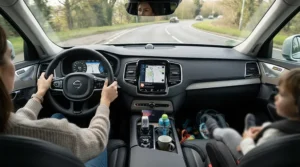
Your car is a small glass-and-metal box that spends much of its life recirculating the same air. Add a golden retriever who sheds like it’s getting paid per hair, and that box turns into a dander delivery system. The stock cabin filter helps a little. It was never designed to chase down what a Labrador leaves on a 20-minute drive to the vet.
That’s the gap a dedicated HEPA car air purifier for pet dander fills. If you want the technical backstory, Wikipedia’s overview of the HEPA standard is a solid primer on how these filters work and where the “HEPA-type” marketing labels fall short.
Here’s my plan. I’ll walk through seven real units, explain what their specs mean once you’re stuck in traffic with a shedding passenger, and cover the stuff the listings skip. That includes SUV cabin size, odor control and HEPA cartridge replacement costs. One honest note up front: this is a research-led comparison built from published specs and aggregated owner feedback, not a hands-on lab test. I’ll say plainly where the evidence is thin.
Quick Comparison: 7 Car Air Purifiers for Pet Dander at a Glance
Skim this first. The details come after.
| Product | Filter | Power | Noise | Standout | Best For |
|---|---|---|---|---|---|
| IQAir Atem Car HyperHEPA Purifier | HyperHEPA (claimed 99% at 0.003 micron) | 12V, headrest mount | Not published | Bluetooth monitoring, ultrafine filtration | Pollution-sensitive, allergy-heavy drivers |
| LUFTRUM Car Air Purifier H13 HEPA | H13 True HEPA, 4-stage | 12V | Described as near-silent | PM2.5 sensor, auto engine sync | Set-and-forget daily drivers |
| Philips GoPure GP5212 | SelectFilter Plus (Philips’ own spec) | 12V | Louder at high speed | 16 m³/hour CADR | Fast cabin cleanup |
| Arint Mini Car Air Purifier | H13 True HEPA + carbon, 4-layer | USB-C, 8+ hr battery | 15 dB | Cordless, 210 g | Multi-vehicle households |
| Pure Enrichment PureZone Mini | True HEPA + carbon pre-filter | Rechargeable, USB-C | Not specified | 5-year warranty | Budget personal-zone cleaning |
| ALIENONE Car Air Purifier AP-C1-D | H13 True HEPA, 3-in-1 | 12V | About 30 dB | Cup-holder fit | Simple daily commutes |
| Aucleia Portable Car Air Purifier | True H13 HEPA | USB | 22 dB | 3 modes, auto on/off | Quiet pet-owner rides |
The table tells a clear story. Plug-in 12V units like the LUFTRUM Car Air Purifier H13 HEPA and Philips GoPure GP5212 are built to move more air, while the cordless Arint Mini Car Air Purifier and Pure Enrichment PureZone Mini trade airflow for flexibility. The IQAir Atem Car HyperHEPA Purifier sits in its own tier, with filtration that goes well beyond anything pet dander demands. Buyers with a single dog and a sedan can happily live in the cheaper half of this chart. Anyone with a big SUV or a serious allergy should read on before deciding.
💬 Just one click — help others make better buying decisions too!😊
Top 7 HEPA Car Air Purifier Picks for Pet Dander: Expert Analysis
Every unit below gets the same treatment: what it does, what the specs mean in real driving, who it fits, what reviewers keep saying, and what you give up. Price tiers are approximate and shift constantly, so check current pricing before you buy.
1. IQAir Atem Car HyperHEPA Purifier — ultrafine filtration for pollution-heavy commutes
This is the “bring a scalpel, not a spoon” option. Instead of sitting in a cup holder, the IQAir Atem Car HyperHEPA Purifier mounts to the headrest and aims a directed stream of filtered air at your breathing zone. Roundups list its HyperHEPA media at 99% efficiency down to 0.003 microns, far below the 0.3-micron benchmark, and describe it as ozone-free and CARB-compliant.
Dander particles are comparatively large, so that ultrafine capability matters more for exhaust, smoke and wildfire haze than for fur flakes. If your commute includes tunnels or bad-air days, you’re buying protection against all of it. If your only enemy is a beagle, it’s a lot of engineering for one problem.
Based on the spec sheet, the headrest mount has a catch. It protects the front seat best, while your dog sits behind you shedding at the source. Reviewers quoted in editorial roundups consistently describe noticeably cleaner air in smoggy traffic. The recurring complaints are price and the mounting fuss. I couldn’t verify individual review counts, so treat that as aggregated sentiment.
Pros:
- ✅ Ultrafine HyperHEPA filtration far beyond the HEPA benchmark
- ✅ Directed airflow aimed at the driver’s breathing zone
- ✅ Bluetooth monitoring and certified low-ozone design
Cons:
- ❌ Premium pricing, reportedly about ten times a budget unit
- ❌ Requires mounting setup and favors the front seat
Price tier: premium. Value verdict: worth it for pollution-sensitive drivers, overbuilt for dander alone.
2. LUFTRUM Car Air Purifier H13 HEPA — the set-and-forget smart pick
The LUFTRUM Car Air Purifier H13 HEPA behaves like a co-pilot with a single job. A 12V plug-in design starts and stops with the engine, so you never have to remember to switch it on. Roundups list a 4-stage system with H13 True HEPA media, claimed removal of 99.9% of particles down to 0.1 microns, a 4W fan and CARB and ETL certifications.
The built-in PM2.5 sensor is the real differentiator. It adjusts fan speed to what’s actually in the air, so the unit ramps up when your dog hops in and quiets down once things settle. The 3-meter cord reaches the second row, which matters if the dog rides in back.
My read: this is the most “appliance-like” option here, and that’s a compliment. You install it once and forget it. The trade-offs are cost and consumables. Reviewers praise the quiet operation, while roundups flag a premium price and ongoing filter expense as the main drawbacks.
Pros:
- ✅ PM2.5 sensor with automatic fan adjustment
- ✅ Auto on/off with the car’s ignition
- ✅ Long cord reaches the back seat
Cons:
- ❌ Premium price tier
- ❌ Replacement filters add ongoing cost
Price tier: upper-mid to premium; check current price. Value verdict: the best long-term pick for people who hate fiddling with gadgets.
3. Philips GoPure GP5212 — a plug-in built for fast cleanup
The Philips GoPure GP5212 is the veteran in this lineup, a 12V unit that leans on brand muscle and airflow. Roundups cite a 16 m³/hour CADR, a filter life of around 350 hours, a long power cable and an engine-sync feature. Its SelectFilter Plus media captures a large share of airborne allergens, according to the listing.
Here’s the nuance. This isn’t marketed with a plain “H13 True HEPA” label like most rivals. It uses Philips’ own filter specification. That can still work well on larger particles like dander, but if certified HEPA capture is non-negotiable for you, confirm the filter claims on the product page before buying.
On paper, the higher airflow means faster cabin turnover after the dog jumps in, which is the scenario that matters. Reviewers reportedly like its speed and its cable length. The consistent grumble is a noticeable hum at the top fan speed, and the absence of an air-quality sensor.
Pros:
- ✅ Higher airflow than most compact rivals
- ✅ Long cable routes easily behind seats
- ✅ Filter-life tracking and auto start
Cons:
- ❌ Audible hum at high fan speed
- ❌ No true-HEPA label or air sensor
Price tier: mid-range; check current price. Value verdict: a smart pick if you value speed over silence.
4. Arint Mini Car Air Purifier — cordless and featherweight
The Arint Mini Car Air Purifier is the one you can toss in a tote and carry between vehicles. It weighs 210 grams and runs 8+ hours on a USB-C charge. Its listing describes a 4-layer stack with H13 True HEPA, activated carbon, a solid alkali layer and negative ions, all at a claimed 15 dB.
That whisper-level noise is its best trick. A 15 dB machine disappears under road noise, so you’ll forget it’s running. The listing claims it covers about 20 sq ft in five minutes, which is a small-zone number. Think “driver’s seat and console,” not “entire three-row SUV.”
My caution is the negative-ion feature. Ionizers can generate trace ozone, so the HEPA layer should do the real work here. Reviewers reportedly praise the portability and quiet. The common complaints are manual on/off and no filter-life reminder, so you’ll have to track the schedule yourself.
Pros:
- ✅ Cordless, with 8+ hours of runtime
- ✅ Extremely quiet at a claimed 15 dB
- ✅ Carbon layer helps with pet odor
Cons:
- ❌ No filter-life indicator
- ❌ Manual operation, small coverage zone
Price tier: mid-range; check current price. Value verdict: great for households that share one purifier across several cars.
5. Pure Enrichment PureZone Mini — budget personal-zone protection
The Pure Enrichment PureZone Mini is the “don’t overthink it” pick, and it earns that role. It pairs True HEPA with a carbon pre-filter in a sub-one-pound body, with a 12-hour battery, USB-C charging and a 5-year warranty. Listings quote a 6 sq ft coverage zone and a CADR around 4 CFM.
Those numbers are honest about what it is: a personal bubble. Placed on the console or passenger seat, it cleans the air closest to you. It will not scrub a whole SUV, and the maker doesn’t pretend otherwise.
The warranty is the sleeper feature. Most budget gadgets quietly die in a year, so five years of coverage signals confidence. Roundups report that owners like the cordless freedom and the easy twist-off filter swap. The recurring limit is low airflow, which means it works best as a supplement to bigger cleaning.
Pros:
- ✅ True HEPA plus carbon at a bargain tier
- ✅ 12-hour battery and USB-C charging
- ✅ Rare 5-year warranty
Cons:
- ❌ Small coverage zone, low airflow
- ❌ Manual operation, no sensor
Price tier: budget, in the sub-$50 range per roundup reporting; check current price. Value verdict: unbeatable as a personal-space starter.
6. ALIENONE Car Air Purifier AP-C1-D — the cup-holder specialist
The ALIENONE Car Air Purifier AP-C1-D is shaped like it grew in your cup holder. Its cylindrical body and 360° air intake fit snugly, and reviewers say it doesn’t wobble. A 3-in-1 filter stack combines a pre-filter, H13 True HEPA and photocatalyst cotton, running at about 30 dB.
That 30 dB figure is quiet enough for a nap in the back seat, though not silent. The pre-filter earns its keep with pet hair, shielding the HEPA layer from clumps that would clog it early. The photocatalyst layer claims odor help, but roundups note it lacks long-term performance data.
The control scheme is minimalist to a fault: one button, no fan speeds. Owners reportedly like the clean look and the quiet. They complain about the lack of adjustability and a cord that limits placement. For pet owners, the pre-filter-plus-H13 combination is the practical heart of this unit.
Pros:
- ✅ Cup-holder fit with 360° intake
- ✅ Pre-filter catches pet hair first
- ✅ One-touch operation
Cons:
- ❌ No adjustable fan speeds
- ❌ Short cord limits placement
Price tier: entry to mid; check current price. Value verdict: a solid, no-drama commuter pick.
7. Aucleia Portable Car Air Purifier — quiet, pet-owner friendly
The Aucleia Portable Car Air Purifier is the roundup’s “Best for Pet Owners” choice. It offers True H13 HEPA, a 22 dB noise rating, three modes, auto on/off, a negative-ion function and an aromatherapy pad. Power comes through USB, so it works with most vehicles.
At 22 dB, this is about as quiet as these gadgets get. The auto on/off is a sleeper feature too, because the best purifier is the one that’s actually running. The catch for SUV owners is airflow. Roundups report that boost mode feels underpowered in larger vehicles.
This model matters for the HEPA cartridge replacement conversation. Roundups warn that replacement filters aren’t widely available, which is a real long-term risk. Owners praise the silence. Skeptics point to the bulkier fit in tight cup holders and the weak boost mode.
Pros:
- ✅ True H13 HEPA filter
- ✅ Ultra-quiet 22 dB operation
- ✅ Adjustable modes with auto on/off
Cons:
- ❌ Boost mode lacks punch in big cabins
- ❌ Replacement filters hard to find
Price tier: entry to mid; check current price. Value verdict: great quiet commuter, but verify filter supply before committing.
Top 7 at a Glance: Value and Maintenance
| Product | Mounting / Power | Price Tier | Watch-Out | Best For |
|---|---|---|---|---|
| IQAir Atem Car HyperHEPA Purifier | Headrest, 12V | Premium | Front-seat bias | IQAir Atem Car HyperHEPA Purifier for allergy-prone city drivers |
| LUFTRUM Car Air Purifier H13 HEPA | 12V, long cord | Upper-mid/premium | Filter cost | LUFTRUM Car Air Purifier H13 HEPA for daily automation |
| Philips GoPure GP5212 | 12V | Mid | Fan hum | Philips GoPure GP5212 for quick cleanups |
| Arint Mini Car Air Purifier | Cordless USB-C | Mid | No reminder | Arint Mini Car Air Purifier for multi-car homes |
| Pure Enrichment PureZone Mini | Cordless USB-C | Budget | Low airflow | Pure Enrichment PureZone Mini for budget shoppers |
| ALIENONE Car Air Purifier AP-C1-D | Cup holder, 12V | Entry-mid | One speed | ALIENONE Car Air Purifier AP-C1-D for simple commutes |
| Aucleia Portable Car Air Purifier | USB | Entry-mid | Filter supply | Aucleia Portable Car Air Purifier for quiet rides |
Looking at the table, the maintenance column is where budgets quietly diverge. The Pure Enrichment PureZone Mini and Arint Mini Car Air Purifier are easy to run but need manual tracking, while the LUFTRUM Car Air Purifier H13 HEPA automates more of the work in exchange for a higher cost of ownership. If you hate remembering schedules, pay for the unit that reminds you. If you’re happy with a calendar alert, the cheaper cordless options win on value.
How to Choose a HEPA Car Air Purifier for Pet Dander
Start with the definition that matters: pick a unit with H13 or True HEPA media, not “HEPA-type” copy. Then work through these steps.
- Verify the filter label. True HEPA or H13 means a tested standard. “HEPA-type” or “HEPA-style” is unregulated marketing and tells you nothing about capture rates.
- Check for a pre-filter. Pet hair clogs a bare HEPA layer fast. A washable or replaceable pre-filter protects your investment.
- Match airflow to your cabin. A sedan tolerates a modest unit. A three-row SUV needs real airflow or a second purifier.
- Look for activated carbon. Dander is a particle problem, but wet-dog smell is a gas problem, and HEPA alone doesn’t solve it.
- Weigh noise. Under 30 dB fades into road noise. Above 50 dB, you’ll hear it on every drive.
- Decide on power style. A 12V plug-in gives steady output. Cordless gives flexibility but needs charging.
- Price the filters. A cheap unit with scarce or pricey cartridges becomes expensive in year two.
Notice what’s missing: ionizer claims, “plasma” branding and aromatherapy extras. They’re nice-to-haves at best, and the EPA’s page on air cleaners and air filters is a useful reality check on what portable cleaners can and cannot do.
Pet Dander Particles: What HEPA Actually Catches
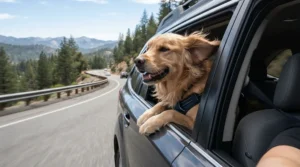
Here’s the good news about pet dander particles: they’re easier targets than most people assume. Several pet-air-purifier guides place dander in roughly the 2.5-to-10-micron range. That’s far larger than the 0.3-micron benchmark HEPA filters are rated against. A filter that stops 99.97% of 0.3-micron particles has an even easier time with bigger ones.
The reason 0.3 microns is the yardstick is physics. According to Wikipedia’s HEPA entry, the most penetrating particle size sits around 0.2 to 0.3 microns, where diffusion and interception are both at their weakest. Dander lives well above that sweet spot for escaping.
So why does dander still linger? Because it’s light, it’s constantly re-released, and it hides in upholstery. A purifier only catches what’s airborne. A shaken-out seat cover or a happy tail wag can lift settled dander right back into the breathing zone. The EPA’s guidance makes the same larger point: filtration supplements source control and ventilation, it doesn’t replace them.
Practically, that means three habits matter more than any single spec:
- Run the purifier before and after the pet rides, not only during.
- Keep a washable seat cover so dander has fewer places to hide.
- Pair filtration with a quick vacuum or wipe-down every week or two.
HEPA Car Air Purifier for Odor: Where the Carbon Does the Heavy Lifting
Let’s talk about the smell, because a HEPA car air purifier for odor is a slightly different job than the dander one. HEPA filters are mechanical particle traps. As Wikipedia’s HEPA entry notes, they don’t filter gases or odor molecules. Smell from a wet dog, a gym bag or fast food is made of gas-phase compounds, and for those you need activated carbon.
That’s why the multi-layer designs matter. The ALIENONE Car Air Purifier AP-C1-D uses a photocatalyst layer. The Arint Mini Car Air Purifier adds carbon and an alkali stage. The Pure Enrichment PureZone Mini pairs HEPA with a carbon pre-filter. Each is trying to cover both jobs in a body that fits a cup holder.
Be realistic about the carbon, though. A small carbon pad saturates faster than a big home-unit canister, so heavy odor means frequent changes. Roundup reviewers note that aromatherapy-focused units like the B0BKJQ13NT-style “perfume diffuser” purifiers tend to mask rather than remove smell. Masking isn’t cleaning.
My advice: treat carbon as the odor layer, treat HEPA as the dander layer, and don’t expect either to fix a soaked seat. Fix the source with an enzyme cleaner, then let the purifier maintain.
HEPA Car Air Purifier for SUV: Matching Airflow to a Bigger Cabin
A HEPA car air purifier for SUV use faces a harder math problem than the same device in a coupe. More cubic feet mean more air to turn over, and more places for dander to settle. Mid-size SUVs often carry roughly 100 to 150 cubic feet of passenger space, and three-row models run higher once you count the cargo bay. Those are ballpark figures, so check your owner’s manual for your own vehicle.
SUV Cabin Size and CADR
The standard yardstick is CADR, the Clean Air Delivery Rate. Wikipedia’s explainer on CADR covers how it’s measured. The takeaway for SUV cabin size is simple: higher CADR cleans faster, and many car purifiers don’t publish one at all.
Here’s how I’d apply that:
- Compact crossover or two-row SUV: a single 12V unit like the Philips GoPure GP5212 or the LUFTRUM Car Air Purifier H13 HEPA is a reasonable fit.
- Three-row SUV with a dog in the cargo area: consider a plug-in unit up front plus a cordless one like the Arint Mini Car Air Purifier near the back.
- Rear-heavy pet traffic: place the purifier on the second row so airflow starts near the source.
The Aucleia Portable Car Air Purifier‘s roundup notes that its boost mode feels weak in larger SUVs, which is exactly the SUV cabin size problem in action. When in doubt, run two small units rather than hoping one tiny fan will do it all.
HEPA Cartridge Replacement: Schedule, Cost and Compatibility
Nobody buys a purifier for the filter, but the filter decides whether it keeps working. Roundup guidance generally suggests replacing HEPA media every 6 to 12 months and activated carbon every 3 to 6 months, with heavier pet use pushing you toward the earlier end. Wikipedia notes that in residential settings, filters can last longer depending on ambient air quality. A shedding dog in a small cabin isn’t ambient-air-quality-gentle.
What to Check Before You Buy
- Availability: the Aucleia Portable Car Air Purifier is flagged in roundups for scarce replacements. Confirm there’s an actual cartridge listing before you commit.
- Cartridge format: a dedicated filter from the maker is safest. Third-party “compatible” cartridges exist for many home models, but fit and media quality vary, so read compatibility notes carefully.
- Cost per year: multiply cartridge cost by replacement frequency, then compare across models. A cheap purifier with a pricey annual HEPA cartridge replacement can lose to a mid-priced one.
A simple rule: if you can’t find the replacement cartridge today, assume you won’t find it in a year.
Practical Usage Guide: Setup, Placement and a 30-Day Routine
Buying the right unit is half the battle. Here’s how to make it work.
First-use setup
- Remove all packaging from the filter before powering on. It’s an easy mistake.
- Place the unit where intake isn’t blocked by a sunshade, jacket or seat cover.
- For 12V models, route the cord away from pedals and gear shifters.
Placement logic
- Put the purifier close to the dog’s usual spot, not just near you.
- In a sedan, a console or rear-seat position works best.
- In an SUV, aim for the second row or center console.
30-day routine
- Week 1: run the purifier for 10 to 15 minutes before each pet ride, and for a few minutes after.
- Week 2: wipe down seats, vents and door pockets, where dander gathers.
- Week 3: check the pre-filter and tap off visible hair.
- Week 4: note the filter state and schedule your cartridge swap.
The EPA’s consumer guide to air cleaners in the home is a helpful companion for understanding CADR, maintenance and what to avoid. A common first-30-days mistake is ignoring the pre-filter, which then clogs and strangles airflow.
Real-World Scenarios: Matching Picks to Real Drivers
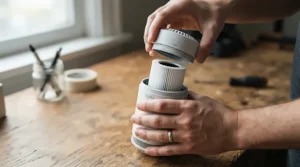
The commuter with one beagle. A short daily trip, a sedan and light odor. Pick the ALIENONE Car Air Purifier AP-C1-D for a quiet, simple cup-holder fit, or the Aucleia Portable Car Air Purifier if you prefer three modes and auto on/off. Budget-conscious? The Pure Enrichment PureZone Mini covers your breathing zone for a modest outlay.
The family with a golden retriever and a three-row SUV. Frequent weekend hauls, kids in the back and serious shedding. Run the LUFTRUM Car Air Purifier H13 HEPA up front for automation, and add the Arint Mini Car Air Purifier on the third row for portability. That’s roughly the mid-premium tier and worth it for the airflow.
The allergic driver in a smoggy city. Dander plus exhaust, plus asthma worries. This is where the IQAir Atem Car HyperHEPA Purifier earns its premium. For a cheaper alternative, the Philips GoPure GP5212 offers fast airflow with less ultrafine capability.
Notice the common thread: match the unit to the real problem, not the spec sheet’s biggest number.
Common Mistakes When Buying a Car Air Purifier for Pet Hair and Dander
Mistake 1: Trusting “HEPA-type” labels. Those terms have no regulatory meaning. True HEPA or H13 is the label to look for.
Mistake 2: Ignoring airflow. A 6 sq ft coverage zone like the Pure Enrichment PureZone Mini‘s is honest, but it’s not a cabin cleaner. Buyers who expect miracles from tiny fans end up disappointed.
Mistake 3: Buying for ionizers. Ion functions can produce trace ozone, and they don’t remove particles. A mechanical HEPA filter does the actual work.
Mistake 4: Skipping the filter math. A cheap purifier with scarce or pricey cartridges is a false economy. Check HEPA cartridge replacement availability up front.
Mistake 5: Forgetting the source. Dander sits in upholstery. Without seat covers and regular cleanup, the purifier is playing endless catch-up.
Mistake 6: Believing the purifier replaces the cabin filter. It supplements it. Keep both fresh.
HEPA Car Air Purifier vs Traditional Alternatives
| Option | Catches Dander? | Handles Odor? | Upkeep | Best For |
|---|---|---|---|---|
| HEPA car air purifier | Yes, strong | Only with carbon | Cartridge swaps | Pet owners and allergy sufferers |
| Stock cabin air filter | Partial | Limited | Annual replacement | Baseline protection |
| Scented air freshener | No | Masks only | Frequent refills | Fragrance fans |
| Ionizer-only gadget | Weak | Weak | Low | Not recommended alone |
| Vacuum and wipe-down routine | Removes settled dander | Some | Weekly effort | Everyone, alongside a purifier |
The pattern is clear. A LUFTRUM Car Air Purifier H13 HEPA-class unit handles airborne particles, while vacuuming handles what has already settled, and the two jobs rarely overlap. Skip scent-only products if allergies are your priority, since masking isn’t filtering. The smartest setup combines filtration, a fresh cabin filter and a regular cleanup, not any single gadget.
Price Range and Value Analysis
| Tier | Typical Picks | What You Get | What You Give Up | Best For |
|---|---|---|---|---|
| Budget | Pure Enrichment PureZone Mini, ALIENONE Car Air Purifier AP-C1-D | True or H13 HEPA, simple controls | Airflow, smart features | Light shedding, small cabins |
| Mid-range | Philips GoPure GP5212, Arint Mini Car Air Purifier, Aucleia Portable Car Air Purifier | Better airflow or portability | Premium sensors, longer support | Regular pet riders |
| Premium | LUFTRUM Car Air Purifier H13 HEPA, IQAir Atem Car HyperHEPA Purifier | Sensors, certifications, ultrafine capture | Higher upfront and filter cost | Large SUVs, heavy allergy sensitivity |
Looking at value, the budget tier does the core job, which is a particle trap, for the least money. Mid-range buys you either airflow or portability. Premium pays off mainly for people with real health needs or bigger vehicles. If you only need to tame a single dog’s dander, you don’t need to start at the top.
FAQ: HEPA Car Air Purifier for Pet Dander
❓ Does a HEPA car air purifier for pet dander really work while the car is moving?
❓ Where should I place a purifier in an SUV with a dog in the back?
❓ Are car air purifiers with negative ions safe around pets?
❓ Will a HEPA car air purifier remove wet-dog smell?
❓ How long should I run the purifier after my dog leaves the car?
Conclusion: Pick the Purifier That Fits Your Cabin, Not Just Your Budget
Let’s land the plane. The right HEPA car air purifier for pet dander depends on three things: how big your cabin is, how much your pet sheds, and how much upkeep you’ll tolerate. For small cars and light shedding, the ALIENONE Car Air Purifier AP-C1-D, Aucleia Portable Car Air Purifier or Pure Enrichment PureZone Mini cover the basics affordably. For regular family hauling, the Philips GoPure GP5212 and Arint Mini Car Air Purifier add airflow and flexibility. For big SUVs or serious allergies, the LUFTRUM Car Air Purifier H13 HEPA and IQAir Atem Car HyperHEPA Purifier justify their premium.
Whatever you choose, remember the unglamorous parts: verify the True HEPA label, plan your HEPA cartridge replacement before you need it, and pair filtration with simple cleanup habits. A purifier can’t undo a seat full of settled fur, but it can keep the air you actually breathe far cleaner than a stock cabin ever will.
Do the homework once, set a filter reminder, and enjoy the drive with your best furry co-pilot.
Recommended for You
- HEPA Car Air Purifier For Allergies: 7 Best Picks 2026
- Portable Car Air Purifier For Allergies: 7 Best Picks (2026)
- Rechargeable Portable Car Air Purifier: 7 Best & Honest Picks 2026
Disclaimer: This article contains affiliate links. As an Amazon Associate, I earn from qualifying purchases. If you purchase products through these links, we may earn a small commission at no additional cost to you.
✨ Found this helpful? Share it with your friends! 💬🤗
