
In This Article
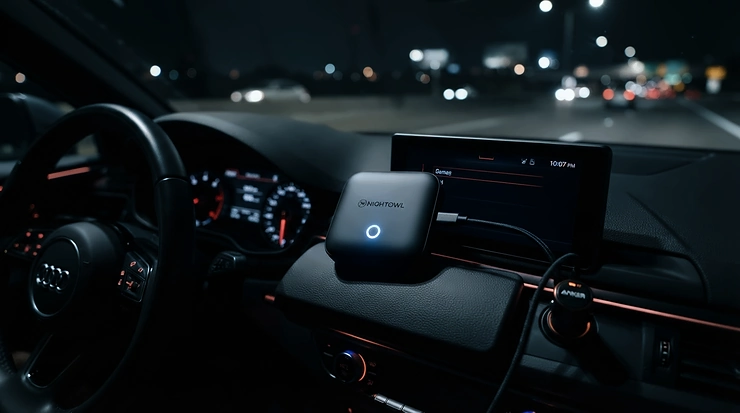
A HEPA car air purifier for allergies is a compact, USB- or battery-powered device that pulls cabin air through a high-efficiency particulate air filter. It traps pollen, dust, pet dander, and smoke particles before you breathe them in. Under the U.S. standard, a true HEPA filter must capture at least 99.97% of particles at 0.3 microns, a benchmark the EPA explains in plain language.
Your car is a strange little room. It’s roughly the size of a walk-in closet, it has a fan that sucks in whatever the street is offering, and you probably spend more waking hours in it than in your guest bedroom. When the pollen count spikes, that closet becomes a pollen trap on wheels. Every time you open a door, the cabin takes a fresh dose, and the seats, mats, and vents hold on to it like a bad grudge.
That’s the real pitch for a HEPA car air purifier for allergies. It won’t fix a dirty cabin filter or erase an entire ragweed season. What it can do is add a dedicated, high-grade filtration layer inside the space where you sit. That’s useful when the factory filter is basic, when you drive older vehicles, or when you share the car with a dog who thinks shedding is a competitive sport.
This guide covers seven real models, from budget cup-holder units to a premium Swiss-built option. It also decodes what “true HEPA filter” does and doesn’t promise, and explains how to use a purifier alongside smart habits during high-pollen days. Product details come from manufacturer and retailer listings plus independent roundups, and I’ve flagged where review data is thin. Prices are shown as ranges only, so check current pricing before you buy.
Quick Comparison: 7 HEPA Car Air Purifiers at a Glance
| Product | Filter Type (per listing) | Standout | Price Range | Best For |
|---|---|---|---|---|
| MOOKA M01 | H13 True HEPA, 3-stage | 360° intake, USB-C | Budget (~$30-$60) | First-time buyers |
| Pure Enrichment PureZone Mini | True HEPA, 2-stage | Cordless, long battery | Budget-mid (~$40-$70) | Rental cars, kids’ seats |
| AIRFEEL Mini | H13 HEPA + aromatherapy | Cup-holder fit | Budget (~$30-$60) | Scent lovers |
| Aucleia KQ-20 | True H13 HEPA | ~22 dB operation | Budget-mid (~$35-$70) | Quiet commutes |
| LUFTRUM C401A | H13 True HEPA, multi-stage | PM2.5 sensor, auto on/off | Mid-range (~$70-$130) | Set-and-forget drivers |
| Philips GoPure GP5212 | SelectFilter Plus (verify HEPA grade) | Established brand, fitted design | Mid-range (~$90-$180) | Brand-trust buyers |
| IQAir Atem Car | HyperHEPA | Premium filtration, headrest mount | Premium (several hundred dollars) | Severe sensitivities |
Looking at the table, the MOOKA M01, AIRFEEL Mini, and Aucleia KQ-20 cluster at the budget end, and all three advertise H13-grade filtration. The LUFTRUM C401A earns its higher range through automation and a particle sensor, while the IQAir Atem Car sits alone at the premium end, with filtration claims that go well past the standard HEPA benchmark. If you want the least regret per dollar, start with the budget cluster and move up only when a specific feature, like the sensor or a lower noise floor, solves a real problem for you.
💬 Just one click — help others make better buying decisions too!😊
Top 7 HEPA Car Air Purifier for Allergies Picks: Expert Analysis
1. MOOKA M01 — cheapest ticket to genuine H13 filtration
The MOOKA M01 exists to answer one question: how little can you spend and still get a HEPA-grade filter into a cup holder? Listings describe a three-stage setup with an H13 True HEPA layer, 360-degree air intake, a 15 dB sleep mode, USB-C power, and a small aromatherapy pad.
The 360-degree intake matters more than it sounds. A purifier that draws air from one side pulls from a narrow cone. All-around intake samples the whole zone around the cup holder, which suits a cabin where pollen arrives from four doors and a trunk.
Based on the spec comparison, this is the sensible first purchase for a commuter who wants a true HEPA car air purifier without a big gamble. USB-C means it runs from a dashboard port or a 12V adapter. The tradeoff is physics: a small fan can’t move the air volume a large home unit can, so expect a gentle, steady turnover rather than a gale. A recurring theme in reviews of compact USB purifiers is praise for the price and quiet low setting, paired with the complaint that airflow is modest. I couldn’t verify a large independent review pool for this exact model, so check the live ratings before buying.
Pros:
- ✅ H13 True HEPA stage at a budget price
- ✅ 360-degree intake covers the whole cabin zone
- ✅ Very quiet sleep mode for early commutes
Cons:
- ❌ Modest airflow in large SUVs and vans
- ❌ Limited independent review verification
Price range: budget tier, usually around $30-$60 (check current price). Verdict: strong value for sedans and compact cars.

2. Pure Enrichment PureZone Mini — cordless freedom, strong rating track record
The Pure Enrichment PureZone Mini is the one you can toss in a tote bag. It’s a cordless personal purifier that lists a True HEPA filter rated at 99.97%, a two-stage design, an adjustable three-speed fan, and a battery that its marketing puts at around 12 hours. That makes it more of a “bring it everywhere” device than a fixed car accessory.
Cordless matters in a car for a practical reason: no cable snaking across the console, no dead USB port, and no fumbling in a rental. The same freedom lets you carry it from car to office to hotel nightstand, so the money works harder than a car-only unit.
Retail listings show the PureZone Mini with ratings around 4.7 stars across several hundred reviews, which is a strong signal for a compact purifier. Reviewers of personal purifiers in this class commonly say they like the portability and the simple controls. They also tend to note that it works best as a “close to you” device rather than a whole-room cleaner. In a car that limitation barely matters, since the cabin is already “close to you.”
On paper, a two-stage filter means fewer layers than the multi-stage budget rivals. That’s fine for pollen and dust, but if odors are your main complaint, consider a model with a carbon stage.
Pros:
- ✅ Cordless with roughly all-day battery life
- ✅ True HEPA filter claim at 99.97%
- ✅ Strong retail rating record
Cons:
- ❌ Fewer filtration stages than competitors
- ❌ Must be recharged between trips
Price range: roughly $40-$70 (check current price). Verdict: excellent for renters, carpoolers, and anyone who moves between vehicles.
3. AIRFEEL Mini — HEPA plus a built-in scent diffuser
The AIRFEEL Mini pairs an H13 HEPA filter with an aromatherapy pad in a cup-holder-friendly body. If your car’s biggest crime is smelling like yesterday’s drive-through, that combo is clever. You get particle capture and a pleasant nudge against stale air in one footprint.
Here’s the analytical catch. Fragrance is a trigger for some allergy and asthma sufferers, so the diffuser pad is optional, not essential. The filter does the allergy work, and the scent is a lifestyle extra. Run it unscented first, then add scent only if it doesn’t bother you.
Because the AIRFEEL Mini shares the compact USB design of its budget peers, expect similar airflow limits: ideal for a driver and one or two passengers in a sedan or hatchback, less convincing in a three-row SUV. Aggregated feedback on small purifiers with scent pads tends to split between fans of the fresh-air feel and critics who find the filter life short in dusty areas. I couldn’t verify a deep independent review base for this specific model, so read recent listing feedback.
Pros:
- ✅ H13 HEPA filter in a cup-holder shape
- ✅ Optional aromatherapy pad
- ✅ Budget-friendly entry price
Cons:
- ❌ Fragrance may bother sensitive users
- ❌ Limited airflow for larger vehicles
Price range: around $30-$60 (check current price). Verdict: great value if you like scent options, fine without them.
4. Aucleia KQ-20 — the quiet commuter’s cup-holder purifier
The Aucleia KQ-20 is built for people whose commute doubles as thinking time. Roundups list it with a True H13 HEPA filter, three speed modes, a 22 dB noise rating, and an aromatherapy pad, in a compact body of about 9.8 by 3.6 by 4.6 inches.
A 22 dB rating is roughly library-whisper territory, which is the right target for a car. Road, wind, and tire noise already fill the cabin, so a purifier only needs to avoid adding a whine. The three-speed design is the sensible way to handle this: low for steady background cleaning, high for the first few minutes after you load a muddy dog or open every window in April.
What the spec sheet won’t tell you is how much you’ll use each speed. Plan to run it on high briefly after entering a pollen-heavy environment, then drop to low for the drive. As for review data, listings of compact true HEPA car air purifier models like this one generally attract praise for noise levels and complaints about modest airflow. I couldn’t verify an independent review pool for this exact unit.
Pros:
- ✅ True H13 HEPA filter claim
- ✅ Whisper-level noise on low speed
- ✅ Three speeds for different situations
Cons:
- ❌ Small unit, limited reach in big cabins
- ❌ Brand has a thinner independent track record
Price range: around $35-$70 (check current price). Verdict: the best pick here for noise-sensitive drivers.
5. LUFTRUM C401A — smart sensor and automatic start
The LUFTRUM C401A is the “set it and forget it” option. Roundups describe H13 True HEPA filtration, a multi-stage design, a PM2.5 particle sensor, and an auto start/stop feature that syncs with the car’s ignition. It’s also larger than the cup-holder units, at about 10.9 by 7.5 by 3 inches.
The sensor is the real differentiator. A PM2.5 reading turns the purifier from a mystery box into an instrument, which means you can see a spike when you open the door or park behind a diesel truck. That feedback helps you build habits. If the number drops quickly on high but lingers on low, you know which speed your car needs.
Auto on/off also solves the most common failure mode of cheap car accessories: forgetting to turn them on. Based on the spec comparison, this model suits drivers who want filtering to happen without thought, such as ride-share drivers, parents, and anyone with a long daily commute. The tradeoff is size and cost, since it won’t disappear into a cup holder.
Reviewers of sensor-equipped purifiers often value the feedback loop but sometimes question how well a small sensor reads absolute values. Treat it as a trend indicator, not a lab instrument. I couldn’t verify a large independent review pool for this model.
Pros:
- ✅ PM2.5 sensor shows real-time changes
- ✅ Auto start/stop with ignition
- ✅ Multi-stage H13 True HEPA design
Cons:
- ❌ Bulkier than cup-holder rivals
- ❌ Higher cost than budget units
Price range: roughly $70-$130 (check current price). Verdict: best for drivers who want automation and data.
6. Philips GoPure GP5212 — brand trust and a fitted design
The Philips GoPure GP5212 is the established-name option. Independent roundups include it as a notable in-car purifier, listing a SelectFilter Plus system and a modest air-flow rating. What stands out here is the engineering pedigree: Philips has long built automotive-lighting and air-quality products, so parts and filter support tend to be easier to trust.
Here’s the label-reading lesson this product teaches. Not every “HEPA” filter is a true HEPA filter. Before buying the GoPure GP5212, check the live listing for the exact filter grade and efficiency claim. If the page says 99.97% at 0.3 microns, you’re in true HEPA territory. If it uses softer language like “HEPA-type,” treat it as a good filter but not the same standard. I couldn’t confirm a certified true HEPA claim from the sources I reviewed, so verify it.
Practically, a fitted design that plugs into the vehicle’s 12V outlet means no battery to charge, and the setup suits owners who want something that looks like it belongs in the car. Recurring feedback on plug-in car purifiers tends to praise the clean install and criticize modest output, which tracks with the small fan.
Pros:
- ✅ Recognized brand with a long track record
- ✅ 12V plug-in with no battery to manage
- ✅ Clean, car-friendly design
Cons:
- ❌ HEPA grade needs verification on the listing
- ❌ Modest airflow for large cabins
Price range: roughly $90-$180 (check current price). Verdict: a solid choice if brand trust matters to you.
7. IQAir Atem Car — premium filtration for serious sensitivities
The IQAir Atem Car is the Swiss-engineered splurge. Listings describe HyperHEPA filtration rated to capture particles down to about 0.003 microns, headrest mounting, and Bluetooth connectivity. That’s a far smaller particle size than the 0.3-micron standard for true HEPA filter testing, so on paper it targets ultrafine particles such as exhaust and smoke.
The headrest placement is a smart design choice. It positions the clean-air stream near your breathing zone rather than down at the cup holder, so more of that filtered air reaches your nose. For severe allergy and asthma sufferers, that placement matters as much as the filter grade.
Honest analysis: this is overkill for someone with mild spring sniffles, and the budget picks above will handle ordinary pollen and dust well. The IQAir Atem Car earns its keep for people with physician-flagged sensitivities, long commutes through heavy traffic, or a need for the best filtration they can reasonably buy. The review data I found was limited and came mainly from roundups, so check recent buyer feedback and warranty terms on the live listing.
Pros:
- ✅ HyperHEPA filtration claim down to 0.003 microns
- ✅ Headrest mount delivers air near your face
- ✅ Premium build and brand reputation
Cons:
- ❌ Highest price in the lineup
- ❌ Larger and less discreet than cup-holder units
Price range: premium, typically several hundred dollars (check current price). Verdict: worth it only if your sensitivities justify the premium.
Top 7 Specs Compared: What the Numbers Mean
| Product | Mounting | Power | Noise Claim | Key Extra |
|---|---|---|---|---|
| MOOKA M01 | Cup holder | USB-C | ~15 dB (sleep) | 360° intake |
| Pure Enrichment PureZone Mini | Portable | Rechargeable | Not verified | Cordless |
| AIRFEEL Mini | Cup holder | USB | Not verified | Aroma pad |
| Aucleia KQ-20 | Cup holder | USB | ~22 dB | 3 speeds |
| LUFTRUM C401A | Console/seat | 12V/USB | Not verified | PM2.5 sensor |
| Philips GoPure GP5212 | 12V plug-in | 12V | Not verified | Brand support |
| IQAir Atem Car | Headrest | 12V | Not verified | HyperHEPA |
Several noise figures are blank because I couldn’t verify them, and that’s worth sitting with: many compact purifiers publish a single flattering decibel number measured under ideal conditions. The MOOKA M01 and Aucleia KQ-20 are the only two with claims I could cite, so ask sellers for noise at each speed before you commit. Meanwhile, the LUFTRUM C401A and IQAir Atem Car justify their larger footprint with features the little cup-holder units can’t match.
How to Choose a HEPA Car Air Purifier for Allergies
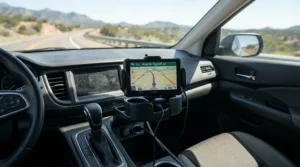
Picking a HEPA car air purifier for allergies comes down to seven checks. Work through them in order and you’ll avoid most regrets.
- Confirm the filter grade. Look for 99.97% at 0.3 microns, or an H13 rating. “HEPA-type” and “HEPA-like” are marketing language, not a standard.
- Match the airflow to your cabin. A sedan is roughly 100 cubic feet of air, and an SUV can run noticeably more. Small purifiers suit small cabins best.
- Decide where it sits. Cup holders are convenient, but headrest or dashboard placement puts clean air closer to your face.
- Choose your power source. USB and 12V never run flat, but cables clutter. Battery models travel well and need charging.
- Check the noise. Anything near 20-25 dB on low is pleasant. Louder than that, and you’ll stop using it.
- Avoid ozone generators. If a unit includes an ionizer, look for a clear low-ozone claim or California CARB certification.
- Price the replacement filters. A cheap purifier with expensive filters isn’t cheap.
The reasoning behind step two deserves a quick illustration. Imagine a purifier that moves 15 cubic feet of air per minute through its filter (a hypothetical number for the math). In a 100-cubic-foot cabin, that’s roughly one full pass of the cabin’s air every seven minutes. That’s why running it on high for the first few minutes of a drive makes sense.
True HEPA Filter vs HEPA-Type: What the Label Really Means
The phrase true HEPA filter has a precise meaning, and the shopping aisle is full of impostors. According to the standard summarized on Wikipedia’s HEPA overview, HEPA filters as defined by the U.S. Department of Energy remove at least 99.97% of aerosols at 0.3 micrometers. The 0.3-micron figure isn’t arbitrary: it’s the “most penetrating particle size,” the hardest one to catch. Particles that are larger or smaller get caught at even higher rates.
In Europe, the language shifts slightly. An H13 filter is rated at 99.95% at its most penetrating size, which is why you’ll see “H13” on so many car purifier listings. In practice the gap between 99.95% and 99.97% is negligible for your sinuses. What matters is that a lab tested the filter, and that a manufacturer isn’t hiding behind soft wording.
For allergy sufferers, the practical translation is simple. Pollen grains are far larger than 0.3 microns, so a decent filter catches them easily. The tougher targets are fine dust, smoke, and exhaust particles, where a true HEPA car air purifier shows its worth. Treat anything labeled “99% HEPA” or “HEPA-style” as a good filter, but not necessarily the same standard. If a listing won’t state the efficiency figure, ask yourself why.
HEPA Car Air Purifier vs Cabin Air Filter and Ionizers
| Option | What It Does | Strength | Weakness | Best For |
|---|---|---|---|---|
| HEPA car air purifier | Filters cabin air continuously | Captures fine particles in the cabin | Small airflow | Allergy and dust sufferers |
| Standard cabin air filter | Filters incoming outside air | Built in, protects HVAC | Basic grades miss fine particles | Everyone, as a baseline |
| Upgraded HEPA-style cabin filter | Same job, higher grade | Blocks more at the vents | Only works with fan on | Pollen-heavy regions |
| Ionizer | Charges particles to drop out | No filter to replace | Possible ozone, less proven | Not recommended alone |
Think of the three layers as a defense line. The cabin air filter guards the front door, the purifier cleans what sneaks in or gets stirred up inside, and good habits keep the pollen from entering in the first place. The cabin filter only works when the fan is running, so a purifier fills the gap when you’re parked, idling, or running recirculate. As the table shows, the combination beats any single tool, and ionizers alone are the weakest bet for allergy relief because the evidence and safety questions are murkier.
💬 Want a quick refresher before your next drive? Bookmark this guide and share it with a fellow allergy sufferer!
Pollen Count and Your Commute: A Practical Usage Guide
Think of the pollen count as the weather report for your sinuses. It tells you when to fight back and when to simply wait it out.
Step 1: Check the forecast before you drive. Pollen levels tend to peak in the early morning and again in the evening on dry, windy days. If your symptoms are bad, a mid-day drive often beats a dawn commute.
Step 2: Close the windows, run the AC. The American Academy of Allergy, Asthma and Immunology’s travel advice is blunt: keep windows closed and use air conditioning while driving to keep pollen out. Your purifier can’t beat an open window.
Step 3: Start the purifier before you start moving. Turn it on high when you get in, even before pulling out. The first few minutes are when the cabin is most disturbed.
Step 4: Switch to recirculate on high pollen count days. Recirculate keeps new outside air from constantly entering, which lets your purifier work on a stable pool of air.
Step 5: Leave the pollen outside. Shake out jackets before you climb in, wipe shoes, and vacuum mats regularly. Pollen clings to clothing like glitter at a craft party.
Step 6: Mind the first 30 days. The common mistakes are forgetting to charge a battery unit, placing the purifier where it’s blocked by a bag, and never checking the filter. Set a phone reminder to inspect the filter monthly.
HEPA Car Air Purifier for Dust: What to Expect in Real-World Performance
A HEPA car air purifier for dust works a little differently from a pollen fighter. Pollen mostly arrives from outside, so prevention helps. Dust is already inside, living in the carpet, the seat seams, and the vents, and it flies up whenever someone climbs in or slams a door.
Here’s what to realistically expect. A compact purifier will not make a dusty car instantly pristine. What it can do is reduce the amount of fine dust suspended in the air at any moment, which cuts the irritation you feel as the dust settles on your nose and eyes. The effect is gradual and strongest over repeated trips, especially if you pair it with vacuuming.
Here’s a useful way to think about it. The purifier is a filter for the air, not a vacuum for the surfaces. If you run a HEPA car air purifier for dust but never clean the seats, you’re asking a small fan to fight a never-ending refill. A weekly five-minute vacuum, plus a damp-cloth wipe of the dashboard, multiplies the purifier’s effect.
Dust also loads filters faster. If your commute runs along dirt roads or through construction zones, expect to replace or clean the filter sooner than the manufacturer’s nominal schedule, and keep a spare on hand.
Real-World Scenarios: Matching Purifiers to Real Drivers
The college student with an eight-mile commute. Budget is tight, the car is an older hatchback, and spring means sneezing at red lights. A MOOKA M01 or AIRFEEL Mini fits the cup holder, runs from USB, and gives true HEPA car air purifier performance for little money. Add a monthly vacuum and a fresh cabin filter, and you’ve covered the basics.
The parent shuttling kids and a dog. The cabin sees cracker crumbs, pet dander, and wet-fur odors. The LUFTRUM C401A makes sense here: the PM2.5 sensor shows the spikes, and automatic starting means no one has to remember. Pair it with weekly vacuuming.
The ride-share driver. Hours of daily use and constantly changing passengers stress any purifier. A plug-in model like the Philips GoPure GP5212 avoids battery management, and a spare filter keeps downtime low. Quiet matters too, which makes the Aucleia KQ-20 a worthy alternative.
The severe-allergy commuter. If a physician has flagged serious sensitivities, the IQAir Atem Car with its headrest placement and premium filtration is the logical splurge. For travel and rentals, the cordless Pure Enrichment PureZone Mini is a flexible backup.
Problem → Solution: Common Complaints and Fixes
Problem: “I still sneeze on pollen days.” Check whether you’re driving with windows open, whether the cabin filter is overdue, and whether the purifier is sitting behind a bag. Run it on high for the first few minutes.
Problem: “The purifier is too loud.” Drop to low once the cabin is stable. If it’s still loud, a model such as the Aucleia KQ-20 or MOOKA M01 offers quieter settings.
Problem: “It smells odd.” A new filter can have a brief factory scent, and aroma pads on the AIRFEEL Mini can add fragrance. Remove the pad if you’re sensitive.
Problem: “The battery dies mid-trip.” Charge the Pure Enrichment PureZone Mini overnight, or keep a USB cable in the car for top-ups.
Problem: “I can’t tell if it works.” That’s the case for a sensor model like the LUFTRUM C401A, which shows particle readings. Without a sensor, judge by symptoms over a couple of weeks.
Common Mistakes When Buying a HEPA Car Air Purifier
The biggest mistake is trusting the word “HEPA” without checking the number. A listing that says “HEPA filter” but never states 99.97% at 0.3 microns is dodging the one detail that matters.
The second mistake is buying for the wrong room size. Many listings brag about coverage like “600 square feet,” which describes a bedroom, not a car. The cabin is tiny, so what you need is solid airflow in a small space, not a giant number on the box.
Third, ignoring ozone. Some ionizers produce ozone, a lung irritant that’s the opposite of what an allergy sufferer wants. If a product includes an ionizer, look for explicit low-ozone claims or California CARB certification, or skip the feature altogether.
Fourth, skipping the cabin air filter. A purifier is a supplement, not a replacement. Fifth, forgetting filter costs: some budget purifiers use proprietary filters, and a pile of replacements can erase the savings. Finally, expecting miracles. A small purifier reduces exposure, but it works best alongside closed windows, recirculate mode, and a clean cabin.
Safety, Ozone, and Compliance Notes
If you suffer from allergies or asthma, safety deserves a short, serious section. The core rule: choose mechanical filtration over anything that generates ozone. HEPA filters work by trapping particles in a dense mesh, with no chemistry involved.
California’s air resources regulator limits ozone emissions from certified air cleaners, and that certification is a helpful shorthand if you want an independent check. Anything described as “ozone-boosted” or built to generate ozone for odor elimination should be a hard pass for a sensitive person.
Other practical safety points: route cables so they can’t tangle with pedals or the shifter, mount headrest units so they can’t become projectiles in a hard stop, and avoid anything that blocks airbags. Finally, don’t treat a purifier as medical treatment. If your symptoms are severe or you have asthma, talk to your clinician about a plan, and use the purifier as one layer of that plan.
Long-Term Cost and Maintenance: What You’ll Really Spend
| Cost Tier | Typical Purchase | Filter Upkeep | Best Value When |
|---|---|---|---|
| Budget ($30-$70 range) | MOOKA M01, AIRFEEL Mini, Aucleia KQ-20 | Replace every few months | You want low risk |
| Mid-range ($70-$180 range) | LUFTRUM C401A, Philips GoPure GP5212 | Replacement filters needed | You want features or brand support |
| Premium (several hundred) | IQAir Atem Car | Specialized filters | Sensitivities justify it |
Retail guides commonly suggest replacing compact car purifier filters roughly every three to six months, depending on air quality and use. That’s a general range, so follow each manufacturer’s schedule. The IQAir Atem Car will cost more up front and for filters, but a better filter that you actually use beats a cheap one you ignore.
The value logic is straightforward. Spread a mid-range purchase over a couple of years of daily commuting and the cost per drive is tiny. Compare that with the price of even a modest allergy-relief routine, and a purifier can be a reasonable line item. The cabin air filter deserves the same attention: CarPro’s guidance on allergy-proofing your car calls the cabin air filter the first line of defense and recommends upgrading it and using recirculate when the pollen count is high.
✨ Don’t Miss These Exclusive Deals!
🔍 Take your clean-air drives to the next level with these carefully selected products. Click on any highlighted item to check current pricing and availability. These tools will help you create a calmer, more comfortable cabin your whole family will love!
HEPA Car Air Purifier for Allergies for Specific Audiences
For parents: Choose quiet, simple, and secure. A cordless Pure Enrichment PureZone Mini moves between cars, but keep it out of reach of small hands, and make sure cables never dangle near car seats.
For pet owners: Dander and hair call for a purifier with decent airflow and a filter you can inspect often. The LUFTRUM C401A suits shedding season, and a lint roller keeps seats under control.
For seniors and sensitive drivers: Simple controls matter. Plug-in options like the Philips GoPure GP5212 require little fuss, and quiet operation reduces fatigue.
For frequent travelers and renters: Portability wins, so a battery-powered PureZone Mini or a USB MOOKA M01 can follow you from rental to rental.
For asthma-prone commuters: Talk to your clinician first. If they agree a purifier makes sense, the IQAir Atem Car is the premium path, with the budget true HEPA car air purifier options as a more modest alternative.
FAQ
❓ Does a HEPA car air purifier for allergies really help?
❓ What's the difference between H13 and true HEPA filter ratings?
❓ Where should I put a car air purifier?
❓ How often should I replace the filter?
❓ Is it safe to run a purifier all the time?
Conclusion
A small purifier won’t turn your car into an operating room, and anyone who promises that is selling something. A good HEPA car air purifier for allergies does something quieter and more useful: it adds a real filter to a small space where you spend real time. That’s especially true on days when the pollen count is high and your sinuses are already staging a protest.
If you want the shortest path, here’s the recap. The MOOKA M01 is the budget starting point with H13 filtration. The Pure Enrichment PureZone Mini is the cordless, strong-rated traveler. The AIRFEEL Mini adds a scent option, and the Aucleia KQ-20 is the quiet choice. The LUFTRUM C401A brings a sensor and automation, the Philips GoPure GP5212 offers brand reassurance (verify its filter grade), and the IQAir Atem Car sits at the premium end for serious sensitivities.
Whatever you pick, verify the true HEPA filter claim, choose a unit that fits your cabin, and treat the purifier as one layer alongside closed windows, recirculate mode, a good cabin filter, and regular vacuuming. Small, consistent habits beat one big gadget, and your next drive could be a lot less sneezy.
🚗 Ready to breathe easier on the road?
🔍 Compare the picks above, check current pricing and availability on Amazon, and choose the HEPA car air purifier for allergies that fits your cabin and your commute. Your nose will thank you at the next red light! ✨
Recommended for You
- Portable Car Air Purifier For Allergies: 7 Best Picks (2026)
- Rechargeable Portable Car Air Purifier: 7 Best & Honest Picks 2026
- Portable Car Air Purifier For Odor: 7 Top Picks That Work (2026)
Disclaimer: This article contains affiliate links. As an Amazon Associate, I earn from qualifying purchases. If you purchase products through these links, we may earn a small commission at no additional cost to you.
✨ Found this helpful? Share it with your friends! 💬🤗
