
In This Article
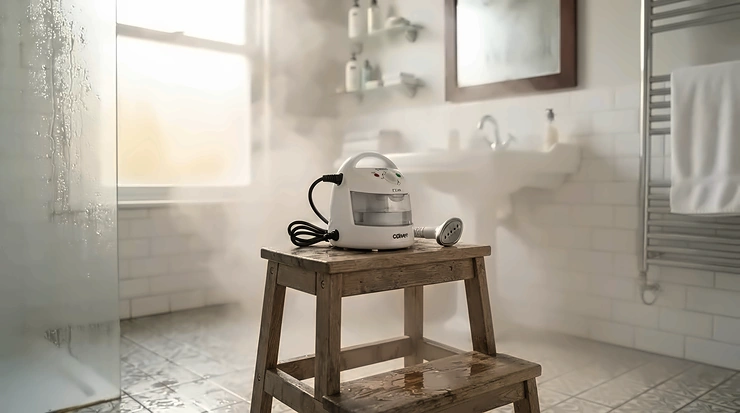
Your bathroom is a strange little paradox. You spend fewer minutes there than anywhere else, yet the air works harder in there than in any other room. It handles steam, cleaning-spray haze, hairspray, and the occasional “well, that happened.” Most bathrooms have one exhaust fan of unknown age and a door that stays shut. That’s where a compact air purifier for bathroom use earns its keep. It’s a small, quiet box that keeps the air moving and filtered while your fan does the heavy lifting.
Here’s the catch. Most purifiers are built for bedrooms and living rooms, and the marketing around tiny units can get enthusiastic. Coverage numbers get stretched. “HEPA-type” labels get tossed around like confetti. And “bathroom-safe” means something different to every brand.
This guide cuts through that. You’ll get seven real products, from a bathroom air purifier under $50 to a stronger mid-priced unit. Each is judged on what matters in a small, damp room: clean air delivery rate (CADR), noise, footprint, filter type, and ozone safety. You’ll also get practical advice if you need an air purifier for guest bathroom duty, where the unit runs mostly unattended and has to behave itself. If you want a countertop size model, we’ll do the math on whether it can actually keep up.
One transparency note. Everything here comes from manufacturer spec pages, third-party measurements, and published regulatory guidance. There are no invented “I tested it for months” stories. Where reliable review data couldn’t be verified, I say so plainly. Prices are ranges only, so check current price before you buy.
What Is a Compact Air Purifier for Bathroom Use?
A compact air purifier for bathroom use is a small, low-wattage air cleaner, usually countertop, shelf-top, or plug-in. It filters airborne particles and odors from rooms of roughly 20 to 100 square feet. Most pair a HEPA-style filter with activated carbon, run quietly, and are sized for bathrooms, closets, and nurseries.
The “HEPA” part matters. A true HEPA filter is defined by its ability to capture at least 99.97% of particles at 0.3 microns. That covers dust, pollen, pet dander, and mold spores. Activated carbon is a separate job: it adsorbs odor-causing gases. Particles and smells are two different problems, which is why the best small units stack both.
Now the part marketing skips. A purifier cleans air that passes through it. It does not remove humidity, dry out a damp wall, or fix a leak. Think of it as a very good supporting actor. Your exhaust fan and good moisture habits are still the stars. The EPA suggests keeping indoor humidity between 30 and 50 percent, and a small hygrometer is a cheap way to see where your bathroom sits.
Quick Comparison Table: Compact Air Purifier for Bathroom at a Glance
| Product | Filtration | Key Spec | Price Range | Best For |
|---|---|---|---|---|
| LEVOIT Core Mini-P | Pre-filter + True HEPA + carbon | 34 CFM CADR (per Levoit), 25–44 dB | Around $50 | Best all-rounder for a small bath |
| GoveeLife Mini (H7126) | Filter-based (verify grade on listing) | 50 CFM, rated 78 sq ft | Budget tier; check current price | Bath plus dressing alcove |
| FULMINARE H13 True HEPA Compact | H13 HEPA (maker-claimed) | 360° air outlet | Budget tier; check current price | HEPA-grade on a tight budget |
| GermGuardian GG1100W | UV-C light; not a HEPA unit | Plug-in, zero counter space | Typically under $30 | Tiny powder rooms |
| LEVOIT LV-H132 | True HEPA + carbon (per Levoit line) | Rated roughly 129 sq ft | Typically sub-$100 | Slightly larger baths |
| LEVOIT Core 300 | Pre-filter + True HEPA + carbon | 141 CFM, rated 219 sq ft | Around $100 | Bath plus adjoining bedroom |
| Blueair Blue Pure Mini Max | Particle filter (verify on listing) | CARB-certified brand | Roughly $60–$80 per unit | Certification-minded buyers |
Looking at the comparison above, the LEVOIT Core Mini-P is the cleanest fit for an actual bathroom. Its published coverage numbers line up with a typical 40-to-60-square-foot room, with no wishful thinking required. If you want more airflow headroom, the LEVOIT Core 300 delivers it at roughly double the cost. The GermGuardian GG1100W is the odd one out, since it’s cheap and convenient but doesn’t offer the same particle filtration as the HEPA models.
💬 Just one click — help others make better buying decisions too!😊
Top 7 Compact Air Purifier for Bathroom Picks: Expert Analysis
Each pick below covers what the specs mean in a real bathroom, who it suits, and where it falls short. Review sentiment is summarized only where it could be verified, and I flag it when it couldn’t.
1. LEVOIT Core Mini-P — best all-rounder for a small bath
The standout here is that the numbers match how real bathrooms are built. Levoit lists a CADR of 34 CFM. It rates the unit for 254 square feet at one air change per hour, and for 53 square feet at 4.8 air changes per hour. A typical 5×8 full bath is about 40 square feet. With 8-foot ceilings that’s 320 cubic feet, so 34 CFM × 60 ÷ 320 works out to roughly six air changes an hour. The LEVOIT Core Mini-P draws 7W, weighs 2.2 pounds, and stands about 10.4 inches tall on a 6.5-inch base, which is genuine countertop size.
Based on the spec comparison, this is the sensible bathroom air purifier under $50 contender that still has a three-stage filter: pre-filter, True HEPA per Levoit, and activated carbon. Rated noise of 25–44 dB means the low setting should disappear under a running fan, while top speed will be audible. The carbon layer is thin, so expect it to soften odors rather than erase them. One retailer listing shows a different CFM figure than Levoit’s own page, and I’ve used the manufacturer’s.
Reviewers in one roundup describe it as helpful but best suited to smaller areas, which is exactly where you’d put it. I couldn’t verify a current review-count breakdown, so skim the newest listing reviews yourself.
Pros:
- ✅ Coverage math fits real bathrooms
- ✅ Very low 7W power draw
- ✅ Check-filter indicator and 2-year warranty
Cons:
- ❌ Thin carbon layer for strong odors
- ❌ Top-speed noise is noticeable
Price: around $50, sometimes a touch under or over depending on promotions, so check current price. Verdict: strong value for a first purifier.
2. GoveeLife Mini (H7126) — most airflow in a pocket-sized body
The GoveeLife Mini (H7126) has a CADR of 50 CFM and a rated coverage of 78 square feet, according to a third-party comparison. It uses an 8W motor, so it sips power like the Levoit. The same comparison measured 40.1 dBA at the lowest speed and 56.5 dBA at maximum.
On paper this means more air through the filter per minute than the LEVOIT Core Mini-P. In a 320-cubic-foot bathroom, 50 CFM works out to about 9.4 air changes an hour. That’s plenty of headroom, so you can run it on its lowest speed and still keep pace. The measured low-speed noise isn’t directly comparable to Levoit’s manufacturer figure, because methods differ. Still, it’s worth knowing that “quiet” here is a measured reading, not a promise.
Who is it for? Someone with a bath plus a dressing alcove, or a powder room that gets heavy use. What the spec sheet won’t tell you is the filter grade, so confirm it on the current listing before buying. I couldn’t verify enough independent review data to summarize owner sentiment fairly.
Pros:
- ✅ Higher CADR than most mini units
- ✅ Low 8W motor draw
- ✅ Compact enough for shelf placement
Cons:
- ❌ Filter grade needs listing verification
- ❌ Owner feedback hard to verify
Price: budget tier, so check current price. Verdict: good value if the filter grade checks out.
3. FULMINARE H13 True HEPA Compact Purifier — H13-grade claim at a budget price
The headline is the H13 label. That grade is a step above the standard True HEPA cutoff, and this model pairs it with a 360° air outlet meant to spread cleaned air around a small room. It shows up regularly in under-$50 roundups.
What does that mean in practice? On paper, H13 media captures finer particles than lower grades. But the grade is only a manufacturer claim until you see a CADR figure, ideally one verified by AHAM or a lab. Smaller brands sometimes publish glowing filter grades without matching airflow data, and a great filter in a weak fan is still a weak purifier. Here’s what to weigh: look for a stated CADR or at least a rated room size, then run the same air-change math shown later in this guide.
This model suits budget buyers who want HEPA-grade filtration for a small bath and don’t mind doing a little homework. Review sentiment wasn’t verifiable in enough depth for me to summarize, so I’d treat it as unproven rather than bad.
Pros:
- ✅ H13 HEPA claim on a small unit
- ✅ 360° outlet spreads air evenly
- ✅ Frequently listed in budget roundups
Cons:
- ❌ Airflow data less transparent than Levoit’s
- ❌ Brand track record is thinner
Price: budget tier; check current price. Verdict: a reasonable gamble once you confirm CADR.
4. GermGuardian GG1100W — plug-in convenience for tiny powder rooms
The big win is that the GermGuardian GG1100W needs zero counter space. It’s a small plug-in unit marketed for bathrooms and other compact spaces, using UV-C light to freshen air. A black version, the GG1100B, also exists.
Here’s the honest framing. This isn’t a HEPA purifier, so it doesn’t offer the same particle capture as the Levoit models. Treat it as an air freshener with UV ambitions rather than a dust or allergen solution. UV-C needs exposure time to do much, and in a plug-in unit with modest airflow, that’s limited. It earns its place in a half-bath where you simply want a low-effort, always-on companion and don’t want a cord or box on the counter.
Because UV devices fall under California’s ozone rules, it’s smart to confirm CARB status on the current listing. Owner sentiment varies widely across small plug-ins, and I couldn’t verify a reliable aggregate here.
Pros:
- ✅ No counter footprint at all
- ✅ Extremely low price point
- ✅ Dead-simple plug-and-forget use
Cons:
- ❌ Not a HEPA particle filter
- ❌ Limited proof for odor and germ claims
Price: typically under $30. Verdict: fine as a tiny add-on, not as your only defense.
5. LEVOIT LV-H132 — the older workhorse for slightly bigger baths
The LEVOIT LV-H132 has been a popular small-room Levoit for years. Coverage figures vary by source. One comparison lists roughly 129 square feet, while another roundup cites a smaller number and a CADR of 145 CFM. When sources disagree, treat the rating as an upper bound for your room.
In one comparison test, it improved air quality by about 87 to 88 percent in an hour in rooms of roughly 120 and 194 square feet. That’s useful context, since a bathroom is much smaller than either. In a 40-square-foot room, you’d have lots of headroom even at low speed. That same comparison suggests it lacks the sleep mode found on the LEVOIT Core 300, and it appears to include a night light. That’s a perk in a hallway bath and a nuisance in a guest suite.
This one suits a larger bath, or a bath with an attached walk-in closet. I couldn’t verify a precise current review picture, but its longevity on the market is itself a signal of steady demand.
Pros:
- ✅ Solid test improvement in larger rooms
- ✅ True HEPA plus carbon per Levoit line
- ✅ Plenty of headroom for a bathroom
Cons:
- ❌ Conflicting coverage figures across sources
- ❌ No sleep mode in one comparison
Price: typically sub-$100; check current price. Verdict: good value if you find it near the low end.
6. LEVOIT Core 300 — power to spare for bath-plus-bedroom suites
The standout is raw capacity. The LEVOIT Core 300 posts a CADR of 141 CFM and is rated for 219 square feet at 4.8 air changes an hour (and 1,051 square feet at one). Levoit says the motor produces no ozone, and the same maker’s claim is that a 65-square-foot room cycles in about three minutes.
In a 40-square-foot bath, 141 CFM works out to over 26 air changes an hour. That’s absurd overkill, which is the point. You run it on the lowest speed and enjoy the quiet. Third-party testing logged noise from 40.7 dBA at the lowest speed to 64.9 dBA at maximum. Power draw ranged from about 0.8W idle to roughly 43.5W at top speed. It has a sleep mode, which the LEVOIT LV-H132 lacks. The trade-off is size: it’s taller and wider than a mini unit, so measure your shelf first.
It’s best if your bathroom opens into a bedroom and you want one unit covering both. Listing pages show it among the more heavily reviewed small purifiers, with ratings in the mid-4-star range.
Pros:
- ✅ Huge airflow headroom for the price
- ✅ Sleep mode and low idle draw
- ✅ Well-reviewed and widely stocked
Cons:
- ❌ Loud at maximum speed
- ❌ Not truly countertop size
Price: around $100. Verdict: overkill for a bathroom alone, excellent for a bath-plus-bedroom combo.
7. Blueair Blue Pure Mini Max — for buyers who prize certification
The Blueair Blue Pure Mini Max stands out for brand-level compliance. Blueair states that all of its air purifiers are CARB certified and tested to UL 867 at an accredited lab, with ozone emissions well under California’s 50 ppb limit. For anyone nervous about ozone, that documentation is reassuring.
The honest limit is that I couldn’t verify the Mini Max’s exact CADR or filter spec in my research. So check the current listing and run the air-change math before buying. What the certification does tell you is that the unit meets a respected safety bar, which is a worthwhile tiebreaker when every other spec is close.
This one fits a buyer who’d rather pay a bit more for documented safety and a recognized brand. It’s sold in single units and multi-packs, with a 2-pack seen at retail for roughly double the single-unit price. Owner sentiment couldn’t be verified well enough to summarize.
Pros:
- ✅ Brand-wide CARB certification
- ✅ Tested to UL 867 standard
- ✅ Multi-pack option for two bathrooms
Cons:
- ❌ Specs need listing verification
- ❌ Costs more than the budget picks
Price: roughly $60–$80 per unit depending on retailer and pack size. Verdict: fair value for the certification peace of mind.
✨ Ready to Clear the Air?
🔍 Take your bathroom from stuffy to fresh with these carefully selected products. Click on any highlighted item to check current pricing and availability. These small units will help you create the clean, comfortable space your family and guests will notice!
Bathroom Air Purifier Under $50: What a Budget Option Really Buys You
Let’s be straight about the bathroom air purifier under $50 category. A budget option here can be a perfectly good decision, but it’s a different bargain than a mid-priced unit. The LEVOIT Core Mini-P sits right around that $50 line, while the GermGuardian GG1100W and the FULMINARE H13 True HEPA Compact Purifier sit comfortably below or near it.
What do you get? In most cases, a small fan, a modest filter, and low noise. What do you give up? Usually airflow headroom, a long list of features, and sometimes verification. Budget makers often skip independent testing, which makes brand transparency a real value-add.
Running cost is the quiet win. At 7W, a unit like the LEVOIT Core Mini-P uses about 5 kilowatt-hours a month if it runs around the clock. At roughly 17 cents per kilowatt-hour, that’s under a dollar a month, though your utility rate will differ. The recurring cost that actually matters is the replacement filter, so check its price before you commit.
Here’s a rule of thumb. If you’re protecting a guest bathroom that sees light traffic, a budget option is usually plenty. If you’re managing real moisture or odor in a daily-use bath, spend a little more for airflow headroom, like the LEVOIT Core 300, and pair it with solid ventilation.
Countertop Size and Coverage: Doing the Air-Change Math
Most spec sheets brag about square footage, but the number that really matters is air changes per hour (ACH). The formula is simple: ACH = CADR (in CFM) × 60 ÷ room volume (in cubic feet). Take your bathroom’s length × width × ceiling height, and you’re set.
Here’s how three countertop size and near-countertop models stack up in a 40-square-foot bathroom with 8-foot ceilings (320 cubic feet):
| Model | CADR | Rated Room (4.8 ACH) | ACH in 40 sq ft Bath | Best For |
|---|---|---|---|---|
| LEVOIT Core Mini-P | 34 CFM | 53 sq ft | About 6.4 | Full bath or powder room |
| GoveeLife Mini (H7126) | 50 CFM | 78 sq ft | About 9.4 | Bath plus alcove |
| LEVOIT Core 300 | 141 CFM | 219 sq ft | About 26 | Bath plus bedroom |
Notice what this reveals. The LEVOIT Core Mini-P already clears the commonly cited four-to-five-changes-an-hour target in a standard bath, so a bigger unit isn’t automatically a better one. The LEVOIT Core 300 could, in theory, cycle the air constantly, but you’d only ever want it on low in this room. Bigger baths or open layouts change the math, so measure before you buy.
How to Choose a Compact Air Purifier for Bathroom Use
Short on time? Here are the six steps, in order of importance. The EPA’s guidance on air cleaners and filters in the home is a handy companion, and it notes that EPA does not certify or recommend specific brands or models.
- Measure your room. Multiply length × width × ceiling height to get cubic feet. Everything else builds on that number.
- Find the CADR. Look for a stated CFM figure and use the formula above. If a brand won’t publish one, treat that as a yellow flag.
- Aim for four or more air changes per hour. That’s the sweet spot where a small purifier noticeably refreshes the room.
- Check the filter stack. True HEPA handles particles, and activated carbon handles odors. In a bathroom, carbon deserves more attention than usual.
- Verify ozone safety. Look for CARB certification or similar documentation, and avoid anything that intentionally generates ozone.
- Weigh noise and footprint. A bathroom shared with a bedroom needs a sleep mode or a very low floor noise. Measure the shelf you plan to use.
Air Purifier for Guest Bathroom: A Low-Maintenance Setup Guide
An air purifier for guest bathroom use has a different job than one in your daily-use bath. It runs mostly unattended, it needs to be quiet enough for a stranger’s comfort, and it should never become a chore. Here are three scenarios, with budgets and reasoning.
Scenario 1: The occasional host. A guest bathroom used a handful of weekends a year, with a $50 budget. The LEVOIT Core Mini-P fits: low wattage, a filter that lasts, and a low setting you can leave on. Skip the aroma pad, because scent preferences vary and a neutral room is more welcoming.
Scenario 2: The apartment powder room. A tiny half bath with one outlet near the ceiling and no counter space. The GermGuardian GG1100W plugs in and disappears. It won’t filter particles, but it helps keep the space fresh at a very low cost.
Scenario 3: The connected suite. A guest bath attached to a bedroom, used several nights a month. The LEVOIT Core 300 covers both on low speed, using its sleep mode at night.
For every guest bathroom setup, put the unit where it won’t get splashed, leave a few inches of intake clearance, and set a reminder to check the filter before guests arrive. Make sure the bathroom itself has a working exhaust fan, since a purifier supports ventilation rather than replacing it.
Practical Usage Guide: Setup, Placement, and Your First 30 Days
Getting a purifier is the easy part. Getting value from it is about placement and habits. Here’s the playbook.
Pick the right spot. A dry countertop or shelf away from the shower or tub is ideal. Keep it out of the direct splash zone, and leave several inches of clearance around the intake (check your manual for exact distances). Humid, warm air can shorten filter life, so distance from the shower helps.
Run it smart. Use the lowest setting most of the time and bump it up after showers. If the unit has a timer or sleep mode, use it overnight.
Add a hygrometer. A small humidity gauge tells you if you’re in the 30-to-50-percent target range. If the number sits high, you have a ventilation problem a purifier can’t solve.
Mind the filter. Many units have a check-filter indicator, such as on the LEVOIT Core Mini-P. Manufacturers commonly suggest replacements every six to eight months with normal use, but a humid bathroom may shorten that, so follow the indicator and your manual.
Avoid the first-30-day mistakes. The big ones are blocking the intake with towels, placing the unit next to the tub, running it only on max, and forgetting that the pre-filter collects hair and lint. A quick wipe or vacuum every few weeks keeps airflow healthy.
Problem → Solution: Fixing Common Bathroom Air Headaches
Problem: A musty smell that won’t quit. That usually signals moisture, not just odor. A purifier with carbon helps, but the fix is better ventilation, drying surfaces, and checking for leaks. The EPA’s consumer guide to air cleaners in the home is clear that air cleaners are not a stand-alone answer to mold.
Problem: The unit is too loud. Drop to the lowest speed or use sleep mode. If your model is too loud even on low, a smaller-CADR unit like the LEVOIT Core Mini-P may suit the room better than a powerhouse.
Problem: The filter clogs quickly. Bathrooms generate hair and lint. Clean the pre-filter regularly and keep the unit off the floor.
Problem: Mirrors still fog up. That’s humidity, and a purifier doesn’t dehumidify. Run the exhaust fan longer or consider a small dehumidifier if the problem persists.
Problem: The outlet is far from the counter. A plug-in like the GermGuardian GG1100W sidesteps cords entirely. For other models, a short, properly rated cord placed away from water is safer than an overstretched one.
Compact Air Purifier vs Exhaust Fan, Plug-Ins, and Odor Sprays
A purifier isn’t your only option, and it shouldn’t be your only tool. Here’s how the common choices compare.
| Option | What It Does Well | What It Misses | Best For |
|---|---|---|---|
| Compact purifier (HEPA + carbon) | Filters particles and softens odors | Doesn’t remove moisture | Allergy-minded households |
| Exhaust fan | Removes humid air outdoors | No particle or odor filtering | Every bathroom, as the foundation |
| Plug-in UV or ionic units | Cheap, no footprint | Limited particle capture; ozone concerns for some | Tiny powder rooms |
| Sprays and charcoal bags | Mask or absorb odors | No particle filtering | Quick odor cover-ups |
The takeaway is that these tools stack rather than compete. An exhaust fan handles moisture, a HEPA-plus-carbon purifier handles particles and smells, and sprays are a stopgap. If you can only pick one thing to fix first, make it ventilation. If ventilation is solid and the room still feels stale or dusty, add a purifier like the LEVOIT Core Mini-P.
Common Mistakes When Buying a Compact Air Purifier for Bathroom Use
Plenty of buyers stumble in the same places. Avoid these and you’re ahead of most shoppers.
- Trusting square footage alone. A rated room size at one air change per hour is not the same as at five. Always check which ACH the number refers to.
- Ignoring noise at the top speed. Many units are quiet on low and loud on high. Plan to live on the low setting.
- Buying “HEPA-type” and assuming it means True HEPA. The labels aren’t equivalent, and unclear wording is worth questioning.
- Skipping ozone checks. Some products sold as air purifiers deliberately generate ozone, which is a lung irritant.
- Forgetting the filter cost. The sticker price is only part of the bill, so look up the replacement filter before you buy.
- Expecting it to fix a damp problem. A purifier can’t dry a wall or stop a leak.
Safety, Ozone, and Regulations: What to Check Before You Buy
Safety matters more in a bathroom, where water and electricity share a small room. Start with ozone. California’s regulation limits ozone emissions from indoor air cleaners to 0.050 parts per million, which is 50 parts per billion. The state’s air cleaner information for consumers page lists certified devices and strongly advises against ozone generators and uncertified air cleaners in the home. Even if you don’t live in California, CARB certification is a handy, widely recognized signal. The EPA’s consumer guide similarly advises avoiding air cleaners that intentionally produce ozone.
Electrical safety is the other half. Purifiers aren’t waterproof, so keep them off wet surfaces and out of splash range. US bathroom outlets are generally GFCI-protected, which adds a safety net, but don’t lean on it as a substitute for sensible placement.
Finally, read the claims critically. Words like “kills germs” or “eliminates mold” are marketing language unless backed by testing you can find. When in doubt, stick with filter-based units from brands that publish CADR and certification data.
FAQ: Compact Air Purifier for Bathroom
❓ Can a compact air purifier for bathroom use handle humidity?
❓ Is a bathroom air purifier under $50 actually worth buying?
❓ How long should I run an air purifier for guest bathroom use?
❓ Where should a countertop size purifier go in a bathroom?
❓ How often do bathroom purifier filters need replacing?
Conclusion
Here’s the short version. A compact air purifier for bathroom use works best as a supporting player. It filters particles, softens odors, and keeps the air moving, while your exhaust fan and moisture habits handle the humidity.
For most people, the LEVOIT Core Mini-P is the safest pick. Its published numbers fit a typical bathroom, it’s quiet, and it sits right around the $50 mark. If you want extra airflow, or your bath opens into a bedroom, the LEVOIT Core 300 gives you headroom at roughly double the cost. The GoveeLife Mini (H7126) is a strong middle path if you can confirm its filter grade, and the Blueair Blue Pure Mini Max suits anyone who puts certification first. The FULMINARE H13 True HEPA Compact Purifier and LEVOIT LV-H132 are worth a look when pricing and listings line up. Meanwhile, the GermGuardian GG1100W is a cheap add-on for tiny powder rooms rather than a full solution.
Whatever you choose, do the quick math: measure the room, find the CADR, and aim for around five air changes an hour. Then keep the filter fresh and the fan running.
Recommended for You
- Air Purifier For Bathroom Mold And Mildew: 7 Smart Picks 2026
- Air Purifier For Bathroom Odor: 7 Best Picks To Try In 2026
- Air Purifier For Garage Gym: 7 Proven Picks For 2026
Disclaimer: This article contains affiliate links. As an Amazon Associate, I earn from qualifying purchases. If you purchase products through these links, we may earn a small commission at no additional cost to you.
✨ Found this helpful? Share it with your friends! 💬🤗
