
In This Article
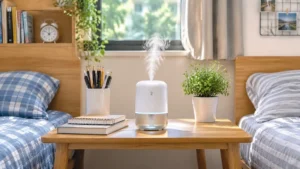
Picture a 150-square-foot box with two beds, a mini fridge, a laundry pile with its own weather system, and a window that opens about as far as a teenager’s patience. That’s your dorm. Air doesn’t circulate in there. It loiters.
That’s why a portable air purifier for dorm room life has graduated from “nice extra” to “move-in essential.” Bedding dust, pollen hitchhiking on hoodies, burnt popcorn, body spray and a roommate’s gym bag all settle into the same shared pocket of air where you study, sleep, and occasionally weep over organic chemistry.
The trouble is that plenty of tiny gadgets make coverage claims that are, let’s say, optimistic. So I dug into spec sheets, independent test data, and aggregated review sentiment for seven real models. They run from a bargain portable air purifier under $50 to a premium pick built for suites. Each is explained in plain English, with honest notes on noise level, dorm room size, and what a shared living space demands.
Prices below are ranges captured at the time of research. They shift constantly, so check current pricing before you buy.
What Is a Portable Air Purifier for Dorm Room Use?
A portable air purifier for dorm room use is a compact, plug-in (or battery-powered) air cleaner that pulls room air through filters—typically a pre-filter, a HEPA-style filter, and sometimes activated carbon—to trap dust, pollen, pet dander, and smoke particles. It’s sized for small, shared spaces and designed to be quiet enough for studying and sleeping.
The “HEPA” label refers to a filter efficiency standard that requires capturing at least 99.97% of 0.3-micron particles. That’s why “True HEPA” and “HEPA-type” on a box are not the same promise.
Quick Comparison: 7 Portable Air Purifier Picks for Dorm Room Life
Here’s the fast scan before the deep dive. “Realistic coverage” uses the rule of thumb in the EPA’s guide to air cleaners in the home, which ties a purifier’s CADR (clean air delivery rate) to floor area. It is not the inflated number some boxes print.
| Product | Best For | Price Range | Realistic Coverage | Noise Level (maker’s figures) |
|---|---|---|---|---|
| Levoit Core Mini-P | Single desks and nightstands | ~$35–$50 | ~50 sq ft | 25–44 dB |
| Pure Enrichment PureZone Mini | Cordless personal bubble | ~$35–$50 | Personal space only | Varies by listing |
| Clorox Tabletop True HEPA (11020) | Small singles wanting a timer | ~$50–$75 | ~80–90 sq ft | 23 dB on low |
| Holmes Desktop HEPA-Type (HAP242B-U) | Tight budgets, odor control | ~$45–$60 | ~100–110 sq ft | Reviews mixed |
| Levoit Core 300-P | Typical double rooms | ~$80–$100 | ~215–220 sq ft | 24–50 dB |
| Levoit Vital 100S | Auto mode and app control | ~$110–$140 | ~220 sq ft | 23 dB minimum (listed) |
| Coway Airmega Mighty AP-1512HH | Big rooms and shared suites | ~$150–$240 | ~360 sq ft | 24.5–54.9 dB |
Notice the cliff between the first four and the last three. The budget quartet cleans a desk-sized zone or a very small single, while the Levoit pair and the Coway clean an actual room. For a typical double, the Levoit Core 300-P looks like the sweet spot on paper, and for a suite the Coway Airmega Mighty AP-1512HH is the one whose airflow won’t be out of breath. The noise column is maker claims, and independent measurements (covered below) often run higher.
💬 Just one click — help others make better buying decisions too!😊
Top 7 Portable Air Purifier for Dorm Room Picks: Expert Analysis
Every pick below is a real, currently listed model. Specs come from manufacturer pages and independent test sites, and the review comments are summarized themes rather than quotes.
1. Levoit Core Mini-P — the budget benchmark for tiny spaces
The Levoit Core Mini-P crams a three-stage filter into something roughly the size of a large water bottle. At about 2.2 pounds and just over 10 inches tall, it slides onto a desk or nightstand without a fight. A 7-watt draw means it costs almost nothing to run, and the six-foot-plus cord reaches most outlets.
Here’s what the spec sheet means in practice. A CADR of 34 CFM works out, by the EPA-style two-thirds rule, to around 50 square feet of properly cleaned floor space. Levoit lists 254 sq ft at one air change per hour but also 53 sq ft at roughly five changes per hour, and the second number is the honest one for allergy relief. Think “personal zone,” not “whole room.”
Based on the spec comparison, it suits a single-occupant desk area or a bunk-side shelf, and it’s a smart portable air purifier for small rooms when you can park it close to your head. Reviewers consistently praise how quiet and cheap it is. The recurring complaints are short filter life (roughly four to six months) and no timer. One testing site also doesn’t classify its filter as True HEPA despite the maker’s 99.97% claim, so treat it as a strong dust-and-pollen filter, not a medical device.
Pros:
- ✅ Tiny footprint fits any desk or shelf
- ✅ Very low running cost at 7 watts
- ✅ Quiet enough for light sleepers
Cons:
- ❌ Short filter life and no timer
- ❌ Only cleans a very small zone properly
Expect roughly $35–$50, which makes it a true portable air purifier under $50 and the best entry-level value of the seven.
2. Pure Enrichment PureZone Mini — the cordless, pocket-sized personal bubble
The Pure Enrichment PureZone Mini is the only pick here that runs without a wall outlet. It weighs about 0.58 pounds and carries a rechargeable battery rated for up to 12 hours on low, 6 on medium, and 2.5 on high. The filter is a 2-in-1 design (carbon pre-filter plus H13 True HEPA) that the maker says to replace every six months, and the warranty runs a generous five years.
Now the reality check. Some retail listings advertise 54 square feet, but the maker’s own spec page bases its coverage on a CADR of just 4 CFM, which works out to about 6 square feet. That’s a bubble around your laptop, not a room.
What most buyers overlook is how useful that bubble can be. It suits lecture halls, library carrels, the car, and the pillow-side spot where a bigger unit would blow on you. It’s a sidekick, not a primary purifier. Review sentiment is positive but thin: one big-box retailer page shows about 4.3 out of 5 from a small sample, and another listing averages near 4.1 from a few hundred ratings. Complaints center on battery life at high speed (one buyer reported roughly three hours), and one reviewer said the unit failed after about a year.
Pros:
- ✅ Cordless and light enough for a backpack
- ✅ Five-year warranty is rare at this size
- ✅ USB charging keeps things simple
Cons:
- ❌ Effective coverage is personal-space only
- ❌ Battery drains fast on high speed
Plan on roughly $35–$50. Good value as a travel buddy, poor value as your only purifier.
3. Clorox Tabletop True HEPA (11020) — quiet, with a built-in timer
The Clorox Tabletop True HEPA (11020) is the tidy tabletop tower of the group. It has a pre-filter plus True HEPA filter, three speeds, an adjustable night light, and an optional 2-, 4- or 8-hour timer. It’s Energy Star certified, weighs about 3.1 pounds, and carries a three-year warranty. Clorox lists 23 dB on the lowest speed.
Marketing says it handles “up to 200 sq ft,” but the CADR figures (53 smoke, 59 dust, 55 pollen) translate to roughly 80–90 square feet by EPA-style math, and some retailer listings frame it around 80 sq ft. That’s the gap to know about. In a roughly 100 sq ft single, it will do real work if it’s within a few feet of your bed or desk. In a larger double, it’s underpowered.
Buyers describe the medium setting as soft-sounding, and a Grown & Flown roundup credits Wired with naming it a best tabletop purifier. The timer is the underrated feature: set it to four hours and let it clean while you’re at class, no app required.
Pros:
- ✅ Timer and low-speed noise suit bedrooms
- ✅ True HEPA plus pre-filter at a small size
- ✅ Three-year warranty and Energy Star rating
Cons:
- ❌ Coverage claim outruns its CADR
- ❌ Price often sits just above $50
Expect roughly $50–$75. It’s a fair value for a single room, but check current pricing against the Holmes Desktop HEPA-Type (HAP242B-U) if you’re watching every dollar.
4. Holmes Desktop HEPA-Type (HAP242B-U) — slim enough to lie flat or stand up
The Holmes Desktop HEPA-Type (HAP242B-U) fits a bookshelf either way. It combines a HEPA-type filter, a carbon layer for odors, and an optional ionizer. It’s rated for rooms up to about 109 sq ft, and its smoke CADR of 70 matches that figure almost exactly. At roughly 5.8 pounds with a three-year warranty, it’s sturdier than its price suggests.
The term that matters is “HEPA-type.” Holmes describes it as capturing particles down to about 2 microns, so it handles dust, pollen, and hair well but doesn’t meet the True HEPA standard for the finest particles. For mild allergies and everyday dust, that’s fine. For asthma or smoke concerns, I’d step up to a True HEPA model. The ionizer can be switched off, and in a dorm I’d leave it off (more on ozone later).
Holmes’s own product page shows about 4.3 out of 5 across 88 reviews. Some customers find it noticeably loud, especially in bedrooms, while others call it fine for background use. Here’s a budget trick: two units together deliver roughly 140 CFM of combined CADR, enough for about 215 sq ft by the EPA math.
Pros:
- ✅ Slim dual-position design saves space
- ✅ Carbon layer helps with cooking and gym-bag smells
- ✅ Three-year warranty at a budget price
Cons:
- ❌ HEPA-type filter, not True HEPA
- ❌ Reviewers disagree about how loud it is
Plan on roughly $45–$60. That makes it a borderline portable air purifier under $50, worth it when odors, not allergies, are your main problem.
5. Levoit Core 300-P — the all-rounder for a typical double
The Levoit Core 300-P is the model most dorm guides circle first, and the spec sheet explains why. Its CADR is about 141 CFM (140 dust, 145 pollen) in an 8.7-inch-square body that weighs roughly seven pounds. By the EPA-style math, that’s about 215–220 square feet at roughly five air changes per hour. That lines up with Levoit’s own 219 sq ft figure and covers most doubles.
It also has a three-stage filter (pre-filter, H13 True HEPA, activated carbon), a sleep mode, and a 2-4-6-8-hour timer. Levoit quotes 24–50 dB across the speeds.
Independent notes keep the hype honest. GearLab calls it a little underpowered for large spaces but praises its portability. Tom’s Guide recorded louder readings than the box suggests (about 40 dB on low and 56 dB at the top in its test room). Reviewers rate it around 4.7 stars across tens of thousands of ratings. The minority complaints are a new-plastic smell, an occasional rattle, and a musty filter odor. Filters run about 6–8 months.
It suits the student who wants one machine to handle dust, pollen, and kitchenette smells without being heard.
Pros:
- ✅ True HEPA with real room-scale airflow
- ✅ Sleep mode and timer suit bedrooms
- ✅ Huge review base and easy filter availability
Cons:
- ❌ Measured noise runs above the maker’s claim
- ❌ Plastic smell reported by some new owners
Expect roughly $80–$100. It’s the best overall value for a shared double.
6. Levoit Vital 100S — auto mode that thinks for you
The Levoit Vital 100S adds a brain to the Core 300-P formula. It has an infrared PM2.5 sensor, an auto mode that raises and lowers the fan by itself, and app plus Alexa control. Its CADR sits near 141 CFM, so coverage lands around 219 sq ft. HouseFresh estimated a PM1 CADR near 148 cfm in its smoke test and ranked it the best cheap option in Levoit’s lineup. The pre-filter is washable, which trims long-term filter spend.
What does auto mode buy you? Imagine a burnt-toast incident at 11 p.m.: the fan ramps up, clears the air, then settles back down without you touching anything. That’s the whole pitch, and it’s a good one for forgetful humans.
Two caveats. First, infrared sensors are generally less precise than laser ones, and the sensor needs a cotton-swab cleaning about every two months. Second, the noise level gap shows up again. Levoit lists 23 dB at the lowest setting, but AirPurifierFirst measured 40.5–65.4 dBA across speeds. Read the box number as a best case.
Pros:
- ✅ Auto mode adjusts fan speed hands-free
- ✅ App scheduling and air-quality readouts
- ✅ Washable pre-filter trims upkeep costs
Cons:
- ❌ Measured noise is well above the listed minimum
- ❌ Sensor needs periodic cleaning
Plan on roughly $110–$140. It’s worth the premium over the Levoit Core 300-P only if you’ll actually use auto mode or the app.
7. Coway Airmega Mighty AP-1512HH — the most capacity for shared suites
The Coway Airmega Mighty AP-1512HH is the grown-up in the group. Its CADR (233 smoke, 246 dust, 240 pollen) supports Coway’s 361 sq ft rating at about 4.8 air changes per hour. That’s roughly double the airflow of the Levoit pair. The filter stack includes a pre-filter, a deodorization filter, a HEPA filter, and an optional bipolar ionizer you can turn off. It also offers auto mode with an air-quality indicator, plus an eco mode.
Think of it as the machine for the common room: a four-person suite, a kitchenette-adjacent lounge, or a big single you share with a dust magnet. It’s bulky, roughly a foot and a half tall, and it can draw up to about 77 watts. Coway lists 24.5–54.9 dB on a related model page, while AirPurifierFirst measured about 42 dBA on low and 63.5 dBA at maximum. Tom’s Guide called it effective but not the quietest.
The HEPA filter lasts about a year, and replacement sets run roughly $35–$60 depending on the seller. One availability note: RTINGS reports this model has been succeeded by the newer Coway Airmega Mighty2, so stock may thin out and pricing may drift.
Pros:
- ✅ Largest coverage of all seven picks
- ✅ HEPA filter lasts about a year
- ✅ Three-year warranty
Cons:
- ❌ Bulky for a cramped dorm
- ❌ Louder at higher speeds
Expect roughly $150–$240. It’s a smart buy when the cost is split across roommates.
Side-by-Side Spec Check
| Product | CADR (CFM) | Filtration as Marketed | Warranty | Best For |
|---|---|---|---|---|
| Levoit Core Mini-P | 34 | 3-stage (pre-filter, HEPA-style, carbon) | 2 years | Desk or bedside zone |
| Pure Enrichment PureZone Mini | ~4 (maker’s fine print) | 2-in-1 H13 True HEPA plus carbon | 5 years | Cordless travel use |
| Clorox Tabletop True HEPA (11020) | 53–59 | Pre-filter plus True HEPA | 3 years | Small singles needing a timer |
| Holmes Desktop HEPA-Type (HAP242B-U) | 70 (smoke) | HEPA-type plus carbon | 3 years | Budget odor control |
| Levoit Core 300-P | ~141 | Pre-filter, H13 True HEPA, carbon | 2–3 years (check listing) | Typical doubles |
| Levoit Vital 100S | ~141–143 | 3-stage with washable pre-filter | 2 years | Smart auto operation |
| Coway Airmega Mighty AP-1512HH | 233–246 | Pre-filter, deodorization, HEPA, optional ionizer | 3 years | Suites and large rooms |
Read the CADR column first, because it’s the number that decides whether a unit can actually clean your air. The jump from about 70 CFM to about 141 CFM is the real dividing line between a “sidekick” and a “room purifier,” and the Coway Airmega Mighty AP-1512HH roughly doubles that again. Warranty length is a useful tiebreaker among similar models, and the Pure Enrichment PureZone Mini wins it despite having the smallest reach.
Setup and Placement Guide: Your First 30 Days
A purifier only works if the air can reach it, and dorm rooms are cluttered obstacle courses. These steps squeeze out the most performance.
- Unbox and strip the filter. Many units ship with the filter in a plastic bag, and forgetting to remove it is a classic first-week mistake. Check your manual to confirm.
- Choose the spot. Place it where you spend the most time, usually near the bed or desk. Keep the intake clear of curtains, bedding, and laundry baskets, and leave a few inches of space around it (check the manual for the exact clearance).
- Run it hard, then quiet. Use a higher speed when you’re out of the room or after cooking, cleaning, or a hallway-door slam. Drop to sleep mode at night.
- Wipe the pre-filter. A quick vacuum or wipe every couple of weeks keeps airflow healthy and extends the main filter’s life.
- Set a replacement reminder. Mark your phone calendar at four to six months for compact units and about a year for larger HEPA stages, then adjust based on dust levels and the filter indicator.
Common mistakes in the first 30 days include hiding the purifier behind a desk, running only the lowest speed in a dusty room, and leaving an ionizer on in a tiny space. Little tricks help too: run it for 30 minutes before bed to start the night with cleaner air, and turn off the display or night light if your roommate is a light sleeper.
Real-World Scenarios: Which Pick Matches Your Dorm Life?
Specs are abstract, so here are three hypothetical students and the logic that matches each to a purifier.
Maya, a first-year in a roughly 120 sq ft single, with seasonal allergies and a budget near $60. She studies in her room for hours. The Levoit Core Mini-P covers only about 50 sq ft properly, so she’d place it at her desk or bedside within a few feet. The Holmes Desktop HEPA-Type (HAP242B-U) covers about 109 sq ft but isn’t True HEPA, so Maya’s allergies argue for the Levoit.
Jordan and Sam, sharing a double of roughly 190 sq ft, splitting costs, with one early riser and one night owl. They need real room-scale airflow and a sleep mode. The Levoit Core 300-P matches the square footage on paper, and its low-speed setting keeps the peace. Splitting a roughly $80–$100 purchase makes it affordable.
Priya and three suitemates in a shared suite with a kitchenette, roughly 300 sq ft of common space. Only one of the seven reaches that far. The Coway Airmega Mighty AP-1512HH comes closest, and four people splitting a $150–$240 purchase puts each at a manageable amount. Auto mode helps when someone burns dinner.
✨ Ready to Breathe Easier?
🔍 Take your dorm’s air to the next level with these carefully selected picks. Click any bolded product name to check current pricing and availability. These units will help you create a cleaner, calmer space for studying and sleeping!
How to Choose a Portable Air Purifier for Dorm Room Spaces
Short answer first: match the machine to your room, then choose for noise level, filter type, and running cost, in that order. Here’s the sequence.
- Measure your room. Multiply length by width. The EPA guidance referenced earlier translates to a CADR of roughly two-thirds of your floor area for 8-foot ceilings.
- Trust CADR over marketing. “Covers up to X sq ft” often assumes only one air change per hour, so look for an independently verified CADR number.
- Check the noise level at the speed you’ll actually run. The sleep setting matters most in a dorm.
- Pick the filter that fits your needs. True HEPA beats “HEPA-type” for allergies, and activated carbon helps with odors.
- Count the running cost. Filter life and replacement price add up faster than the sticker price.
- Check rules and safety. Avoid ozone generators, look for certification marks, and read your housing handbook.
Dorm Room Size: Matching CADR to Your Square Footage
Dorm room size is the single biggest variable in choosing a unit, and it varies more than people expect. Many singles run roughly 100–130 square feet and many doubles roughly 120–250, but layouts, alcoves, and ceiling heights differ, so measure yours.
The quick math: divide a unit’s CADR by 0.65 to estimate the maximum floor area it can clean properly (assuming 8-foot ceilings). If your ceilings are taller, as in some older buildings, aim higher.
| Dorm Room Size | Minimum CADR (EPA estimate) | Products That Clear It | Best For |
|---|---|---|---|
| ~100 sq ft | 65 CFM | Holmes Desktop HEPA-Type (HAP242B-U), Levoit Core 300-P, Levoit Vital 100S, Coway Airmega Mighty AP-1512HH | Compact singles |
| ~200 sq ft | 130 CFM | Levoit Core 300-P, Levoit Vital 100S, Coway Airmega Mighty AP-1512HH | Typical doubles |
| ~300 sq ft | 195 CFM | Coway Airmega Mighty AP-1512HH | Large doubles and suites |
| ~400 sq ft | 260 CFM | None of the seven (Coway comes closest) | Open common rooms |
The Clorox Tabletop True HEPA (11020) falls a hair short of the 100 sq ft threshold, which is why I list it for slightly smaller spaces. If your dorm room size lands between rows, buy the next tier up, because oversizing lets you run quietly on a low speed. Undersizing means running flat out all day.
HouseFresh’s air purifier buying guide makes a similar argument. It stresses that CADR matters more than the filter grade a box brags about, which is a useful antidote to “99.97%” headlines.
Noise Level: What the Decibel Numbers Really Mean
Noise level is where dorm purifiers win or lose friends. A rough scale helps: around 30 dB is whisper territory, while around 50 dB is a quiet conversation or a running refrigerator.
The headline numbers (24 dB for the Levoit Core 300-P, 23 dB for the Clorox Tabletop True HEPA (11020) and Levoit Vital 100S) describe the lowest setting under lab conditions. Independent tests tell a more nuanced story. GearLab measured the Levoit Core Mini-P at about 32, 35 and 42 dB across its speeds, compared with the maker’s 25–44 dB. Tom’s Guide recorded roughly 40 dB on low for the Levoit Core 300-P, and AirPurifierFirst measured the Levoit Vital 100S at 40.5–65.4 dBA. Methods differ in distance, room, and scale, so compare like with like where you can.
Practical rules for a quiet dorm:
- Buy CADR headroom, then run low. A bigger-CADR machine on a low speed often beats a tiny machine screaming at maximum.
- Listen before you commit. If you can, test the unit at night during the return window.
- Darken the display. Light is noise’s quieter cousin, and roommates notice.
Around 35–40 dB is a reasonable target for a bedroom at night, but that’s a judgment call, not a standard.
Portable Air Purifier Under $50: What You Actually Get
A portable air purifier under $50 is real, but it comes with real limits. The Levoit Core Mini-P and Pure Enrichment PureZone Mini sit comfortably in that range, the Holmes Desktop HEPA-Type (HAP242B-U) straddles it, and the Clorox Tabletop True HEPA (11020) often lands just above.
At this price, expect small CADR, which means small coverage. A unit like the Levoit Core Mini-P treats about 50 sq ft properly. The smart workaround is stacking. CADRs add, so two Holmes Desktop HEPA-Type (HAP242B-U) units deliver about 140 CFM combined, enough for around 215 sq ft by EPA math, for a total in the range of a mid-tier purifier, though with more noise and two filters to replace.
Long-Term Cost and Maintenance
Sticker price isn’t the full story. GearLab’s estimates, which cover electricity plus replacement filters, put annual operating cost at roughly $55 for the Levoit Core Mini-P, roughly $95–$100 for the Levoit Core 300-P, and roughly $110 for the Coway Airmega Mighty AP-1512HH. That’s about $5–$9 a month, or pennies a day. A cheap unit with expensive filters can cost more over time than a pricier one with long-lived filters, so check replacement prices before you buy.
Portable Air Purifier for Small Rooms: Where Compact Units Shine
A portable air purifier for small rooms makes the most sense when your space is roughly 100–130 square feet or when you only need cleaner air near your bed or desk. Compact models fit that job well, and they’re lighter, cheaper, and easier to hide.
Two terms matter here. An air change per hour (ACH) is how many times a purifier cycles a room’s full air volume in an hour. Coverage claims at 1 ACH look impressive, but allergy and smoke relief need closer to 4–5 ACH, which is why the Levoit Core Mini-P is rated for 254 sq ft at one change but only 53 sq ft at about five.
Placement matters even more in small rooms. A unit within a few feet of your head, with the intake clear, can outperform a bigger one tucked in a corner. If you keep the door closed while the purifier runs, you also stop it from constantly working against hallway air.
Shared Living Space: Keeping Roommates Happy
A shared living space turns a purifier into a negotiation. Whose room? Whose wallet? Whose sleep schedule? A little planning prevents a cold war.
- Split the cost and the filter chore. Add the replacement date to a shared calendar and agree on who orders the filter.
- Choose for the lightest sleeper. A quiet sleep mode and the ability to dim lights matter more than extra features.
- Place it fairly. A spot between beds or near the shared desk often works better than favoring one side.
- Write a three-line agreement: allowed speeds at night, quiet hours, and who handles upkeep.
For suites with a kitchenette, bigger airflow earns its keep. The Coway Airmega Mighty AP-1512HH is the only pick here with the CADR for a larger common area, and splitting its cost four ways softens the sting. In a double, the Levoit Core 300-P is the safer shared living space choice.
Portable Air Purifier vs Other Dorm Air Fixes
A purifier isn’t the only move, so here’s how the options compare.
| Option | Strength | Weakness | Best For |
|---|---|---|---|
| Portable air purifier | Filters particles continuously | Needs power and filter changes | Allergies, dust, smoke |
| Opening a window | Free fresh air dilutes indoor pollutants | Lets in outdoor pollen, smoke, and noise | Mild days with clean outdoor air |
| DIY box fan plus furnace filter | Cheap, high airflow | Loud, bulky, may break housing rules | Budget DIYers where allowed |
| Cleaning only | No cost | Doesn’t remove fine airborne particles | Low-sensitivity students |
A purifier wins when outdoor air is part of the problem (pollen season, wildfire smoke) or when you need steady cleaning during sleep. Windows win on mild, clean days, and the two work best together. EPA guidance, as paraphrased in coverage of it, says air cleaning is useful alongside source control and ventilation but not a replacement for either.
Safety, Ozone, and Dorm Rules: What to Check Before You Plug In
Not every “air purifier” is safe. Ozone generators intentionally produce ozone, a lung irritant, and California’s air regulator advises against using them at home. California requires indoor air cleaners sold or shipped there to be certified for electrical safety and ozone limits, with certified models staying at or below 0.050 parts per million. You can check the CARB list of certified air cleaning devices even if you don’t live in California.
Ionizers can produce small amounts of ozone as a byproduct, so I’d leave the optional ionizer on the Holmes Desktop HEPA-Type (HAP242B-U) and the Coway Airmega Mighty AP-1512HH switched off in a dorm. Beyond ozone, check your housing handbook, because some schools restrict certain appliances. Also look for Energy Star certification, which some of these models carry, such as the Clorox Tabletop True HEPA (11020). The EPA, notably, doesn’t certify or recommend specific brands.
FAQ
❓ Can I use a portable air purifier in a dorm without breaking housing rules?
❓ How often should I replace the filter in a portable air purifier for a dorm room?
❓ Where should I put a portable air purifier in a dorm room?
❓ Will a portable air purifier help with microwave smells and gym-bag odors?
❓ Is a battery-powered portable air purifier enough for a whole dorm room?
Conclusion
Choosing a portable air purifier for dorm room life comes down to matching your dorm room size to a real CADR number, then checking the noise level and running costs. Here’s the short version of what the research suggests.
- For a single on a tight budget: the Levoit Core Mini-P is the benchmark, or the Holmes Desktop HEPA-Type (HAP242B-U) if odors are your main worry.
- For a small single wanting a timer: the Clorox Tabletop True HEPA (11020) fits.
- For a typical double: the Levoit Core 300-P is the sweet spot.
- For hands-off operation: the Levoit Vital 100S adds auto mode and app control.
- For a suite or big shared space: the Coway Airmega Mighty AP-1512HH has the airflow.
- For a cordless sidekick: the Pure Enrichment PureZone Mini, as a supplement rather than a main unit.
Whichever you pick, run it consistently, keep the intake clear, and replace filters on schedule. Clean air is quiet, boring, and powerful, the best kind of dorm upgrade.
✨ Your Cleaner Dorm Starts Here!
🔍 Compare these carefully selected picks, click any bolded product name to check current pricing and availability, and give your dorm the fresh start it deserves. Breathe easier, study better, and sleep deeper!
Recommended for You
- HEPA Car Air Purifier For Asthma: 7 Safest Picks 2026
- HEPA Car Air Purifier For Pet Dander: 7 Proven Picks For 2026
- HEPA Car Air Purifier For Allergies: 7 Best Picks 2026
Disclaimer: This article contains affiliate links. As an Amazon Associate, I earn from qualifying purchases. If you purchase products through these links, we may earn a small commission at no additional cost to you.
✨ Found this helpful? Share it with your friends! 💬🤗
