
In This Article
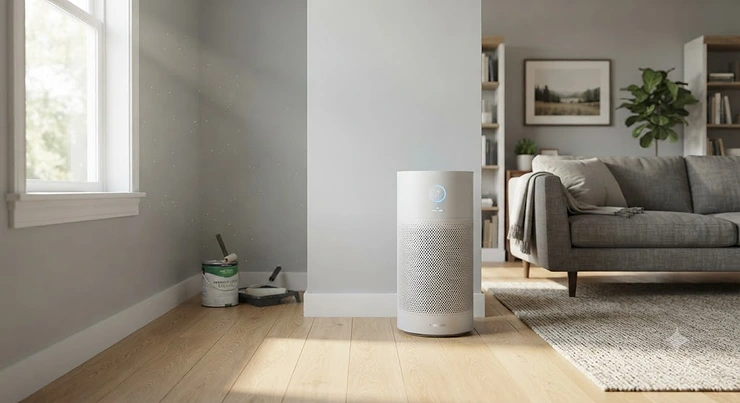
Your living room finally has that fresh coat of “Agreeable Gray” on the walls, and it looks fantastic. Then you sit down to admire it and your eyes start watering. That sharp, chemical smell isn’t just paint being paint — it’s a cloud of volatile organic compounds working their way into your lungs, your couch cushions, and, if you’re not careful, your headache the next morning. An air purifier for paint fumes is a portable device that pulls that air through an activated carbon filter (sometimes paired with true HEPA) to adsorb gas-phase chemicals rather than just catching dust. It won’t replace an open window, but it keeps working long after the window has to close.
We dug through manufacturer specs, AHAM-verified performance data, and the aggregated sentiment of real owner reviews to find seven purifiers that actually earn their keep against fresh paint, not just marketing copy that mentions VOCs in passing. Some of these are budget workhorses under $200; others are the kind of Swiss-engineered unit you buy once and never think about again. According to the EPA’s technical overview of VOCs, these are organic chemical compounds that evaporate readily under normal indoor temperature and pressure, and paint sits near the top of the list of things that release them. That’s exactly the problem this guide is built to solve — matching the right air purifier for paint fumes to your room, your budget, and how bad your particular painting project actually is.
What Is VOC Paint Fume Composition?
VOC paint fume composition refers to the specific mix of gas-phase chemicals — typically toluene, xylene, formaldehyde, ethylbenzene, and glycol ethers — that off-gas from wet paint as solvents evaporate and the film cures. Oil-based and alkyd paints tend to release the heaviest concentrations, while modern low-VOC latex formulas emit less but rarely zero.
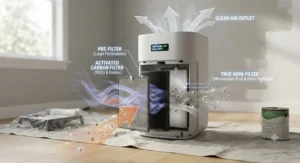
Understanding this composition matters more than most buyers realize, because it directly determines what kind of filter actually works. A standard HEPA filter is built to trap particles — dust, pollen, dander — using a dense mesh of fibers. VOCs aren’t particles; they’re individual gas molecules small enough to slip straight through that mesh, the same way water slips through a net meant for fish. That’s why every product in this guide leans on activated carbon, not HEPA alone, as the real workhorse against paint fumes. The carbon’s porous surface physically adsorbs those gas molecules, and better units add chemical treatments — potassium permanganate is the common one — that neutralize formaldehyde on contact rather than just holding onto it. When you’re shopping specifically for air purifier VOC painting indoors performance, carbon weight and carbon quality are the numbers that matter far more than the CADR figure printed in bold on the box.
Quick Comparison Table
| Purifier | Best For | Room Size | Carbon Focus |
|---|---|---|---|
| Winix 5500-2 | Tightest budget | 360 sq ft | Pellet carbon + PlasmaWave |
| Levoit Core 600S | Best value for large rooms | 635 sq ft | ARC honeycomb carbon |
| Blueair Blue Pure 211+ | Quiet, simple operation | 540 sq ft | Fibrous carbon layer |
| Coway Airmega 400S | Smart tracking, big spaces | 1,560 sq ft | Dual Max2 carbon+HEPA |
| AirDoctor 3500 | Fresh-paint chemical load | 630 sq ft | Dual-action carbon/VOC |
| Alen BreatheSmart 75i | Custom VOC filter swap | 1,300 sq ft | 3.6 lb Fresh carbon option |
| IQAir HealthPro Plus | Heaviest-duty VOC removal | 900–1,125 sq ft | 5 lb V5-Cell carbon |
Looking at this lineup, the split isn’t really budget versus premium — it’s carbon mass versus convenience. The Winix 5500-2 and Levoit Core 600S win on price-per-CADR, but neither carries anywhere near the carbon weight of the IQAir HealthPro Plus or AirDoctor 3500, which is exactly why those two show up so often in serious chemical-sensitivity discussions. If you’re only dealing with a weekend touch-up job, the top of this table is overkill; if you just refinished an entire floor of the house, it’s the bottom two rows that will actually earn their price tag.
💬 Just one click — help others make better buying decisions too!😊
Top 7 Air Purifiers for Paint Fumes: Expert Analysis
Before breaking down each model individually, here’s how they stack up on the numbers that matter most for an air purifier for paint fumes — smoke CADR (the closest proxy AHAM offers for fume-clearing speed), verified room coverage, and where each one sits on price.
| Purifier | Smoke CADR | Coverage | Price Range | Rating |
|---|---|---|---|---|
| Winix 5500-2 | 232 cfm | 360 sq ft | $150–$200 | 4.3/5 |
| Levoit Core 600S | 391–410 cfm | 635 sq ft | $230–$300 | 4.5/5 |
| Blueair Blue Pure 211+ | 353 cfm | 540 sq ft | $300–$350 | 4.2/5 |
| Coway Airmega 400S | 328–376 cfm | 1,560 sq ft | $480–$550 | 4.6/5 |
| AirDoctor 3500 | N/A (0.003-micron rated) | 630 sq ft | $400–$630 | 4.4/5 |
| Alen BreatheSmart 75i | 347–351 cfm | 1,300 sq ft | $700–$800 | 4.3/5 |
| IQAir HealthPro Plus | 300 cfm | 900–1,125 sq ft | $800–$950+ | 4.7/5 |
A quick read on that CADR column: don’t assume a bigger number automatically means better VOC control, because CADR is a particle metric, not a gas metric. The IQAir HealthPro Plus posts the lowest raw CADR here but the heaviest carbon bed by a wide margin, which is exactly why it still commands the highest customer rating among people specifically fighting chemical odors. Meanwhile, the Coway Airmega 400S dominates on particle-clearing speed and room size, which makes it the better pick if you’re managing a whole open-concept renovation rather than one freshly painted room.
1. Winix 5500-2 — best budget pick for everyday odor control
What stands out about the Winix 5500-2 isn’t a headline spec — it’s that Wirecutter kept naming it a top pick for years running while it sat well under $200. That reputation was earned on the strength of a four-stage system that pairs a washable AOC carbon filter with True HEPA and the brand’s PlasmaWave ionizer. In practice, the pelleted carbon inside gives it noticeably better gas-adsorption surface area than the thin, fiber-coated carbon sheets found in similarly priced competitors, which is the single biggest reason it holds up against paint smells rather than just masking them. Based on the spec comparison, this unit is best suited to a single freshly painted bedroom or home office rather than an open floor plan — its 360 sq ft rating is honest, not inflated. Reviewers consistently report that the PlasmaWave feature can be switched off entirely if you’d rather avoid any ionization, and most owners say the noise at low speed is genuinely bedroom-friendly. One caveat worth flagging honestly: some sourcing reports suggest the 5500-2 has been discontinued in favor of the newer 5510, so availability may vary by retailer.
Pros:
- ✅ Pellet-based carbon outperforms fiber-coated filters at this price
- ✅ PlasmaWave ionizer can be fully disabled if preferred
- ✅ AHAM-verified, ENERGY STAR rated, quiet on low speed
Cons:
- ❌ 360 sq ft coverage is too small for open-plan rooms
- ❌ Model availability may be inconsistent as Winix transitions lineups
In the $150–$200 range, this remains one of the best entry points into real carbon-based VOC filtration without stretching a renovation budget.
2. Levoit Core 600S — best CADR-per-dollar for open floor plans
The Levoit Core 600S built its reputation on a simple trick: it matches the CADR of purifiers costing two to three times more, and that holds true for its 410 cfm rating across a genuinely large 635 sq ft space. The custom ARC-formula activated carbon filter is specifically marketed for VOCs, formaldehyde, and ammonia, not just cooking odors, which matters if you’re clearing an entire freshly painted living area rather than one room. Here’s what to weigh: the particle side of the filter dropped its “H13 HEPA” labeling after a 2023 industry challenge, though independent testers still rate its particle capture as excellent regardless of the label change. What most buyers overlook about this model is that it’s genuinely loud at top speed — north of 60 dBA — so running it at full power right after painting works, but you’ll want to drop it to a lower setting before bedtime. Reviewers consistently note the VeSync app’s real-time PM2.5 tracking as a standout feature that helps you actually see the fumes clearing in real time, which is oddly satisfying after a long painting weekend.
Pros:
- ✅ 410 cfm CADR covers 635 sq ft, best-in-class for the price
- ✅ ARC carbon formula specifically targets VOCs and formaldehyde
- ✅ App-based real-time air quality tracking with filter-life alerts
Cons:
- ❌ Loud at top speed, not ideal for overnight use in bedrooms
- ❌ No longer marketed with a certified H13 HEPA label
At around $230–$300, the Core 600S delivers the best raw coverage-per-dollar on this list for anyone tackling a large or open-plan space.
3. Blueair Blue Pure 211+ — quietest large-room option under $350
The first thing that stands out about the Blue Pure 211+ is how understated it looks for a unit rated at 350–353 cfm across 540 sq ft — no screens, no app, just a single button and a fabric pre-filter sleeve available in five colors. Its HEPASilent technology combines mechanical filtration with a built-in ionization boost that can’t be switched off, a design choice that improves particle capture efficiency but is worth knowing about upfront if you’d rather avoid ionizers entirely. Based on the spec comparison, its carbon layer is a fiber-coated design rather than dense pellets, so it handles general household odors capably but lags behind pellet-based competitors like the Levoit or Winix specifically for stubborn paint VOCs. The spec sheet won’t tell you this, but reviewers note the 211+ genuinely excels at quiet operation, staying under 45 dBA even at speed 2 while still moving real air. A common complaint in user reviews is filter cost — at roughly $70 per replacement needed twice yearly, ongoing costs run higher than most rivals on this list.
Pros:
- ✅ Whisper-quiet operation even at moderate-to-high fan speeds
- ✅ Large 540 sq ft coverage in a compact, stylish housing
- ✅ AHAM-certified CADR backed by a Quiet Mark approval
Cons:
- ❌ Ionizer runs constantly and cannot be disabled
- ❌ Fiber-based carbon is weaker against VOCs than pellet designs
Priced in the $300–$350 range, this is the pick for buyers who want quiet, simple large-room coverage and are willing to trade some VOC-specific performance for it.
4. Coway Airmega 400S — smartest filter-life tracking for big rooms
What sets the Coway Airmega 400S apart on paper is its dual-filter architecture: air gets pulled through two Max2 cartridges simultaneously rather than funneling through one bottleneck, which is how it manages a genuinely massive 1,560 sq ft coverage rating at two air changes per hour. Each Max2 cartridge combines True HEPA with activated carbon, and Coway rates the pair for a full 12 months of use — considerably longer than the 6-to-8-month cycles common elsewhere on this list. On paper this means lower long-term maintenance hassle, even though the annual filter cost itself (roughly $90–$130 for a genuine pair) sits solidly mid-pack. What most buyers overlook is the IoCare app’s real usage-based filter tracking, which flags replacement based on actual runtime and air quality rather than a flat calendar countdown — in independent testing the indicator triggered almost exactly at the 11-month mark, right in line with Coway’s claims. Reviewers consistently praise the 22 dB sleep mode as genuinely silent for a unit this powerful, and aggregated sentiment across owner reviews centers on strong performance in multi-pet, heavy-cooking households as much as painting projects.
Pros:
- ✅ Dual Max2 filters cover 1,560 sq ft — best-in-class room size
- ✅ 12-month filter life reduces long-term maintenance hassle
- ✅ Usage-based IoCare app tracking, not just a calendar timer
Cons:
- ❌ Substantial physical footprint demands real floor space
- ❌ Genuine Max2 filters run $90–$130 annually
At around $480–$550, this is the purifier to reach for when an entire open-concept renovation, not just one room, needs clearing.
5. AirDoctor 3500 — dual-action carbon built for fresh paint
The AirDoctor 3500‘s standout feature is its Premium Carbon/VOC filter, which blends activated carbon with potassium permanganate — the same chemisorption compound used in industrial-grade odor control — specifically to target formaldehyde and other reactive gases that plain carbon struggles to fully neutralize. Paired with its UltraHEPA filter rated to capture particles down to 0.003 microns, roughly 100 times smaller than the standard HEPA benchmark, this unit is engineered around gas removal first and particle filtration second. Based on the spec comparison, that dual-action chemistry gives the 3500 a real edge specifically against fresh paint chemistry, not just generic household odors. What most buyers overlook is that AirDoctor’s self-adjusting sensor genuinely ramps fan speed the moment it detects a pollutant spike, which owners consistently describe as noticeably responsive right after opening a new can of paint. A common theme in aggregated review sentiment is that the carbon filter needs replacement every six months under heavy use — faster than the HEPA stage — so budget for that separately rather than assuming a single annual filter change covers everything.
Pros:
- ✅ Potassium permanganate carbon targets formaldehyde directly
- ✅ UltraHEPA rated to 0.003 microns, well beyond standard HEPA
- ✅ Self-adjusting sensor reacts quickly to fresh VOC spikes
Cons:
- ❌ Carbon/VOC filter needs replacing twice as often as the HEPA stage
- ❌ List price sits meaningfully above same-coverage competitors
List prices run $400–$630 depending on promotions, making this one of the more chemistry-focused choices specifically for active painting and renovation work.
6. Alen BreatheSmart 75i — most customizable filter system for VOCs
The defining feature of the Alen BreatheSmart 75i is choice: five interchangeable filter types snap into the same housing, and the “Fresh” option packs in roughly 3.6 lbs of activated carbon specifically for odor and chemical control — a genuinely unusual amount of carbon mass at this price tier. That flexibility means you can run a standard particle-focused filter day-to-day and swap in the Fresh cartridge specifically during and after a painting project, then switch back once the smell clears. Here’s what to weigh: Alen backs this unit with a Forever Guarantee lifetime warranty, tied to an active filter subscription, which changes the long-term cost math compared to a simple one-time purchase. Reviewers consistently note the acoustic tuning produces a soothing “pink noise” quality at low speeds that makes it genuinely pleasant for bedroom use, unusual for a unit rated up to 1,300 sq ft. Aggregated sentiment across owner reviews is split on value — most buyers who specifically fought heavy odors or chemical sensitivity call the investment justified, while those without a specific gas problem tend to say a cheaper particle-focused unit would have served them just as well.
Pros:
- ✅ Interchangeable filters let you target VOCs only when needed
- ✅ 3.6 lb carbon “Fresh” filter is unusually dense for this class
- ✅ Lifetime Forever Guarantee warranty backs the unit
Cons:
- ❌ At $700–$800, it’s a premium price for the base performance
- ❌ Warranty perks require an active filter subscription
If odors and chemical sensitivity are a recurring issue rather than a one-time paint job, the flexibility here can genuinely justify the $700–$800 range.
7. IQAir HealthPro Plus — heaviest carbon bed for serious fume removal
Nothing else on this list touches the IQAir HealthPro Plus for sheer carbon mass — its V5-Cell gas filter packs roughly 5 lbs of granular activated carbon blended with impregnated alumina and potassium permanganate, more than ten times the carbon found in some fiber-based competitors. That density translates directly into contact time: air spends longer moving through the carbon bed, which is exactly the mechanism that makes this unit the go-to recommendation in serious VOC and chemical-sensitivity communities. Based on the spec comparison, its HyperHEPA filtration is independently tested down to 0.003 microns, and the whole system runs as pure mechanical filtration with zero ozone emission, a meaningful distinction from ionizer-based competitors on this list. What the spec sheet won’t tell you, but user reports suggest, is that this is a genuinely heavy, power-hungry unit — among the highest energy draws tested in this category — and its 300 cfm CADR is lower than several cheaper rivals, because IQAir prioritizes filtration depth over raw airflow speed. Reviewers consistently describe it as the gold standard for anyone dealing with chemical sensitivities or a serious formaldehyde concern, not just routine painting.
Pros:
- ✅ 5 lbs of activated carbon, the heaviest bed on this list
- ✅ Zero-ozone, purely mechanical HyperHEPA filtration
- ✅ Widely regarded as the top pick for chemical sensitivities
Cons:
- ❌ Lower CADR (300 cfm) than several lower-priced rivals
- ❌ Highest energy draw and annual filter cost in this lineup
At $800–$950+, this is the investment pick for anyone whose paint-fume problem is really a broader chemical-sensitivity or formaldehyde concern.
Renovation Air Quality Risks You Shouldn’t Ignore
Paint is rarely the only thing off-gassing during a renovation, and that’s the core of renovation air quality risks most homeowners underestimate. New cabinetry, subfloor adhesives, fresh drywall compound, and even new carpet padding can all release formaldehyde and other VOCs at concentrations that, per the EPA’s indoor air quality research, routinely run higher indoors than outdoors — sometimes by a factor of ten. Layer a paint job on top of that, and you’re not dealing with a single chemical spike but a cumulative one that can linger for days or weeks after the visible work wraps up.
The health effects scale with both concentration and duration. Short bursts of exposure tend to cause the familiar headache-and-dizziness combination; sustained exposure over a full renovation timeline is the bigger concern, particularly for children, pregnant occupants, and anyone with existing respiratory conditions. This is exactly why an air purifier for paint fumes earns its keep well beyond the day you actually roll on the paint — running it continuously through the first one to two weeks of curing time addresses the compounding risk that a single afternoon of open windows can’t fully resolve.
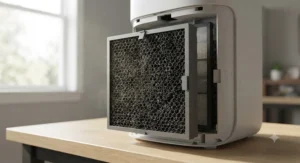
Best Air Purifier After Renovation: What Changes Once the Dust Settles
The best air purifier after renovation isn’t necessarily the same unit you’d want mid-project, because the pollutant mix shifts once the active work stops. During construction, you’re managing acute chemical spikes and particulate dust simultaneously; afterward, you’re managing a slower, ongoing off-gassing curve from cured paint, sealed cabinetry, and new flooring adhesives that can continue releasing VOCs for weeks or months at lower, steadier concentrations.
For this phase, a unit with genuinely long-lasting carbon and low running cost matters more than peak CADR. The Coway Airmega 400S fits well here thanks to its 12-month Max2 filter life across a large coverage area, while the AirDoctor 3500‘s dual-action carbon continues actively neutralizing formaldehyde rather than just adsorbing it, which suits the slow-bleed nature of post-renovation off-gassing. Running your unit on auto mode with a smart sensor, rather than manually cranking it to max only right after painting, tends to catch these lower, steadier VOC levels more consistently over the following weeks.
Air Purifier for Construction Dust and Fumes: Extra Considerations
Choosing an air purifier for construction dust and fumes adds a wrinkle beyond pure VOC filtration: you’re now also fighting fine particulate from drywall sanding, sawdust, and demolition debris alongside the chemical load from paint and adhesives. That combination clogs a standard pre-filter far faster than routine household use, which means filter-life estimates on the box should be treated as optimistic during active construction rather than realistic.
Prioritize units with a washable pre-filter stage that can be rinsed daily during heavy sanding or drywall work — the Coway Airmega 400S and Levoit Core 600S both offer this, extending the life of the more expensive HEPA and carbon stages behind it. It’s also worth running the unit in a separate zone from active construction where possible, since pulling extremely dust-laden air through any purifier accelerates filter saturation regardless of brand or price point.
Air Purifier for Glue Adhesive Smell: Why Resin and Adhesive Off-Gassing Is Different
An air purifier for glue adhesive smell faces a slightly different chemical profile than paint alone — construction adhesives, wood glue, and flooring mastic tend to release higher concentrations of solvents like toluene and xylene over a longer curing window, sometimes stretching well past the point where paint fumes have already cleared. Reviewers consistently note that units with denser carbon beds, like the Alen BreatheSmart 75i‘s Fresh filter or the IQAir HealthPro Plus‘s V5-Cell, handle these sustained adhesive odors more effectively than lighter carbon layers designed primarily for cooking smells.
If you’re specifically working with resin, epoxy, or heavy-duty adhesives — common in flooring installs and DIY resin crafting alike — look for a Carbon/VOC filter description that explicitly mentions gas-trap or chemisorption technology rather than a generic “odor filter” label, since the latter is often optimized for pet and kitchen smells rather than industrial solvents.
Practical Usage Guide: Running Your Purifier During and After Painting
Getting real value out of an air purifier for paint fumes comes down to timing and placement as much as the unit itself. Start the purifier before you open the paint can, not after the smell hits you — giving it a head start on the room’s baseline air quality makes the entire session more effective. Position it a few feet from your main work area, close enough to catch concentrated fumes but not so close that overspray or dust directly coats the intake.
During the first 24 to 48 hours, the highest-VOC window while paint actively cures, run the unit on its highest sustainable speed or, better, in auto mode if it has a sensor — most models in this guide adjust fan speed automatically once they detect a spike. Keep doors to the painted room closed but the purifier running continuously rather than cycling it on and off, since restart lag lets concentrations rebound between sessions.
A common first-30-days mistake is assuming the job is done once the smell fades — VOC off-gassing from cured paint can continue at lower levels for weeks, so dropping to a lower, quieter fan speed and letting the unit run in auto mode for that full window catches the slow tail end that your nose stops noticing but your lungs are still absorbing.
Real-World Scenarios: Matching the Right Purifier to Your Project
The apartment renter repainting one bedroom. Budget-conscious, single room under 400 square feet, wants something they can take with them when the lease ends. The Winix 5500-2 or Levoit Core 600S both fit this brief — compact, affordable, and genuinely effective for a single-room paint job without committing to a large-house-sized investment.
The family mid-renovation across an open-concept main floor. Multiple rooms, ongoing construction dust plus paint, kids and a dog in the house. The Coway Airmega 400S matches this scenario well thanks to its 1,560 sq ft coverage and washable pre-filter that tolerates heavier dust loads without expensive filters clogging prematurely.
The chemically sensitive homeowner or new-construction buyer. Concerned less about one paint job and more about cumulative formaldehyde from cabinetry, flooring, and paint combined, often over a period of months. The IQAir HealthPro Plus or AirDoctor 3500 make the most sense here, since both are engineered around sustained gas-phase chemical removal rather than a single acute event.
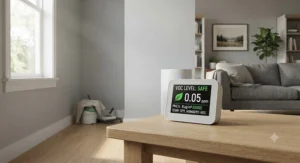
How to Choose an Air Purifier for Paint Fumes
- Check the carbon weight, not just the HEPA rating. A purifier can have a flawless HEPA number and still do almost nothing for VOCs if its carbon layer is thin or fiber-coated rather than pelletized.
- Match CADR and coverage to your actual room, generously. Round up to the next size tier rather than down — a purifier working near its coverage ceiling runs louder and less effectively. AHAM’s air filtration standards recommend a smoke CADR at least equal to two-thirds of your room’s square footage as a baseline rule of thumb.
- Look for potassium permanganate or a similar chemisorption additive. Plain activated carbon adsorbs VOCs; chemically treated carbon actively neutralizes formaldehyde rather than just holding it temporarily.
- Confirm the unit has a genuine auto mode with a real sensor. Manual-only fan speeds mean you’re guessing when concentrations spike; a laser or air-quality sensor adjusts automatically.
- Factor in filter replacement cost and frequency, not just sticker price. A cheaper unit with frequent, pricey carbon swaps can cost more over two years than a pricier one with a 12-month filter cycle.
- Consider noise tolerance for where it’ll actually live. A unit rated quiet at low speed may still be genuinely loud at the top speed you’ll need during active painting.
- Decide if this is a one-time need or an ongoing one. That answer should shape your entire budget — see the next section for exactly how.
Temporary vs Permanent Air Purifier Solution: Which Do You Actually Need?
The temporary vs permanent air purifier solution question comes down to one honest assessment: is this about clearing one painting weekend, or managing an ongoing sensitivity to household chemicals? If it’s the former, a budget unit like the Winix 5500-2 run hard for a week or two and then relegated to occasional bedroom duty makes complete financial sense. If it’s the latter — chronic chemical sensitivity, a newly built home still off-gassing, or a household member with respiratory conditions — the math shifts toward investing once in a unit like the IQAir HealthPro Plus or Alen BreatheSmart 75i built for sustained, heavy-duty gas filtration.
| Approach | Best Fit | Trade-Off |
|---|---|---|
| Temporary / rental-grade unit | One-time paint job, renters, small budget | Lower ongoing cost, weaker sustained VOC removal |
| Permanent / whole-home unit | Chemical sensitivity, ongoing renovation, new construction | Higher upfront and filter cost, much stronger long-term protection |
| Ventilation alone (no purifier) | Mild weather, single small room, short project | Free, but stops working the moment windows close |
That third row matters more than it might seem: the CPSC’s indoor air quality guidance specifically recommends opening doors and windows and using fans to exhaust fumes outdoors as the first line of defense, and ventilation genuinely outperforms any purifier for acute VOC spikes. The honest limitation is that ventilation only works while it’s actively happening — the moment the weather turns or the windows close for the night, a purifier is the only thing still working on your behalf.
Common Mistakes When Buying an Air Purifier for VOCs
The most common mistake is buying based on HEPA marketing alone, since HEPA filters are built for particles, not gases, and a beautifully rated HEPA stage can sit next to a nearly useless carbon layer. A close second is undersizing for the room — buyers routinely match a purifier’s rated coverage to their room’s square footage exactly, when running near a unit’s ceiling means slower, noisier operation than running comfortably within its range.
Another frequent misstep is ignoring filter replacement economics entirely at purchase time, then discovering a “budget” unit actually costs more over two years once frequent carbon swaps are factored in. Buyers also often assume any ionizer-equipped unit is producing meaningful ozone; in reality, most modern ionizers like PlasmaWave produce negligible, tested-safe levels, though it’s still reasonable to prefer a switch-off option if you’d rather avoid ionization altogether. Finally, plenty of buyers turn their purifier off once the smell fades, missing the slower off-gassing tail that continues well after the nose stops registering it.
Long-Term Cost & Maintenance
Sticker price tells you almost nothing about what an air purifier for paint fumes actually costs over its useful life. Filter replacement frequency, filter price, and electricity draw compound over years in ways that can flip a “budget” and “premium” unit’s real-world ranking entirely.
| Purifier | Annual Filter Cost (approx.) | Filter Cycle |
|---|---|---|
| Winix 5500-2 | $50–$75 | 6–9 months |
| Levoit Core 600S | $75–$100 | 6–8 months |
| Blueair Blue Pure 211+ | $100–$140 | 6 months |
| Coway Airmega 400S | $90–$130 | 12 months |
| AirDoctor 3500 | $130–$190 | 6–12 months (staggered) |
| Alen BreatheSmart 75i | $99–$139 per filter | 12 months |
| IQAir HealthPro Plus | $180–$380 | 12–24 months (staggered) |
Reading this table against the upfront price ranges earlier tells a more complete story: the Coway Airmega 400S‘s 12-month filter cycle actually narrows its long-term cost gap with cheaper units considerably, while the Blueair Blue Pure 211+‘s frequent, pricier filter replacements chip away at what looked like mid-tier value upfront. The IQAir HealthPro Plus remains the most expensive to run long-term, but its staggered filter life — with the carbon and HEPA stages replaced on different schedules — spreads that cost out rather than hitting you with one large annual bill.
Features That Actually Matter (And Those That Don’t)
Carbon weight and chemisorption treatment matter enormously; app connectivity and Wi-Fi, charmingly, do not move the needle on actual VOC removal at all — they’re convenience features, full stop. A genuine auto-sensing mode matters a great deal, since it’s the difference between a unit that reacts to a fresh paint spike within minutes and one that keeps running at whatever speed you happened to set it to that morning.
UV-C sterilization, frequently listed as a bonus feature, does essentially nothing for gas-phase VOCs — it’s designed for airborne pathogens, not chemical vapors, so don’t let its presence sway a decision that should be about carbon quality. Washable pre-filters matter more than they get credit for, particularly during active renovation work, since they extend the life of the genuinely expensive carbon and HEPA stages behind them. And decorative color panels, however nice they look in a living room, are exactly what they appear to be: cosmetic, not functional.

FAQ
❓ How long should I run an air purifier after painting?
❓ Does an air purifier remove paint smell completely?
❓ Is HEPA or carbon more important for paint fumes?
❓ Can I use a regular air purifier during painting, or do I need a special one?
❓ How often should I replace the carbon filter after a big renovation?
Conclusion
Fresh paint smell is temporary; the VOCs behind it don’t disappear nearly as fast as the odor does. Matching the right air purifier for paint fumes to your actual situation — a single weekend touch-up versus an ongoing renovation versus a genuine chemical sensitivity — makes the difference between a purifier that just moves air around and one that’s actually pulling formaldehyde and solvents out of it. The Winix 5500-2 and Levoit Core 600S cover most one-room paint jobs affordably, the Coway Airmega 400S scales up for whole-floor renovations, and the IQAir HealthPro Plus and AirDoctor 3500 exist for when the chemical load is a genuine, ongoing concern rather than a passing weekend project.
Whichever tier fits your project, remember that ventilation and a purifier work best together, not as substitutes for one another — open the windows when you can, and let the purifier keep working once you can’t.
✨ Ready to breathe easier? Compare current prices on today’s picks and pick the one that matches your project before your next can of paint gets opened.
Recommended for You
- 7 Best air purifier for new home VOCs off-gassing Picks (2026)
- Air Purifier for VOCs: 7 Real Picks That Work in 2026
- Air Purifier for Basement Mold: 7 Proven Picks for 2026
Disclaimer: This article contains affiliate links. As an Amazon Associate, I earn from qualifying purchases. If you purchase products through these links, we may earn a small commission at no additional cost to you.
✨ Found this helpful? Share it with your friends! 💬🤗
