
In This Article
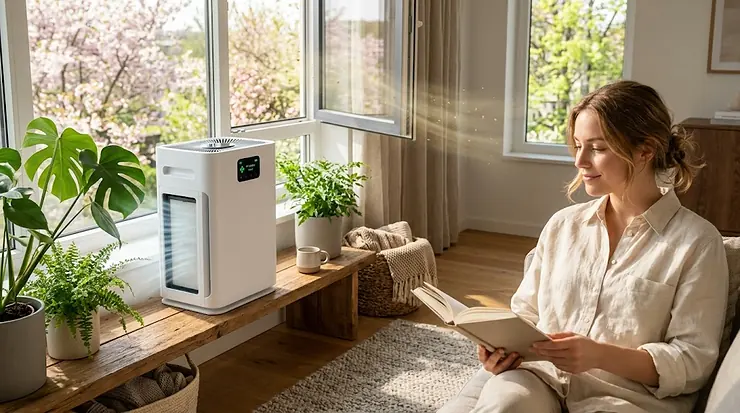
You know the morning. You wake up, and before your feet even hit the floor, your eyes are already staging a protest. Itchy, watery, a little swollen at the edges — like you cried yourself to sleep over something you can’t even remember. You didn’t. That’s just what a decent oak tree fifty feet from your bedroom window can do to a person in springtime.
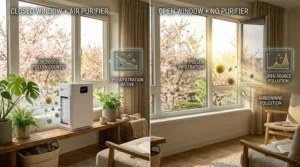
Pollen doesn’t knock. It rides in on your dog’s fur, hitches a lift on your jacket, slips through the two inches you cracked the window open last night because it felt nice outside. And once it’s in, it doesn’t leave on its own — it just settles into your carpet, your bedding, your air ducts, and waits for the HVAC system to stir it back up. More than 106 million Americans live with allergies and asthma, and the seasons aren’t doing them any favors — research from Climate Central shows warming trends across U.S. cities are giving plants more time to grow and release pollen, pushing seasons to start earlier and run longer than they used to.
This is where a genuinely good air purifier for seasonal allergies stops being a “nice to have” and starts pulling real weight. Not a miracle box. Not a replacement for your allergist. But a tool that, placed right and run consistently, takes a meaningful bite out of what’s floating around the room you sleep in for eight hours a night.
I spent days pulling apart lab data, AHAM-certified CADR numbers, and current Amazon listings to find seven purifiers that are actually for sale right now — not discontinued ghosts still haunting “best of” lists from three years ago. Budget options, workhorses for big rooms, and a couple of genuine splurges. Let’s get into it.
Quick Comparison: 7 Best Air Purifiers for Seasonal Allergies at a Glance
| Product | Best For | Price Range | Pollen CADR | Coverage |
|---|---|---|---|---|
| Levoit Core 300S | Small bedrooms, first-timers | $100–$130 | ~170 CFM | ~220 sq ft |
| Winix 5500-2 | Best overall value | $150–$220 | ~245 CFM | ~360 sq ft |
| Honeywell HPA300 | Large rooms, no-frills power | $200–$250 | ~300 CFM | ~465 sq ft |
| Coway Airmega 200M | Quiet bedroom all-rounder | $200–$240 | ~277 CFM | ~360 sq ft |
| Blueair Blue Pure 311i+ Max | Smart homes, whisper-quiet sleep | $300–$370 | ~300 CFM | ~465–500 sq ft |
| Levoit Vital 200S | Pet owners, big living rooms | $180–$220 | ~289 CFM | ~375–380 sq ft |
| Dyson Purifier Cool TP07 | Year-round comfort, premium design | $500–$570 | Not CADR-rated | ~400–800 sq ft |
A few things jump out fast. The Honeywell and the Blueair are neck-and-neck on raw pollen-clearing muscle, but only one of them can be controlled from your phone while you’re still in the allergy-fog of waking up. The Levoit Core 300S looks like the clear budget champ until you remember it’s sized for a bedroom, not a living room — and the Dyson skips the CADR conversation entirely because, frankly, it’s selling you a different experience altogether. None of these numbers tell the whole story alone, which is exactly why we’re not stopping here.
💬 Just one click — help others make better buying decisions too!😊
Top 7 Air Purifiers for Seasonal Allergies — Expert Analysis
Before the individual breakdowns, a quick gut-check on what actually matters for pollen specifically: a true HEPA filter can theoretically remove at least 99.97% of particles as small as 0.3 microns, and pollen grains are comparatively huge — typically 10 to 100 microns wide. In plain terms: pollen is one of the easiest allergens for a HEPA unit to catch. The real differentiator between these seven isn’t whether they can trap pollen — they all can — it’s how fast, how quietly, and how cheaply they keep doing it.
| Model | Price Range | Pollen CADR | Noise Range | Smart Controls | Best For |
|---|---|---|---|---|---|
| Levoit Core 300S | $100–$130 | ~170 CFM | 22–50 dB | Yes (app + Alexa) | Bedrooms, dorms |
| Winix 5500-2 | $150–$220 | ~245 CFM | 28–60 dB | Remote only | Value seekers |
| Honeywell HPA300 | $200–$250 | ~300 CFM | 41–60 dB | None | Big, polluted rooms |
| Coway Airmega 200M | $200–$240 | ~277 CFM | 24–55 dB | None | Quiet bedrooms |
| Blueair 311i+ Max | $300–$370 | ~300 CFM | 23–50 dB | Yes (app + Alexa) | Smart-home sleepers |
| Levoit Vital 200S | $180–$220 | ~289 CFM | 23–62 dB | Yes (app + Alexa/Google) | Pets + large rooms |
| Dyson Purifier Cool TP07 | $500–$570 | N/A | Low–moderate | Yes (app + Alexa/Siri/Google) | Design + dual-use buyers |
The pattern in that table is worth pausing on: CADR roughly tracks with price up to a point, then the curve flattens hard. The jump from $130 to $250 buys you real coverage gains. The jump from $250 to $550 mostly buys you design, smart-home depth, and a cooling fan bolted on — not a dramatically higher pollen-clearing rate. Keep that in mind as we go model by model.
1. Levoit Core 300S
The Levoit Core 300S is the air purifier equivalent of a reliable hatchback — it’s not flashy, but it’s the one over 94,000 Amazon reviewers keep buying, and it currently sits as the No. 1 best-seller in its category. What most buyers overlook is that its low 26-watt motor isn’t a compromise — it’s the reason the unit can run on Auto Mode literally all day for a couple bucks a month in electricity without you noticing the bill move.
Specs that matter in practice: a CADR around 141–175 CFM depending on which AHAM listing you check, paired with a PM2.5 sensor that bumps the fan speed the instant pollen drifts in through an open door. In a 220-square-foot room — your average bedroom — that’s enough to cycle the air close to five times an hour. Sleep Mode drops noise to 22dB, which is below a whisper.
Customer feedback consistently circles two themes: people are pleasantly surprised by how quiet it runs, and pet owners specifically call out how well the pre-filter handles fur before it ever reaches the HEPA stage. A smaller, recurring gripe is that the auto-sensor can be a little generous about what it calls “good” air quality, so allergy-sensitive sleepers sometimes override Auto Mode and just run it on a fixed low speed overnight instead.
✅ Genuinely whisper-quiet in Sleep Mode
✅ Smart app + Alexa control for half-asleep adjustments
✅ Dirt-cheap to run and to replace filters on
❌ Undersized for anything bigger than a bedroom
❌ Auto-sensor accuracy is debated among reviewers
In the $100–$130 range, this is the easiest “yes” on the list if your allergy battlefield is one room.
2. Winix 5500-2
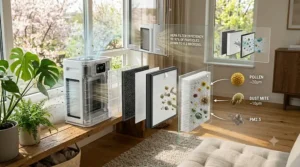
The Winix 5500-2 has been the internet’s favorite budget-to-mid sleeper pick for years, and it earns that reputation with a four-stage system most rivals at this price simply don’t bother with: washable pre-filter, washable AOC carbon filter, true HEPA, and an optional PlasmaWave ionizer stage you can switch off entirely.
What most spec sheets won’t tell you: that PlasmaWave layer is doing something genuinely different from a typical ionizer — Winix split the ions into positive and negative pairs rather than the single-polarity charge most cheap ionizing purifiers use, which is part of why it’s certified by the California Air Resources Board for ozone safety. With CADR scores around 232 (smoke), 243 (dust), and 246 (pollen), independent lab testing has shown it clearing a smoke-filled test room in around 20-25 minutes — fast for the price tier.
Reviewers consistently praise the price-to-performance ratio and the inclusion of a remote control, a feature plenty of $200+ purifiers skip entirely. The most common complaint isn’t performance — it’s the look. Several buyers describe the boxy black shell as more “office printer” than “home decor,” and filter replacements, while not frequent, run pricier than the unit’s budget reputation might suggest.
✅ Outstanding CADR-per-dollar ratio
✅ Washable carbon filter cuts long-term costs
✅ Remote control included — rare at this price
❌ Filter replacements aren’t cheap (~$45+ for genuine ones)
❌ Industrial design won’t win any decor awards
Sitting in the $150–$220 range depending on retailer, this is the one I’d point a skeptical first-time buyer toward.
3. Honeywell HPA300
If the Levoit is a hatchback, the Honeywell HPA300 is a pickup truck — built for raw capacity, not charm. This is Honeywell’s flagship in the HPA line, and it earns the “Allergen Plus” branding with a CADR rating of 300 (smoke), 320 (dust), and 300 (pollen), which is enough muscle to clean a 465-square-foot room nearly five times an hour.
Here’s what the spec sheet undersells: that high airflow comes from genuinely powerful fans, not filter trickery, which means it performs almost identically whether your “large room” is a finished basement or an open-plan living room. The trade-off — and it’s a real one — is that there’s no auto mode and no app. You manually pick from three speeds plus a Turbo setting, and at Turbo it gets loud enough that you’ll want it off before movie night.
Owners who buy this one tend to be pragmatists: people who want maximum air-changes-per-hour and don’t care about Wi-Fi controlling their air. The recurring praise is “it just works, and it works hard.” The recurring complaint is noise at higher speeds and an aesthetic that one reviewer fairly called “expensive office building.”
✅ Among the highest CADR-per-dollar for large rooms
✅ Five-year warranty on most current listings
✅ Three swappable HEPA filter cartridges (replace one, not all)
❌ No auto mode, no app, no smart features at all
❌ Genuinely loud at Turbo speed
At $200–$250, this is the move if square footage is your real enemy, not ambiance.
4. Coway Airmega 200M
The Coway Airmega 200M is essentially the beloved Coway AP-1512HH wearing a slightly updated coat — and that’s a compliment, because the AP-1512HH built a cult following for a reason. Coway rates it at 246 CFM (smoke), 249 CFM (dust), and 277 CFM (pollen) for a 361-square-foot room, with an added bipolar-ionization stage aimed at ultra-fine particles like viruses and bacteria.
What buyers consistently undervalue here is the Eco Mode: when the room stays clean for 30 minutes straight, the fan shuts off automatically and only restarts when pollution is detected again. That’s a meaningfully different approach from “set it and forget it” auto modes that keep the fan spinning low regardless — it’s quieter on average and easier on the filter’s lifespan.
Customer sentiment leans heavily toward “simple and it just performs.” The interface uses tactile, high-contrast buttons that several reviewers single out as easier to use at 2am, bleary-eyed, than touchscreen competitors. The most consistent knock is the lack of any app or WiFi — if you want remote control from your phone, look elsewhere on this list — and the top fan speed has been compared to a window AC unit for noise.
✅ Real-world annual operating cost is among the lowest tested (~$96/year)
✅ Genuine air quality monitor with color-coded LED feedback
✅ Eco Mode meaningfully reduces both noise and energy use
❌ No app, no WiFi, no voice control
❌ Top speed is noticeably loud
In the $200–$240 range, this is the quiet, no-drama choice for a bedroom shared with a light sleeper.
5. Blueair Blue Pure 311i+ Max
The Blueair Blue Pure 311i+ Max swaps the “bigger filter, bigger fan” formula for something more clever: HEPASilent technology, which pairs mechanical HEPA filtration with electrostatic charging. The pitch is faster, quieter air cleaning without needing a louder motor — and the CADR of 300 across smoke, dust, and pollen backs that up.
The detail most competitors can’t match: Blueair’s RealTrack algorithm doesn’t just count days since installation to estimate filter life — it factors in fan speed, runtime, and detected pollution levels to give a genuinely usage-based filter replacement alert instead of a generic “every 6 months” guess. Combined with a sleep-mode noise floor as low as 23dB, this is the purifier built specifically for someone who wants pollen handled without ever being woken up by it.
Owners consistently bring up how fast it responds to sudden spikes — wildfire smoke, a candle, the dog shaking off — crediting the auto-sensing PM2.5 monitor for catching pollution before the room “feels” dirty. The trade-off is price and a buzzing sound some users notice specifically at maximum fan speed, which a quieter mid-setting avoids entirely.
✅ Genuinely one of the quietest purifiers in this lineup
✅ Smart, usage-based filter tracking (not just a generic timer)
✅ Energy Star “Most Efficient” rated — low running cost despite premium price
❌ Noticeable buzz at top fan speed for some units
❌ Highest price point outside the Dyson
Typically landing in the $300–$370 range, this is the pick for allergy sufferers who also happen to be smart-home people.
6. Levoit Vital 200S
The Levoit Vital 200S is what happens when Levoit takes everything people liked about the Core series and scales it up for bigger rooms and messier households. CADR comes in around 250 (smoke), 254 (dust), and 289 (pollen) — genuinely strong numbers for the price — and it adds something the Core 300S doesn’t bother with: a U-shaped secondary air inlet specifically engineered to pull in pet hair without clogging the main intake.
What the spec sheet undersells is the dedicated Pet Mode, which alternates between high and medium fan speeds automatically rather than just running flat-out, balancing odor and dander control against energy use and filter lifespan. For a household managing both pollen season and a shedding golden retriever, that’s a genuinely different problem being solved than what the Core 300S was built for.
Reviewers frequently mention that it completes particle-removal tests as fast as units costing nearly double, which lines up with independent lab data. The most common critique involves the bonded filter design — once the carbon portion is spent (usually around six months), you’re replacing the whole filter assembly even if the HEPA layer has life left in it.
✅ Strong CADR-to-price ratio for a large-room unit
✅ Genuinely useful Pet Mode, not just marketing copy
✅ Washable pre-filter extends main filter life
❌ Bonded filter means replacing carbon + HEPA together
❌ Optical air sensor needs occasional cleaning to stay accurate
At roughly $180–$220, this is the strongest pick on the list for a multi-pet, high-pollen household.
7. Dyson Purifier Cool TP07
The Dyson Purifier Cool TP07 is the one purchase on this list that isn’t really competing on CADR — Dyson doesn’t publish an AHAM-certified number for it at all, which is worth knowing before you compare it line-for-line against the other six. What you’re actually buying is a fully sealed HEPA H13 system capturing 99.95% of particles as small as 0.1 microns through a filtration system engineered so air can’t bypass the filter — a real, documented weakness in cheaper units where air can sneak around a poorly seated filter — bolted onto a bladeless fan that doubles as genuine summer cooling.
The detail that actually matters for allergy season specifically: independent testing found this fully sealed design meaningfully outperforms units that merely claim HEPA filtration but leak air around the filter edges. For pollen specifically, that sealed design matters less than for ultrafine smoke or formaldehyde — but it does mean nothing you’ve already filtered out sneaks back into the room through a gap.
Owners overwhelmingly bring up two things: the LCD screen’s real-time air quality readout, which turns an invisible problem into something you can actually watch improve, and the dual-purpose cooling function, which makes it feel less like a single-season purchase. The near-universal critique is price — at $500–$570, you’re paying a real premium over purifiers with comparable or better raw filtration numbers.
✅ Fully sealed HEPA H13 system — no filter-bypass air leakage
✅ Doubles as a genuine cooling fan, not just a purifier
✅ Deep smart-home integration across Alexa, Siri, and Google
❌ No published CADR rating to directly compare against rivals
❌ Premium price doesn’t translate to premium raw airflow numbers
If budget isn’t the deciding factor and you want one device that earns its spot in the living room year-round, this is the splurge that makes sense.
✨ Don’t Miss These Exclusive Deals!
🔍 Take your indoor air quality to the next level with these carefully selected picks. Click on any highlighted product above to check current pricing and availability on Amazon. These purifiers can help your household breathe easier through every allergy season ahead.
Practical Usage Guide: Setting Up Your Purifier Before Pollen Season Peaks
Buying the right unit is maybe 60% of the battle. Where you put it, and how you run it, decides the rest.
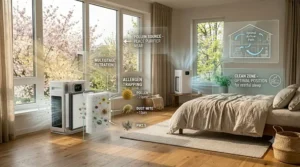
Start with placement: keep it at least a few feet from walls and furniture so air can actually circulate through the intake, and resist the instinct to tuck it in a corner where it looks tidiest. For seasonal allergies specifically, prioritize the bedroom over the living room — you spend roughly a third of your day there, asleep and breathing the same recycled air for hours straight, which makes it the highest-value room in the house for filtration.
Run it continuously, not just when symptoms flare. Pollen doesn’t pause when you’re not sneezing, and a purifier left off all day only to get switched on the moment your eyes start watering is playing constant catch-up instead of staying ahead. If your unit has Auto Mode, use it — it balances coverage against energy use better than guessing manually.
Close windows during peak pollen hours (typically mid-morning through early evening, varying somewhat by your local forecast), and pair the purifier with basics that EPA research consistently backs: washing bedding weekly, frequent vacuuming with a HEPA-filter vacuum, and reducing dust-trapping clutter all lower the source load the purifier has to keep up with. The unit isn’t fighting alone — it’s the cleanup crew, not the whole operation.
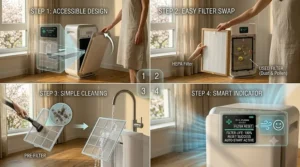
Finally, don’t ignore the pre-filter for large particles — it’s the unsung hero in every model on this list. A quick rinse or vacuum every couple of weeks keeps coarse pollen and pet hair from prematurely clogging the expensive HEPA layer underneath, which directly extends how long that filter actually lasts.
Real-World Scenarios: Matching the Right Purifier to Your Household
The studio apartment dweller with mild seasonal sniffles: A single room, modest budget, pollen that mostly shows up for a few rough weeks each spring. The Levoit Core 300S fits this life almost perfectly — small footprint, quiet enough for a studio, and cheap enough that spending more would genuinely be overkill.
The family with a shedding dog and two kids who sneeze through April: Bigger square footage, a pet adding fur and dander to the pollen problem, and a need for something that won’t clog after two weeks. The Levoit Vital 200S’s Pet Mode and U-shaped intake were built for exactly this scenario — it’s handling two allergen problems at once instead of just one.
The light sleeper who wants pollen handled without ever hearing it happen: Budget isn’t the constraint — sleep quality is. The Blueair Blue Pure 311i+ Max’s sub-25dB low setting and app-based scheduling mean it can ramp up while you’re out and quietly hold steady once you’re asleep, without becoming part of your nightly soundscape.
The big open-plan living space with serious year-round pollution concerns: Square footage is the enemy here, and the Honeywell HPA300’s 465-square-foot rating and high CADR numbers are built specifically for rooms that smaller “bedroom” purifiers simply can’t keep up with.
Problem → Solution: Fixing the Most Common Allergy Triggers Indoors
Problem: Pollen riding in on clothes and pets. Solution — designate a spot near the entryway for shoes and coats, away from your main living space, and keep a purifier running nearby to catch what shakes loose before it spreads further into the home.
Problem: A purifier that seems to “do nothing.” Solution — check that the CADR actually matches your room size using AHAM’s rule of thumb: a CADR equal to at least two-thirds of your room’s square footage. An undersized unit isn’t broken, it’s just outmatched.
Problem: Allergy symptoms persisting even with a purifier running. Solution — combine filtration with source control. Larger pollen particles settle quickly and accumulate on surfaces before a purifier can catch them airborne, so weekly bedding washes and regular vacuuming remain essential alongside the unit itself.
Problem: Filters clogging faster than expected. Solution — clean or replace the pre-filter for large particles on schedule (every 2–4 weeks for most models), especially during heavy pollen weeks when it’s doing far more work than usual.
Problem: Worrying about ozone from “ionizer” features. Solution — units like the Winix 5500-2 let you disable the ionizing PlasmaWave function entirely while keeping full HEPA filtration active, giving cautious users an easy off-switch.
What Is an Air Purifier for Seasonal Allergies?
An air purifier for seasonal allergies is a portable device that pulls room air through one or more filters — almost always including a true HEPA filter — to physically trap airborne pollen, dust, pet dander, and mold spores before recirculating cleaner air back into the room. Since most people spend about 90% of their time indoors, mostly in their homes, reducing what’s airborne in your bedroom or living room has an outsized impact on daily allergy exposure compared to anything you can control outdoors.
It’s worth being precise about what these devices do and don’t do: portable air cleaners can reduce indoor air pollution, but they cannot remove all pollutants from a space, and multiple studies on portable HEPA cleaners have found improvements in allergy and asthma symptoms, though the improvements aren’t always major or universal. Treat one as a strong supplement to your allergy management plan, not a replacement for it.
How to Choose an Air Purifier for Seasonal Allergies
- Match CADR to your actual room size. CADR indicates the volume of filtered air an air cleaner delivers, with separate scores for smoke, pollen, and dust — and pollen is typically the highest of the three, since larger particles are easier to capture.
- Confirm true HEPA, not “HEPA-type.” Several brands on this list, including Levoit, have faced scrutiny over filter-grade marketing claims — verify the filtration spec directly rather than trusting box copy alone.
- Check AHAM Verifide certification. Independent third-party labs verify these CADR numbers, so a certified unit’s claims are far more trustworthy than an uncertified competitor’s marketing-department math.
- Decide if auto mode actually matters to you. It’s genuinely convenient, but a purifier without it (like the Honeywell HPA300) can still outperform a smart one on raw airflow if you’re willing to adjust speeds manually.
- Think about noise tolerance for bedroom placement. A unit rated for your room size at top speed might be unbearable at 2am — check the low-speed dB rating, not just the headline number.
- Budget for filters, not just the unit. A cheap purifier with expensive, frequent filter swaps can cost more over three years than a pricier unit with a longer filter lifespan.
- Consider secondary allergens in your home. If pet dander or dust mites are also in the mix, prioritize washable pre-filters and dedicated pet modes over raw pollen CADR alone.
Common Mistakes When Buying an Air Purifier for Pollen Season
The single biggest mistake is sizing a purifier to the room it’ll be sold to look good in, not the room it’ll actually run in — a compact unit marketed for “any room” often means a 150-square-foot space, not your 300-square-foot living room. Read past the headline coverage number to the AHAM-certified room size specifically.
The second mistake is assuming higher price automatically means higher performance. As the comparison table earlier shows, a $200 Coway can out-CADR a $550 purifier — you’re sometimes paying for design and smart features, not airflow.
A third, sneakier mistake: ignoring filter replacement costs until month six. Some models with attractive upfront prices carry replacement filters starting around $46 each, which adds up fast if you’re swapping every few months during heavy pollen season.
Finally, plenty of buyers skip checking whether a unit produces ozone. Look specifically for CARB certification or an explicit “ozone-free” claim — ionizing features aren’t automatically dangerous, but they’re worth knowing about before you commit to running one 24/7 in a bedroom.
HEPA Air Purifiers vs Traditional Allergy Relief Methods
| Method | How It Works | Effectiveness for Pollen | Limitations |
|---|---|---|---|
| True HEPA air purifier | Mechanically traps particles ≥0.3 microns | High — pollen is large and easy to capture | Needs regular filter maintenance |
| Standard box/ceiling fan | Circulates air without filtering it | None — can actually stir up settled pollen | Worsens airborne exposure |
| Ionizer-only device | Charges particles to settle on surfaces | Moderate, indirect | Pollen settles on furniture, not removed from room |
| HVAC filter upgrade alone | Filters air only when system is actively running | Low-moderate | Most residential HVAC systems can’t physically fit true HEPA-grade filters |
| Allergy medication only | Treats symptoms after exposure | High for symptom relief, none for exposure | Doesn’t reduce airborne allergen levels at all |
The table makes the case pretty plainly: a standard fan is actively counterproductive for pollen allergies, since it just redistributes particles that had already settled. An ionizer-only unit moves particles out of the air, technically, but onto your furniture rather than out of the room entirely. And while upgrading your HVAC filter is a smart complementary move, true HEPA filters are normally not installed in residential HVAC systems because the ductwork can’t accommodate the airflow resistance — which is exactly the gap a dedicated portable purifier is built to fill.
What to Expect: Real-World Performance During Peak Pollen Season
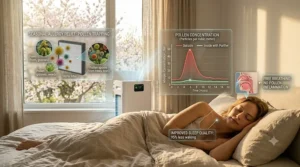
Realistically, a properly sized HEPA purifier running continuously in your bedroom should produce a noticeable improvement within the first 24 to 72 hours — less morning congestion, fewer itchy-eye episodes, and bedding that doesn’t feel quite so “dusty” by the end of the week. Pollen exposure has also been linked to disrupted sleep, fatigue, and reduced daily functioning, so improvements in those areas are a reasonable thing to watch for too, even if they’re harder to measure than a sneeze count.
What it won’t do is eliminate symptoms entirely on the worst high-pollen days, especially right after you’ve been outside without changing clothes or showering. Pollen exposure can trigger sneezing, congestion, itchy or watery eyes, and coughing regardless of how clean your indoor air is the moment you walk in covered in the stuff. The purifier’s job is to clear what’s airborne continuously, not to undo a fresh exposure instantly.
Expect performance to vary noticeably by season length and your local pollen intensity, too — with climate-driven pollen seasons starting earlier and lasting longer in many regions, a unit that felt like overkill in October might feel barely adequate by peak tree-pollen season in March.
Pollen vs Pet Dander vs Dust Mites: Matching Filtration to Your Trigger
These three allergens behave differently, and it changes what you should prioritize. Pollen particles (10–100 microns) are comparatively large and the easiest target for any true HEPA filter — almost every purifier on this list handles pollen well. Pet dander is smaller and stickier, often clinging to fabric and fur rather than staying airborne long, which is why models with washable pre-filters and pet-specific modes (the Levoit Vital 200S, in particular) earn their keep. Dust mite debris is the trickiest of the three — much of it settles quickly rather than staying airborne, meaning filtration alone won’t solve it; regular vacuuming and washing bedding in hot water matter more here than purifier choice.
If pollen is genuinely your only trigger, you have the most flexibility on this list — nearly every model here will serve you well. If you’re managing pollen and a pet and dust mites simultaneously, prioritize washable pre-filters and dedicated allergen modes over chasing the single highest CADR number you can find.
✨ Don’t Miss These Exclusive Deals!
🔍 Ready to breathe easier this allergy season? Check current pricing and availability on the picks above before pollen counts climb. A few minutes of comparison now could mean a noticeably calmer few months ahead for your sinuses.
Long-Term Cost & Maintenance: What You’ll Actually Spend
| Product | Approx. Purchase Price | Annual Filter Cost | 3-Year Estimated Total |
|---|---|---|---|
| Levoit Core 300S | $100–$130 | ~$60–$80 | ~$280–$370 |
| Winix 5500-2 | $150–$220 | ~$50–$90 | ~$300–$490 |
| Honeywell HPA300 | $200–$250 | ~$80–$90 | ~$440–$520 |
| Coway Airmega 200M | $200–$240 | ~$60–$75 | ~$380–$465 |
| Blueair 311i+ Max | $300–$370 | ~$80–$90 | ~$540–$640 |
| Levoit Vital 200S | $180–$220 | ~$60–$80 | ~$360–$460 |
| Dyson Purifier Cool TP07 | $500–$570 | ~$60–$80 (one filter/year) | ~$680–$810 |
The takeaway here cuts against intuition a little: the Coway Airmega 200M posts one of the lowest three-year totals on the list despite a mid-range purchase price, thanks to a filter that only needs swapping once a year. Meanwhile, the Dyson’s single-filter-per-year design is actually reasonably efficient on an ongoing basis — the real cost gap comes almost entirely from the upfront purchase price, not from years of expensive upkeep afterward. If your budget is tight in year one but flexible long-term, prioritize the purchase price; if you’re thinking five-plus years out, factor in filter cadence before you decide.
Features That Actually Matter (And Those That Don’t)
Actually matters: True HEPA filtration, AHAM-certified CADR that matches your room size, and a washable pre-filter for large particles that extends the life of everything downstream of it. These three things determine whether pollen actually leaves the room or just gets pushed around it.
Doesn’t matter as much as marketing suggests: UV-C sterilization add-ons (largely unproven for the brief air-contact time inside a purifier), elaborate ambient lighting, and headline “room coverage” numbers calculated at the loosest possible air-exchange rate rather than the AHAM-recommended standard.
Genuinely nice, but not essential: App control and voice assistant integration. They make adjusting settings more convenient, especially half-asleep at 2am — but a $200 unit with zero smart features, like the Honeywell HPA300, can out-clean a $400 smart purifier on raw CADR alone.

FAQ: Your Air Purifier for Seasonal Allergies Questions Answered
❓ Does an air purifier help seasonal allergies?
❓ What size air purifier do I need for pollen indoors?
❓ Can an air purifier replace allergy medication for hay fever?
❓ How often should I change filters during allergy season?
❓ Is it safe to run an air purifier all day during spring allergy season?
Conclusion
There’s no single best air purifier for seasonal allergies — there’s a best one for your room, your budget, and whatever else is floating around your house alongside the pollen. The Levoit Core 300S earns its bestseller status in small spaces. The Winix 5500-2 remains the value pick nobody regrets. The Honeywell HPA300 is for people who measure success in square footage. The Coway Airmega 200M is the quiet, no-fuss bedroom companion. The Blueair Blue Pure 311i+ Max is for smart-home sleepers who want pollen handled in near-silence. The Levoit Vital 200S earns its spot for multi-pet, high-traffic households. And the Dyson Purifier Cool TP07 is the one you buy when you want a single device working year-round, not just through one rough season.
Whichever you land on, the fundamentals stay the same: size it correctly, run it continuously, keep the pre-filter clean, and pair it with the basic source-control habits that make any purifier work harder for less effort. Pollen season is getting longer almost everywhere — your indoor air doesn’t have to follow that trend.
✨ Don’t Miss These Exclusive Deals!
🔍 Take your allergy season seriously this year. Check current pricing and availability on any of the seven picks above, and give your home the kind of indoor air your sinuses have honestly been asking for.
Recommended for You
- 7 Best Air Purifiers for an Asthmatic Child in 2026
- 7 Best Air Purifiers for Asthma in 2026 (Real HEPA Picks)
- Air Purifier for Dust Mite Allergy: 7 Best Picks in 2026
Disclaimer: This article contains affiliate links. As an Amazon Associate, I earn from qualifying purchases. If you purchase products through these links, we may earn a small commission at no additional cost to you.
✨ Found this helpful? Share it with your friends! 💬🤗
